
They think moving money on-chain is intelligence. Efficiency. Progress. But if you look closely most of what’s happening is still just dumb transfers wrapped in better infrastructure. You send funds hope the other party delivers, and then spend your time chasing updates across platforms, messages, and spreadsheets. The technology changed. The behavior didn’t
The core problem was never speed. It was trust.
And trust, in most systems, is still manual, fragile, and inefficient.
This is exactly where Sign Protocol introduces a real shift not by moving money faster but by redefining why money moves at all
Instead of trusting people, you start trusting conditions.
At the center of this shift is something deceptively simple the schema.
A schema is not just a form or a data structure It’s a precise definition of truth It forces you to clearly define what counts as valid proof before any value is released. No assumptions. No ambiguity. No we’ll figure it out later.Just strict machine-readable logic that systems can enforce without human intervention
This is where things start to change fundamentally
Money no longer moves because someone clicked send It moves because a condition was proven
That distinction is everything.
Designing a schema begins with a brutally honest question: what is the minimum proof required to justify this action? Not ten conditions. Not extra data just in case. Only what actually matters
If it’s a grant, maybe the only thing that matters is whether a milestone was completed and whether there’s verifiable proof of that completion If it’s a performance based payout maybe it’s a score crossing a defined threshold If it s identity maybe it’s a single verified credential
Clarity at this stage is not optional. It’s the foundation

Once that is defined the schema translates this clarity into structured fields each with a specific name and data type. Numbers, addresses hashes short strings. Nothing vague nothing open to interpretation. Each piece of data exists for a reason and the system knows exactly how to read it.
At this point decision-making stops being human
If the KPI score is 82 and the threshold is 80, the outcome is not debated. The condition is met. The action executes. Funds move.
No follow-ups. No approvals. No delays.
From there, you define how and where data lives. Some information belongs fully on-chain immutable, transparent, and permanent. Other data, like large files or detailed evidence, may live off-chain with a verifiable reference. You decide whether attestations can be revoked or must remain permanent. Each choice shapes how flexible or rigid your system becomes over time.
There are also advanced features like hooks — logic that runs automatically when an attestation is created or revoked. But here’s where discipline matters. Every extra layer of logic introduces new failure points. Complexity doesn’t just add power — it adds risk. The strongest systems are often the simplest ones that solve a real problem cleanly.
Interestingly, the technical part of building a schema is the easiest step. Tools make it fast. Interfaces make it accessible. You can deploy a working schema in minutes and assign it an ID that other systems can reference.
But launching it is not the finish line — it’s the beginning of validation.
You test it. You simulate attestations. You check whether the system reads the data correctly. You connect it to payment flows and observe whether it behaves exactly as intended. And if something feels off, you don’t patch it blindly. You version it. Cleanly. Because once a system starts enforcing rules automatically, mistakes don’t just exist — they execute.
This is the part many people underestimate.
Automation doesn’t fix bad thinking. It amplifies it.
A poorly designed schema doesn’t fail quietly. It enforces flawed logic with perfect consistency. Garbage rules don’t get questioned — they get executed.
That’s why the real work here isn’t coding. It’s thinking.
You are forced to define what truth looks like in your system. You have to decide what counts as proof, what doesn’t, and what triggers value. There’s no room to hide behind vague agreements or flexible interpretations.
And that pressure is a good thing.
Because once you get it right, everything clicks.
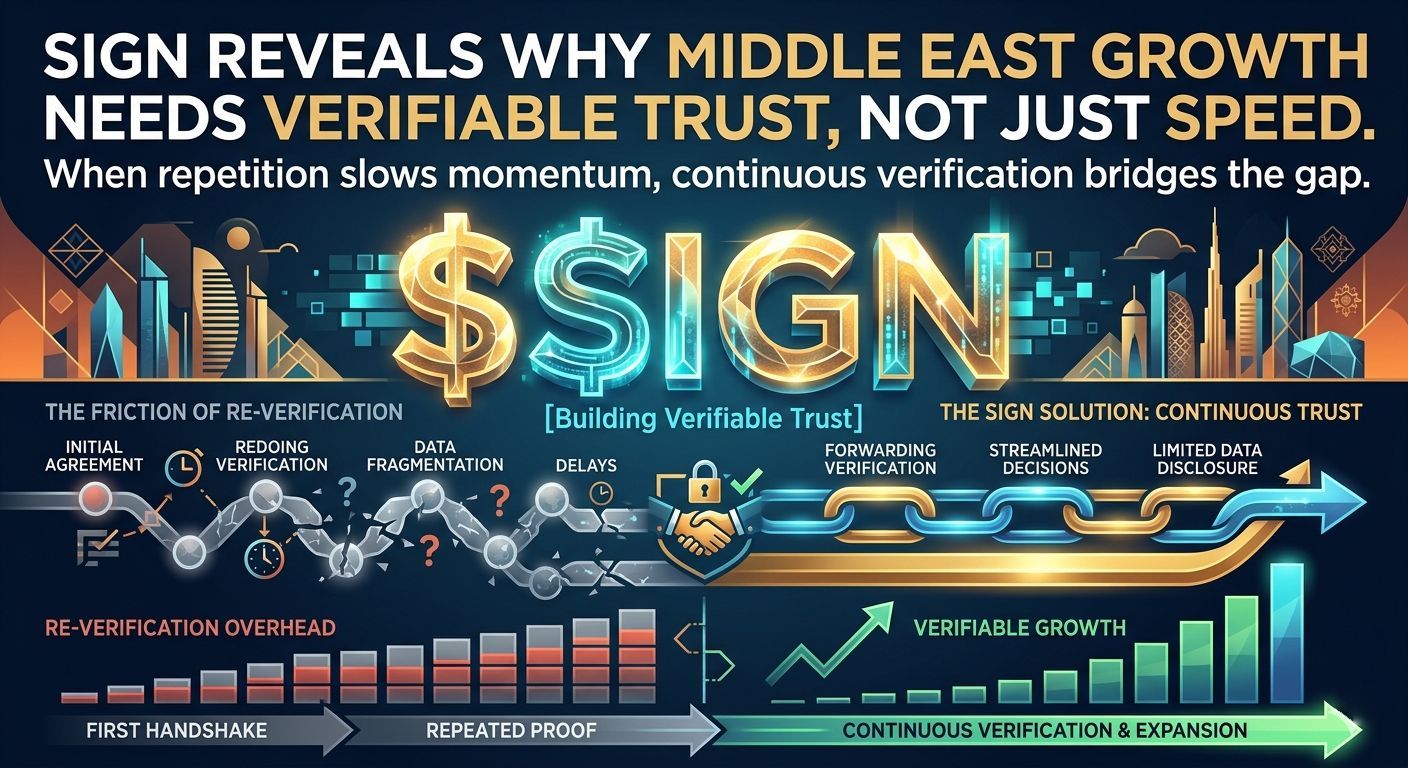
The workflow transforms completely. Someone submits proof in a predefined format. It gets validated against the schema. The system checks whether conditions are met. If they are, the outcome is automatic.
No chasing. No reminders. No trust gaps.
Just execution.
This is the transition from trust-based systems to truth-based systems.
And it’s bigger than payments.
It reshapes grants, payroll, identity verification, compliance, and any process where value depends on proof. It introduces a level of clarity and automation that traditional systems struggle to achieve because they rely too heavily on human coordination.
But the path to that future is not overengineering.
It starts small.
One real use case. One clear condition. One clean schema.
You strip everything down to what actually matters, build around that, and let the system enforce it. You don’t try to be clever too early. You focus on being correct.
Because in this model, simplicity isn’t a limitation it’s strength.
And once you experience a system where money moves because truth is proven, not because trust is assumed it becomes very hard to go back
This is not just better infrastructure.
It’s a better way of thinking.