

@SignOfficial
#SignDigitalSovereignInfra
$SIGN

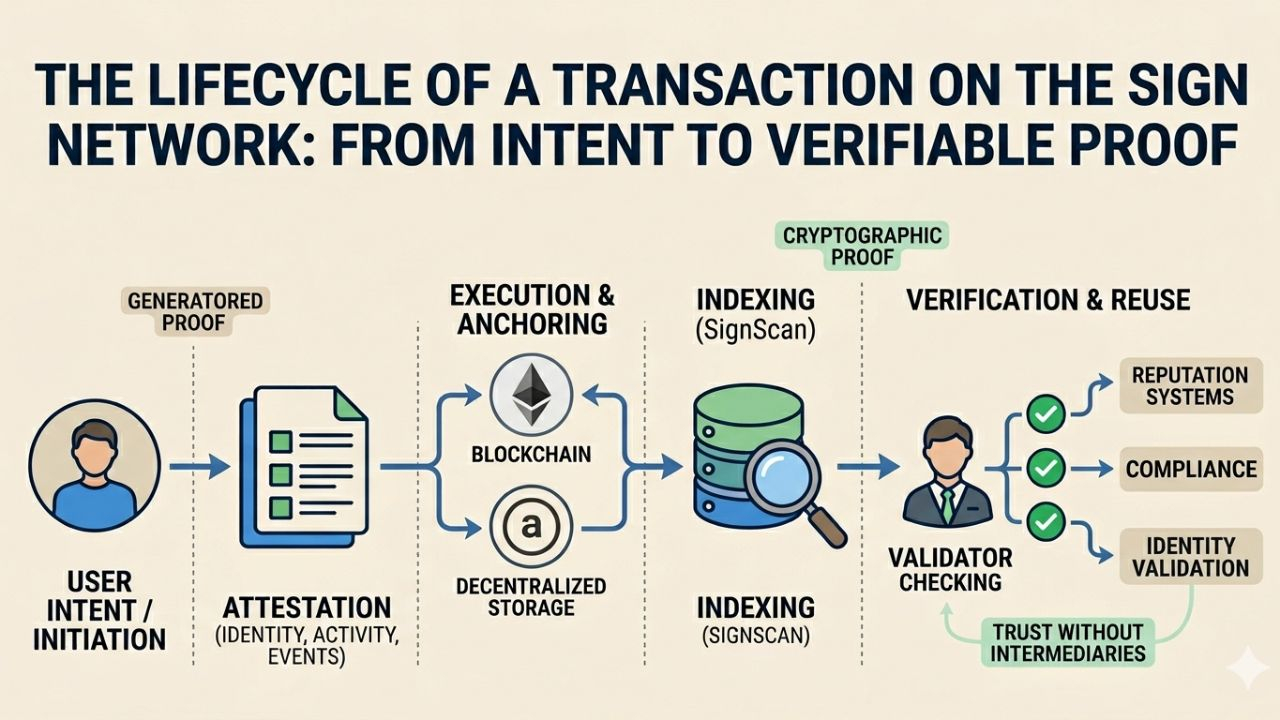
Most users think a transaction ends the moment I click confirm. On Sign Network, I see it very differently. That is only the starting point. Here, a transaction is not just an action. It becomes verifiable evidence that I or anyone else can reuse across applications, audit anytime, and trust without relying on intermediaries.
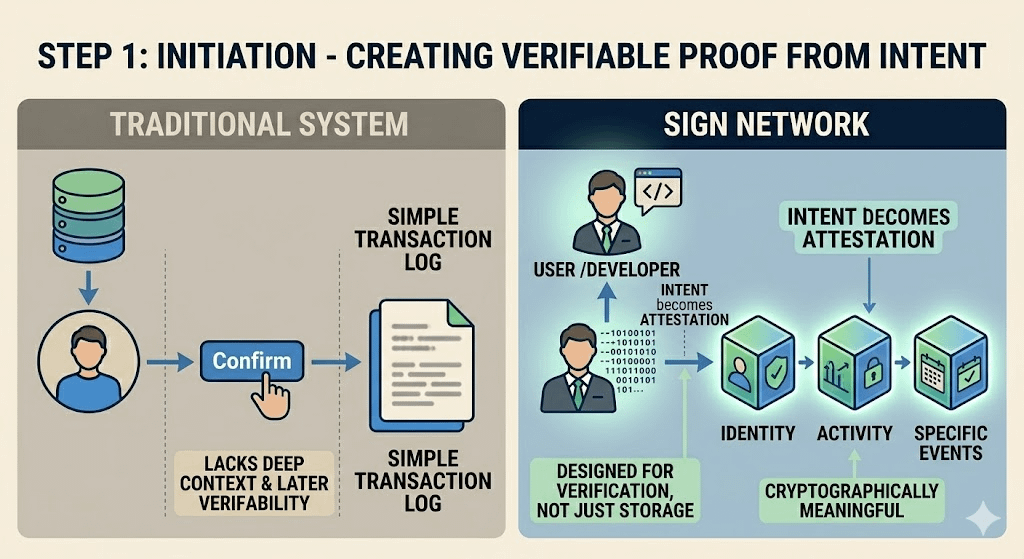
I start by initiating a transaction. Whether I am a user, a developer, or interacting through a smart contract, I am not just triggering an action. I am creating an attestation. This is where intent becomes structured proof. Instead of leaving behind a simple log like in traditional systems, I generate something cryptographically meaningful. It could represent identity, activity, or a specific event, but the key is that it is designed to be verified later, not just stored.
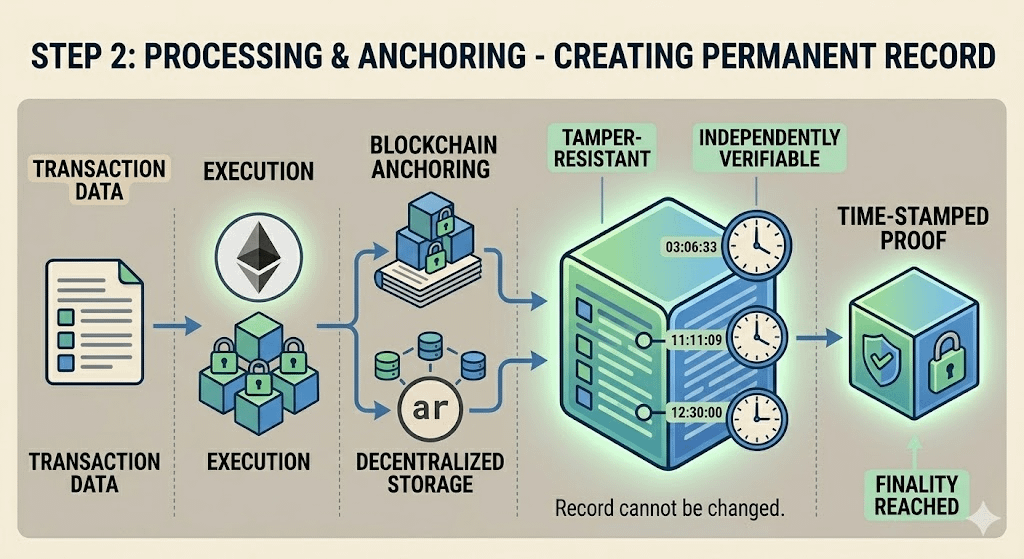
After initiation, the transaction is processed on a target blockchain like Ethereum. From my perspective, it looks like a normal on chain execution, but something deeper is happening. The data tied to that action is being anchored, either directly on chain or stored in decentralized storage like Arweave. This is where I ensure that the record is permanent, tamper resistant, and independently verifiable. I think of it as turning a simple action into a time stamped proof that cannot be changed.
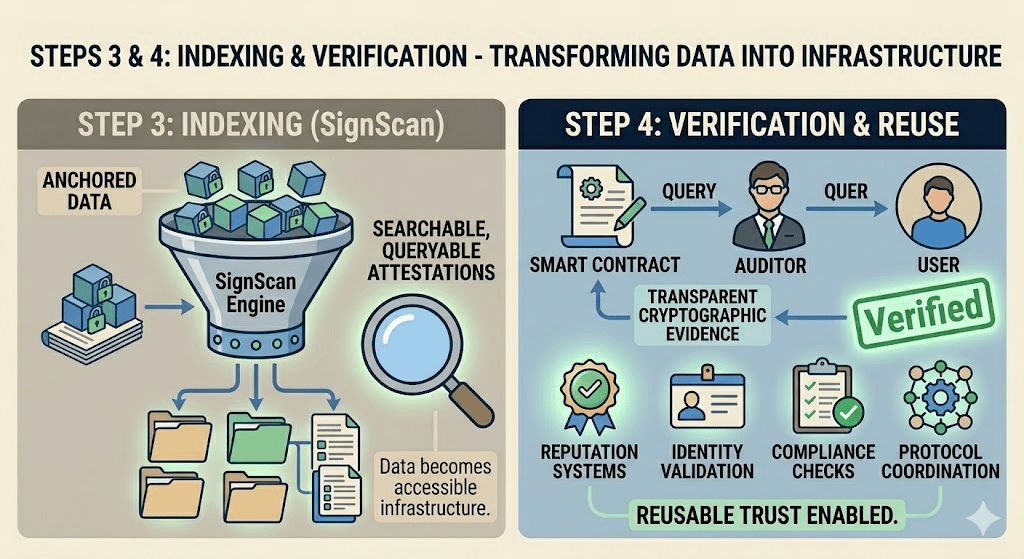
Once the transaction reaches finality, the real utility begins. I rely on SignScan to index the attestation so it becomes searchable and queryable. Without indexing, even valid blockchain data can be difficult to use. But once indexed, I can treat that data as accessible infrastructure. It becomes something I or other applications can integrate into without friction.
The final step is verification. This is where everything connects. I or any auditor, protocol, or application can query SignScan to validate the attestation. Instead of trusting a claim, I verify it using transparent and cryptographic evidence. This enables use cases like reputation systems, compliance checks, identity validation, and coordination across different applications.
When I look at the full flow, it becomes simple and powerful. I initiate an action, it is executed on chain, the proof is anchored, the transaction reaches finality, the data is indexed, and then it becomes verifiable by anyone. What stands out to me is that I am not just sending a transaction. I am creating reusable trust.
In my view, this is where Sign Network stands apart. Most systems focus on moving assets, but here I am working with something deeper. Verifiable truth. In the long run, systems that make data provable, accessible, and reusable will matter far more than those that simply process transactions faster.