

I used to think putting everything on-chain was the right move.
More data. More transparency. More “trustless.”
Sounded solid.
Then I actually tried using it.
Gas doesn’t just go up a little. It spikes. Hard. You push real data, not toy examples, and suddenly every write feels like a bad decision. At some point it stops being about decentralization and starts being about cost survival.
And that’s where the whole idea cracks a bit.
Because if your system only works when usage is low… it doesn’t really work.
That’s the part people avoid saying.
That’s also where Sign Protocol started making more sense to me.
Not because it avoids on-chain.
Because it doesn’t abuse it.
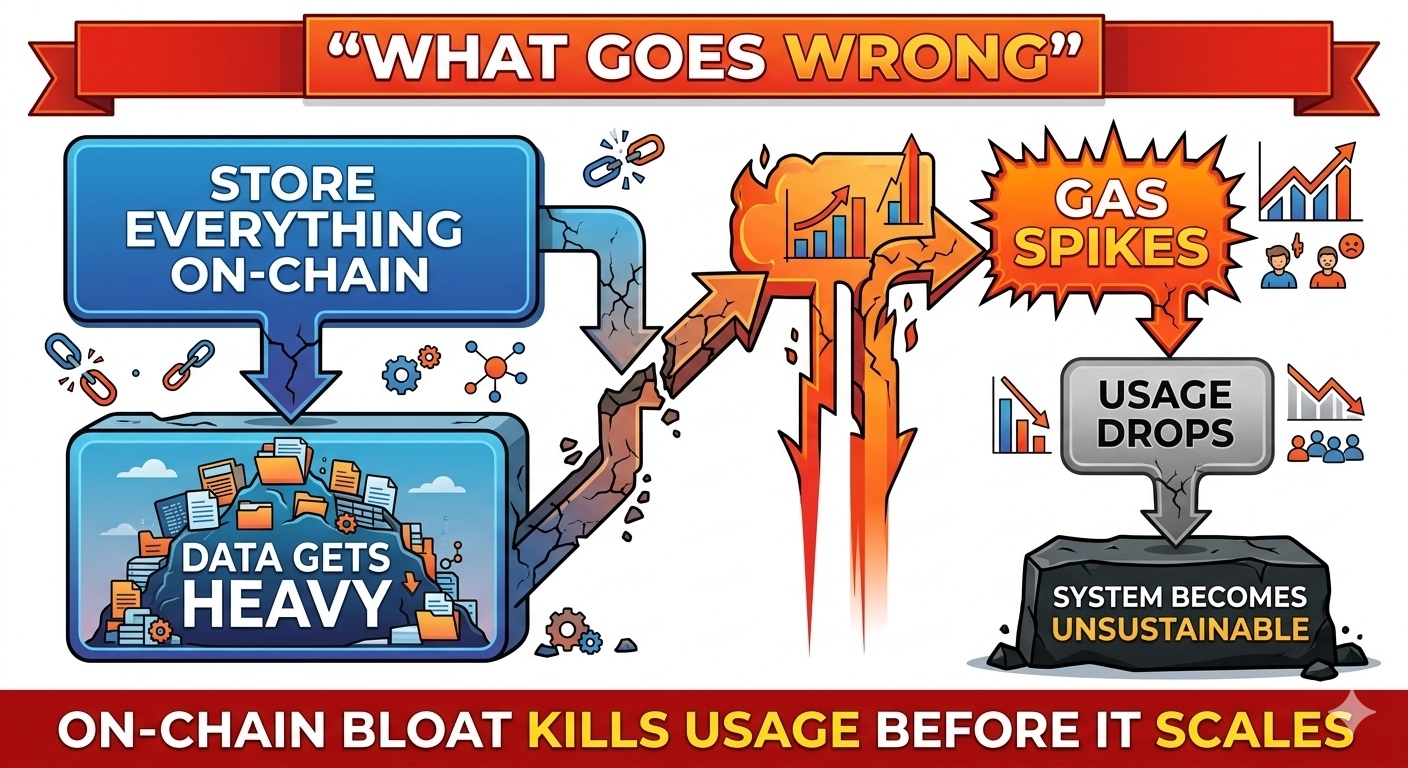
Heavy data doesn’t belong there. Not all of it. Not at scale.
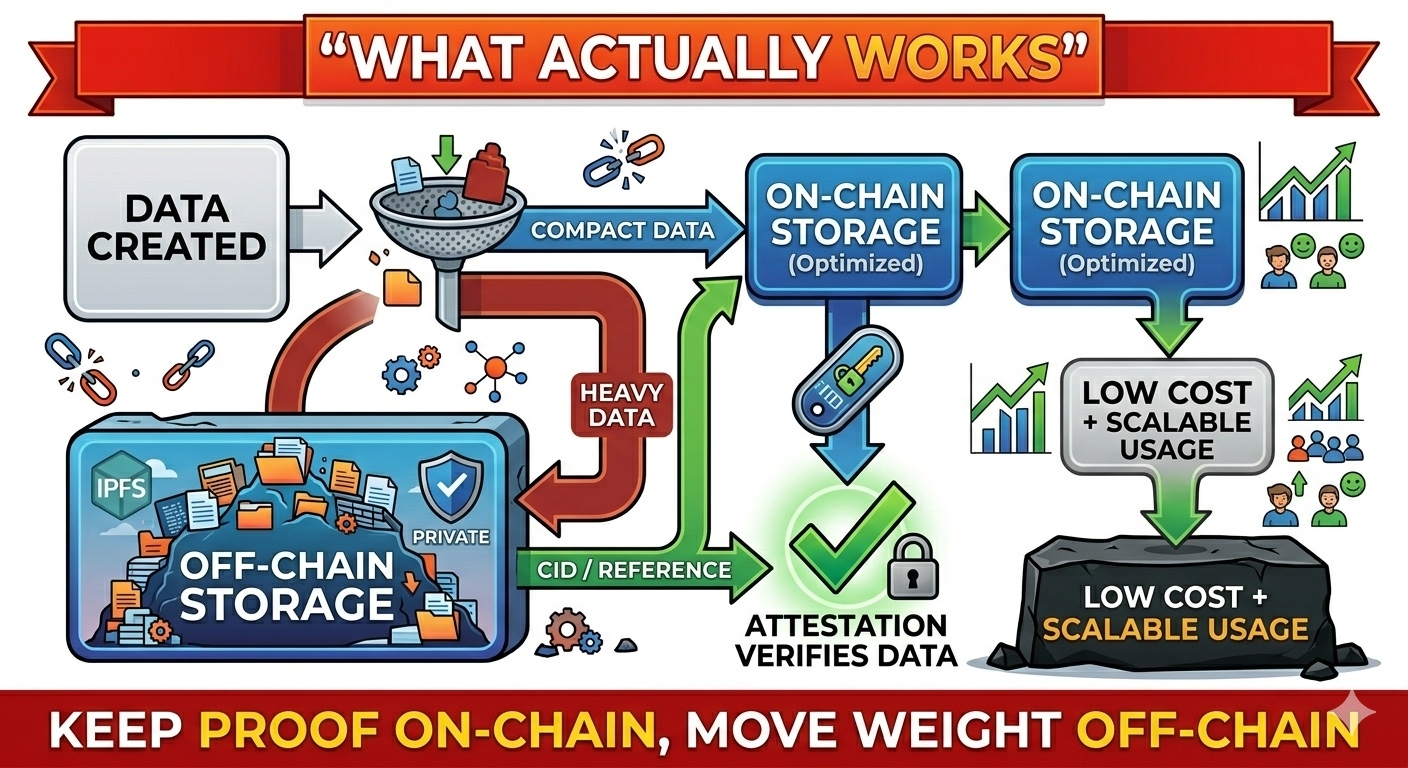
You move the bulk somewhere else. IPFS. Arweave. Even private storage if control matters.
On-chain, you keep the reference.
A CID. Small. Cheap. Verifiable.
That’s it.
The data is still there. Still real. Still provable. But you’re not paying every time just to prove you can store it.
Simple shift. Big difference.
But clean design doesn’t mean safe usage.
People still misunderstand it.
They hear “on-chain attestation” and assume full data lives there. Full payload. Full cost.
It doesn’t.
And honestly, it shouldn’t.
Blockchain is not storage. It’s verification.
Mix those roles and the system pushes back. Not immediately. But when scale hits.
I’ve seen that pattern.
Works early. Breaks later.
What I like here is the flexibility.
You’re not locked into one storage model. You can adapt based on cost, compliance, or control. The verification layer stays intact.
Same proof. Different placement.
That matters more than people think.
Because real systems don’t run in perfect conditions.
They deal with limits.
And systems that ignore those limits don’t fail immediately.
They fail when it’s too late to fix them.
Still, I’m not blindly sold.
Because this only works if people use it right.
Push too much on-chain again, and costs creep back. Ignore verification, and trust weakens. Balance sounds simple until scale tests it.
That’s the real line.
Not design.
Usage.
Because at scale, bad architecture doesn’t stay hidden.
It shows up in gas.
In performance.
In users leaving.
And by then, nobody cares what the original idea was.
They just move on.
$SIGN @SignOfficial #SignDigitalSovereignInfra