

I came to Sign Protocol with a very different mindset than the one people usually bring to payment infrastructure. I was not looking for excitement, and I was not chasing a loud narrative about the future of money. What held my attention was something quieter. The more I looked at programmable CBDC payments inside Sign Protocol, the more I felt this was not really about making payments faster or more polished. It was about changing what a payment can carry before it moves.
That difference matters more than it first appears.
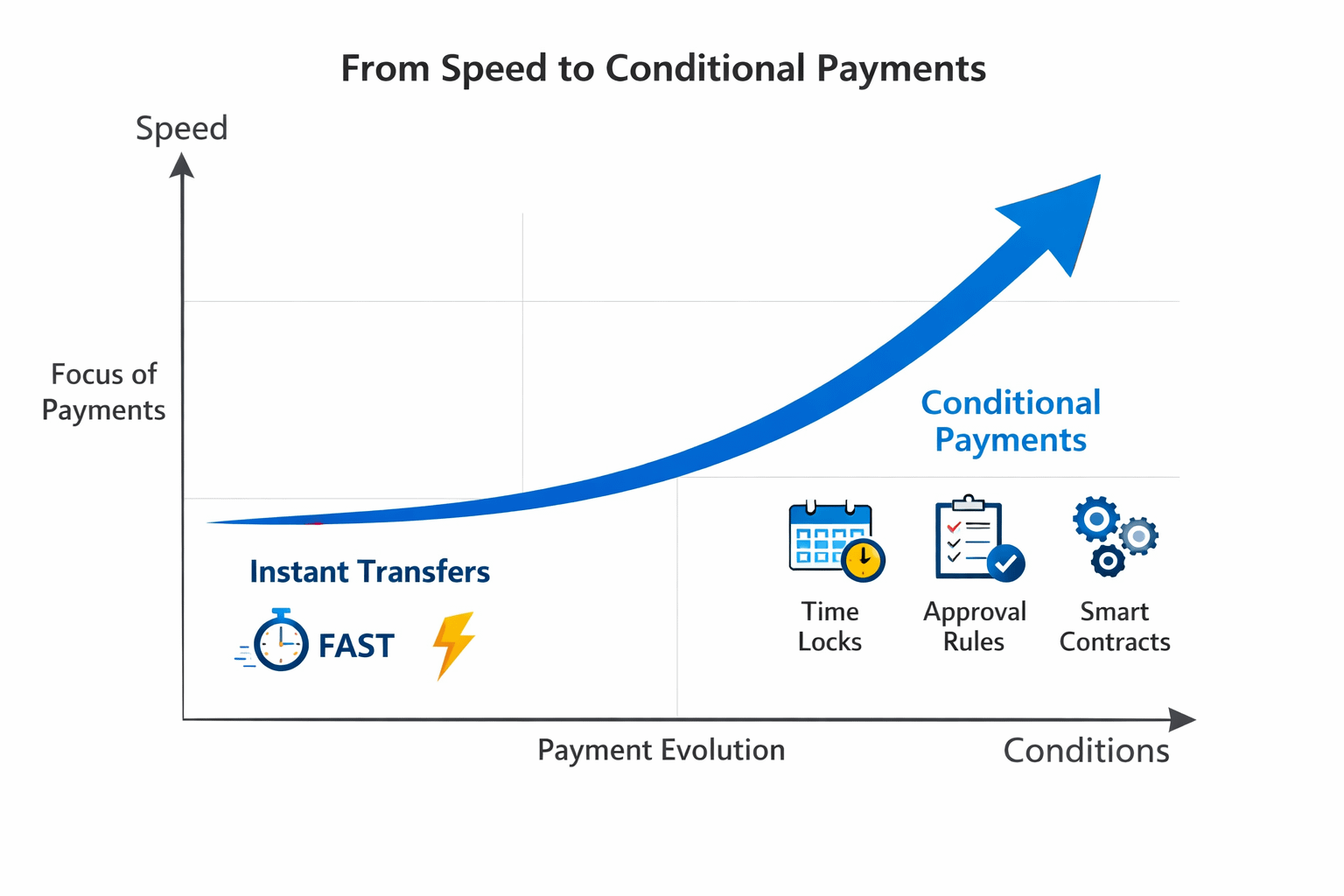
For a long time, the digital payment story has been built around one idea: speed. Faster transfers, faster settlement, faster access. That has become the standard people expect. If money moves instantly, we call it efficient. If it pauses, we assume something is wrong. Over time, speed stopped being just one feature and became the definition of progress itself.
But Sign Protocol made me think about another possibility. What if the future of payments is not only about how quickly money can move, but also about the rules attached to its movement? What if value does not always need to behave like a simple transfer from one side to another? What if, in some cases, money should wait, verify, coordinate, or respond to conditions before release?
That is where programmable CBDC payments start to feel more serious.
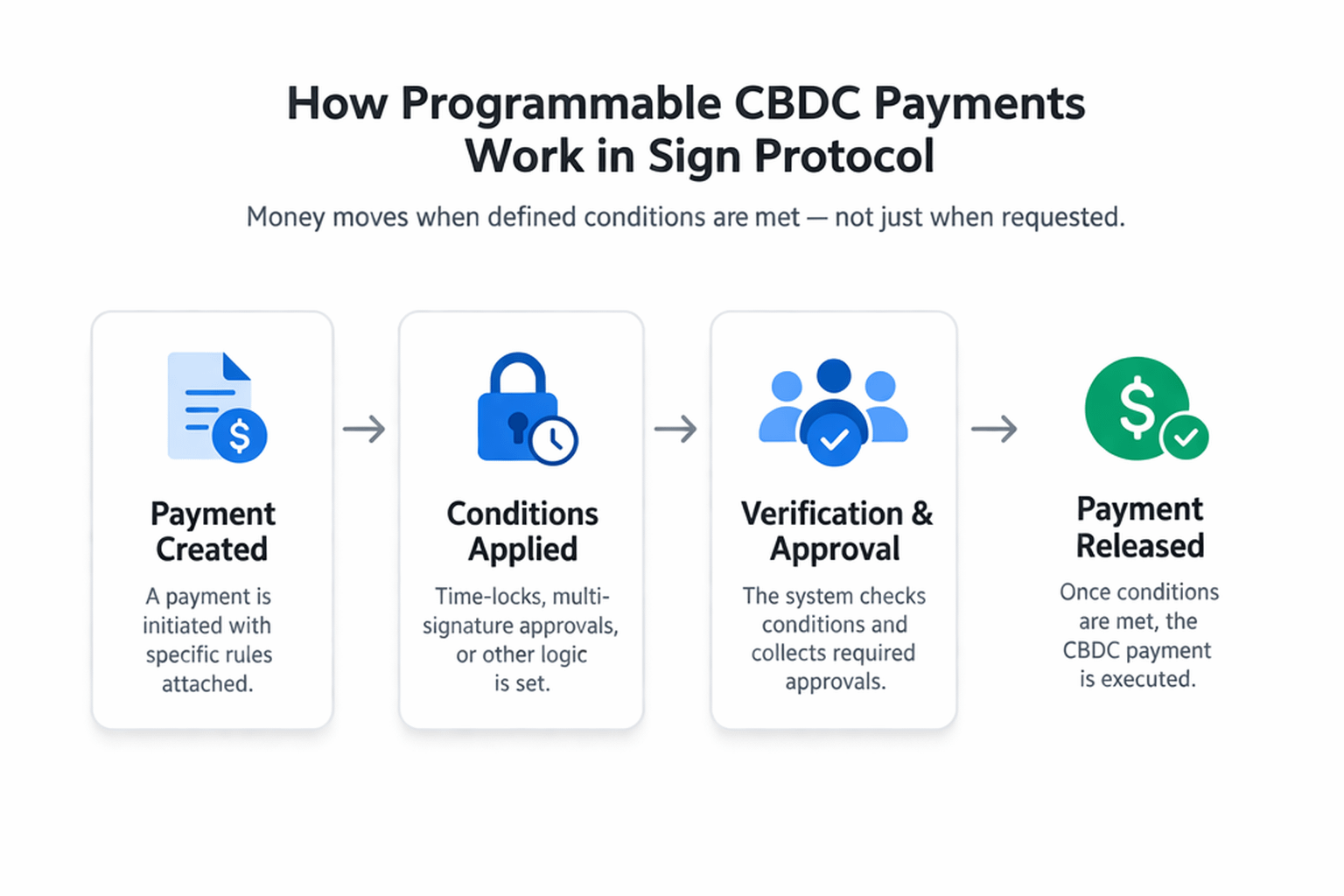
A time-lock sounds simple at first. It looks like a technical restriction, almost a small operational detail. But I do not think it is small at all. The moment a payment includes time as a condition, it challenges the habit we now have with digital money. It says immediacy is not always the highest goal. In some environments, that makes perfect sense. Payroll cycles, escrow arrangements, staged funding, public disbursement schedules, treasury operations — these are all cases where timing is part of trust, not an obstacle to it.
Still, a delay is never neutral. It changes how people experience value. A payment that waits can feel secure in one context and frustrating in another. Someone managing a structured institutional release may see a time-lock as responsible design. A freelancer waiting on funds may see the exact same mechanism as unnecessary friction. That is why I think the real question is not whether these tools are technically valid. The real question is where they actually fit human behavior.
Multi-signature approvals add another layer to that same tension. I can clearly see the logic behind them. Shared authorization distributes control, reduces single points of failure, and creates accountability around important transactions. In theory, that sounds strong. But theory is always cleaner than use. In practice, shared control introduces coordination costs. Someone has to approve. Someone has to be present. Someone has to respond at the right time. If that chain breaks, the payment does not move.
And yet, I still would not call that a flaw. In many cases, that is exactly the purpose. Sign Protocol does not seem designed for situations where speed alone is enough. It feels built for situations where movement needs structure around it. That is a very different kind of financial logic.
What I find most interesting is that Sign Protocol does not present this like spectacle. It feels restrained. It feels more like infrastructure than a flashy feature set. And I think that tone matters, because systems like this do not prove themselves through slogans. They prove themselves in the places where ordinary payment design starts to feel too thin for the complexity of the real world.
There is also a larger reality that cannot be ignored. CBDCs are not just technical products. They exist close to regulation, institutions, and policy frameworks. So programmable conditions are never operating in a vacuum. Even if Sign Protocol can support flexible payment logic, the actual use of that flexibility will always depend on the environment around it. Some conditions may be welcomed. Others may be restricted. Some use cases may become practical very quickly, while others remain more theoretical than real.
That is why I do not see Sign Protocol as a simple upgrade to digital payments. I see it as part of a deeper shift. It asks whether money should remain a neutral object that moves the same way every time, or whether it should become something more responsive to context. Something that can carry timing, approval, coordination, and intention before value is released.
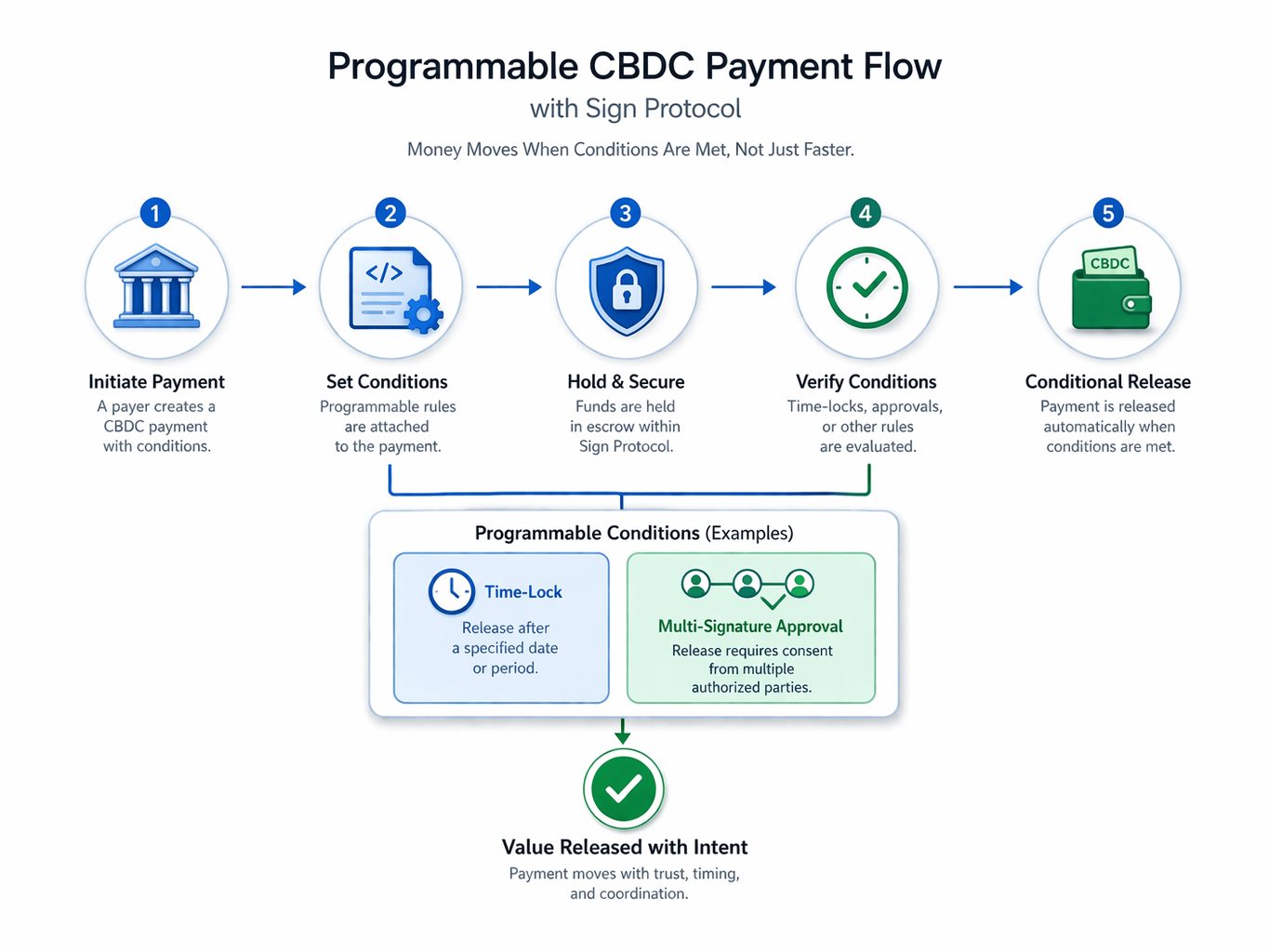
To me, that is where the future begins to change. Not when money moves faster, but when money starts moving with conditions that reflect the world around it. And that is the quiet but important space where Sign Protocol keeps my attention.