
I’ve been thinking about identity a lot lately, and the more I sit with Sign’s approach, the more I realize this isn’t just another tech upgrade.
It’s a quiet reshaping of power itself.
When you walk into a bank, a clinic, or any government office, the routine is always the same. You hand over documents, they copy everything, they store it, and suddenly your personal data lives in five different places. It feels normal, but to me it’s always felt off. Who actually decides what I have to reveal? Who keeps the record? Who can say no, and how do I push back if something is wrong? Identity has never been just a database problem. It’s always been a power problem.
What I like about Sign...
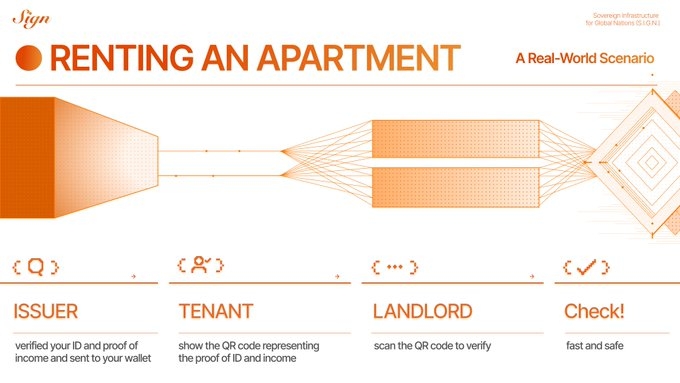
is that they seem to understand this deeply. They’re not trying to build one giant central database that everyone has to trust forever. Instead, they’re building with verifiable credentials at the core. To me, a verifiable credential is like a signed digital stamp from a trusted authority. The issuer creates it, I hold it in my wallet, and when someone needs to check something, I only share exactly what is required and nothing more.
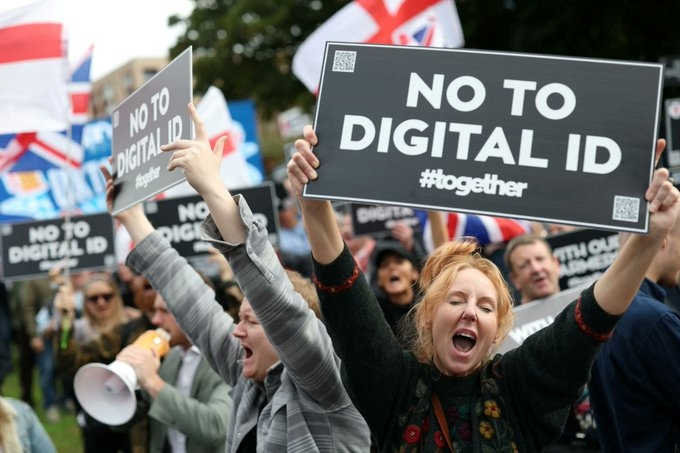
I think this small shift is actually huge. In the old world, verification means handing over raw data and hoping it doesn’t get copied everywhere. With Sign’s verifiable credentials, the verifier gets a cryptographic proof that something is true without ever seeing the full sensitive information.
I’ve tested this flow myself on their testnet, and it feels different. Cleaner. More respectful of the person at the center.
What really stands out to me is how Sign is designed for real sovereign use cases. They’re not building for retail hype. They’re building for governments and institutions that need both capability and accountability.
A country can issue credentials that are verifiable across agencies without creating one massive honeypot of personal data. That balance that private by default, auditable when needed, feels like the right middle ground most projects miss.
I don’t know -
if everyone sees it yet, but to me this is where governance actually lives in the digital age. When you control how identity and credentials work, you control who can access services, who can prove eligibility, and who holds the real power in the system. Sign is forcing us to think about these questions upfront: who can issue what, who can request what, how do we handle revocation, and how do we keep things auditable without turning everything into permanent surveillance.

One thing I really respect is that they treat this as governance first, not just code. They talk about issuer governance, verifier tiers, schema control, and recovery mechanisms. These aren’t boring technical details but they’re the actual rules of power in a digital society. If a country gets this wrong, they risk building either a surveillance state or a chaotic system that never scales. Sign seems to be aiming for something more thoughtful: controllable privacy that still works at national scale.
I’ve spent time looking at their product map of Sign Protocol for attestations, TokenTable for distribution, EthSign for agreements. It all fits together as one trust fabric. To me, this feels like the infrastructure layer most people don’t see but will eventually rely on every day. When governments start using verifiable credentials for digital ID, welfare, or even cross-border verification, the impact could be massive.
What I want to see more of is how this actually plays out in real pilots. I’m curious how citizens will experience it? will it feel empowering or just another layer of tech? Will institutions truly adopt minimal disclosure, or will they still ask for more than they need? These are the questions I keep coming back to.
So Overall,
For me, Sign makes me think differently about identity. It's more than just speeding things up or streamlining processes.
It’s about redesigning the permission system of society in a way that gives individuals more control while still letting governments do their job properly. That balance is incredibly hard to get right, but it feels like they’re genuinely trying.
I’m watching this project closely because It listed on Binance now, the biggest Crypto CEX and I believe the way we build digital identity today will shape power structures for the next decade. Sign isn’t promising magic. It’s promising a more thoughtful foundation, and right now, that feels like the most important thing we can build.
What do you think? Do you see verifiable credentials as just a privacy tool, or as something that actually reshapes governance and power? 🤔
@SignOfficial $SIGN #SignDigitalSovereignInfra