
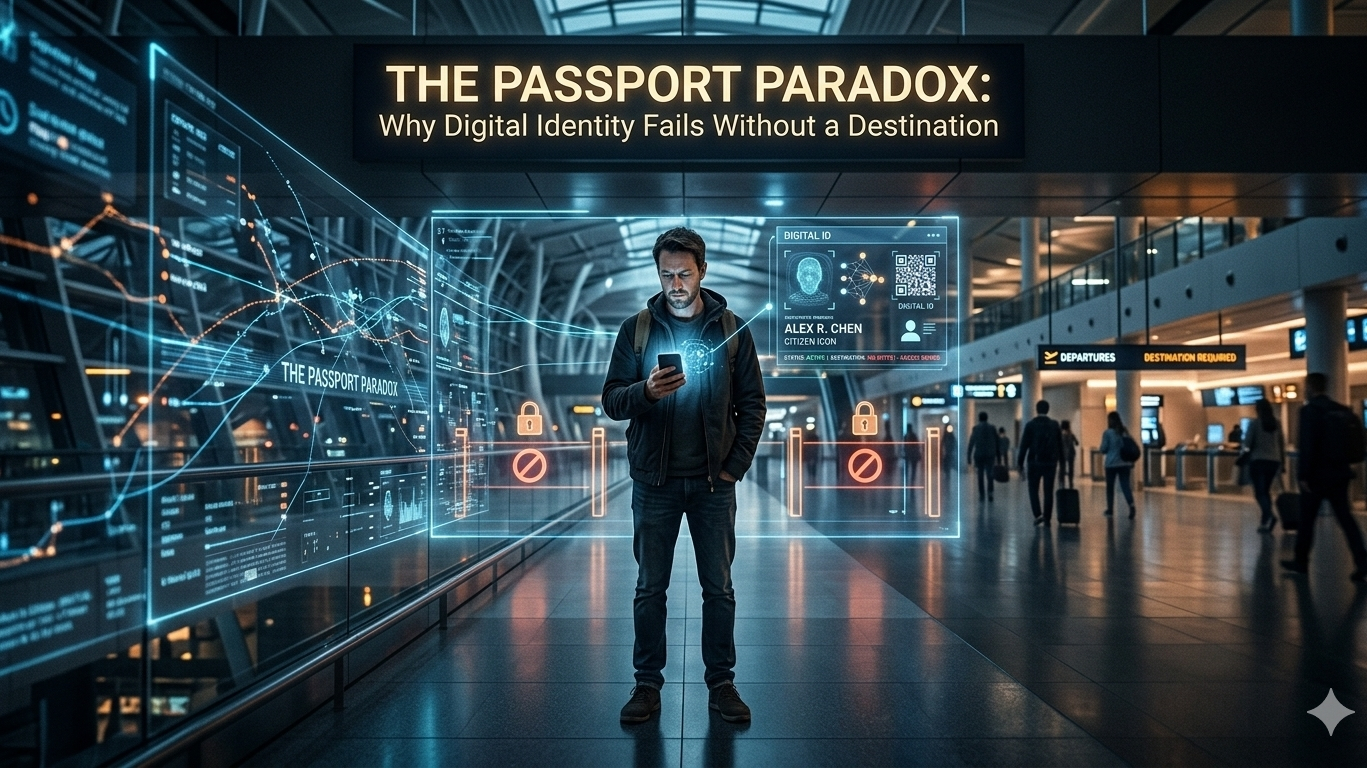

There was a time when I genuinely believed that identity alone was enough. If a project talked about "sovereignty" or "ownership," I didn't question the utility. It felt like an obvious future. whoever controlled the identity layer would control everything that followed. But that idealism was short-lived. Upon closer look, most systems were quietly failing at one critical juncture. They could create identity but they couldn't employ it. Profiles existed and credentials were issued, but the momentum stopped there. No transactions depended on them, no agreements required them. It was the digital equivalent of printing passports for a world with no borders to cross.
That realization changed my entire framework for evaluation. Today, I don't ask what a system claims to verify—I ask what that identity actually does once it exists. This is where Sign Protocol diverges from the pack. It moves past the tired rhetoric of "trust" and focuses on the mechanics of an identity-driven economy. Identity isn't inherently valuable when it sits in a digital vault, it gains value only when it becomes part of an action flowing into agreements, decisions and real-world interactions. In regions like the Middle East, where institutional coordination across borders is a logistical hurdle, this "flow" is more than a technical feature—it is economic infrastructure. A system that only verifies is a library, a system that enables continuous usage is a marketplace.
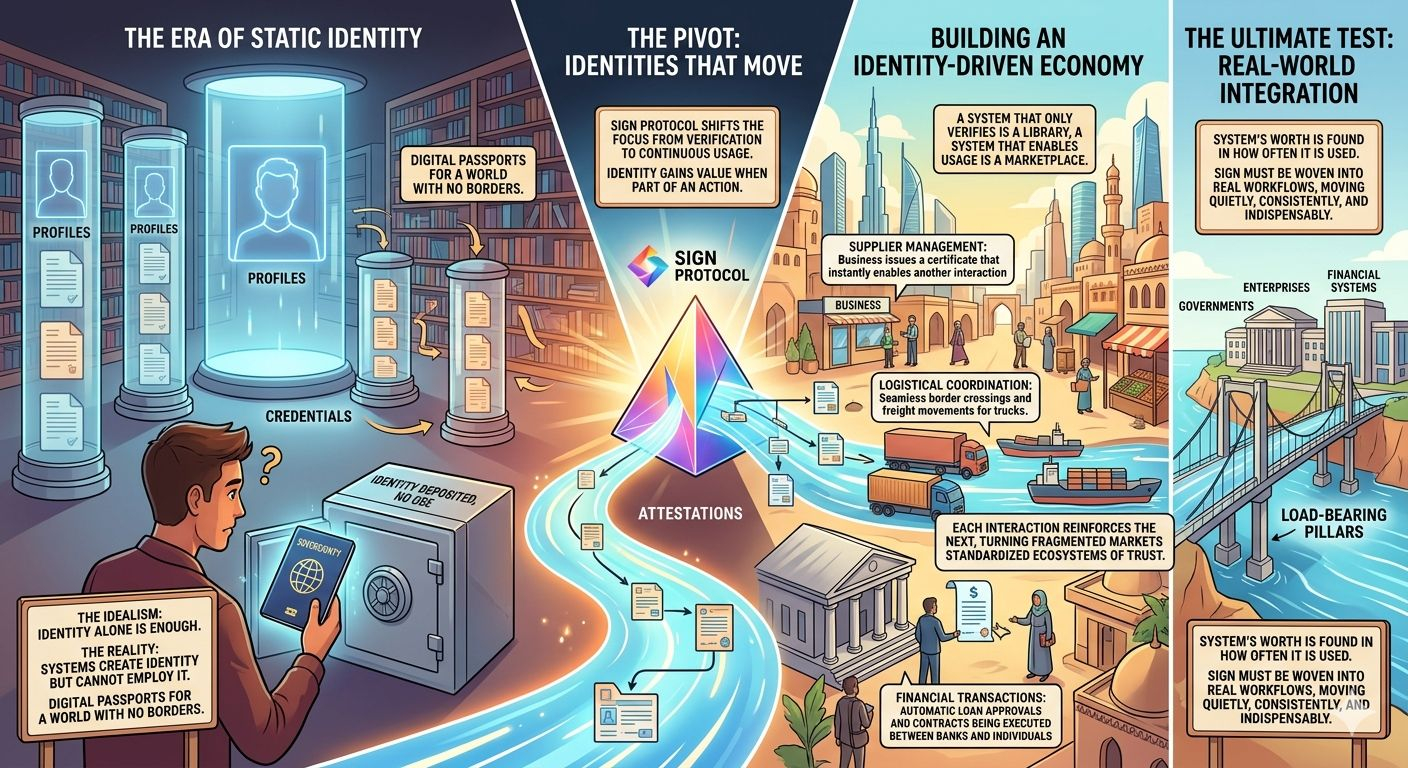
Sign Protocol treats identity as a series of verifiable statements or attestations, rather than a static profile. This subtle shift is profound because it prioritizes portability. An attestation is a cryptographically signed object that other applications can "read" and trust. When a business issues a certificate to a supplier, it doesn't stay trapped in a silo, it becomes a referenceable building block for the next developer. As these attestations are reused, the network strengthens. Each interaction reinforces the next, turning a fragmented market into a standardized ecosystem of trust.
However, we must be honest, the market is currently in an era of speculative potential. Price action and trading volumes often signal interest rather than validation. Real infrastructure isn't defined by a burst of hype, it is defined by repetition. For Sign, the test is no longer whether it can issue attestations, but whether those attestations become load-bearing pillars of real workflows. In the Middle East, this depends on deep integration with the "Real World"—governments, enterprises and financial systems. Without being woven into these institutions, even the most elegant protocol remains a laboratory experiment.
A system’s worth isn’t found in how much it promises, but in how often it is used. The systems that will define the next decade are not the ones that simply "create" identity they are the ones where identity moves quietly, consistently, and indispensably.
@SignOfficial #signdigitalsovereigninfra $SIGN #SignDigitalSovereignInfra