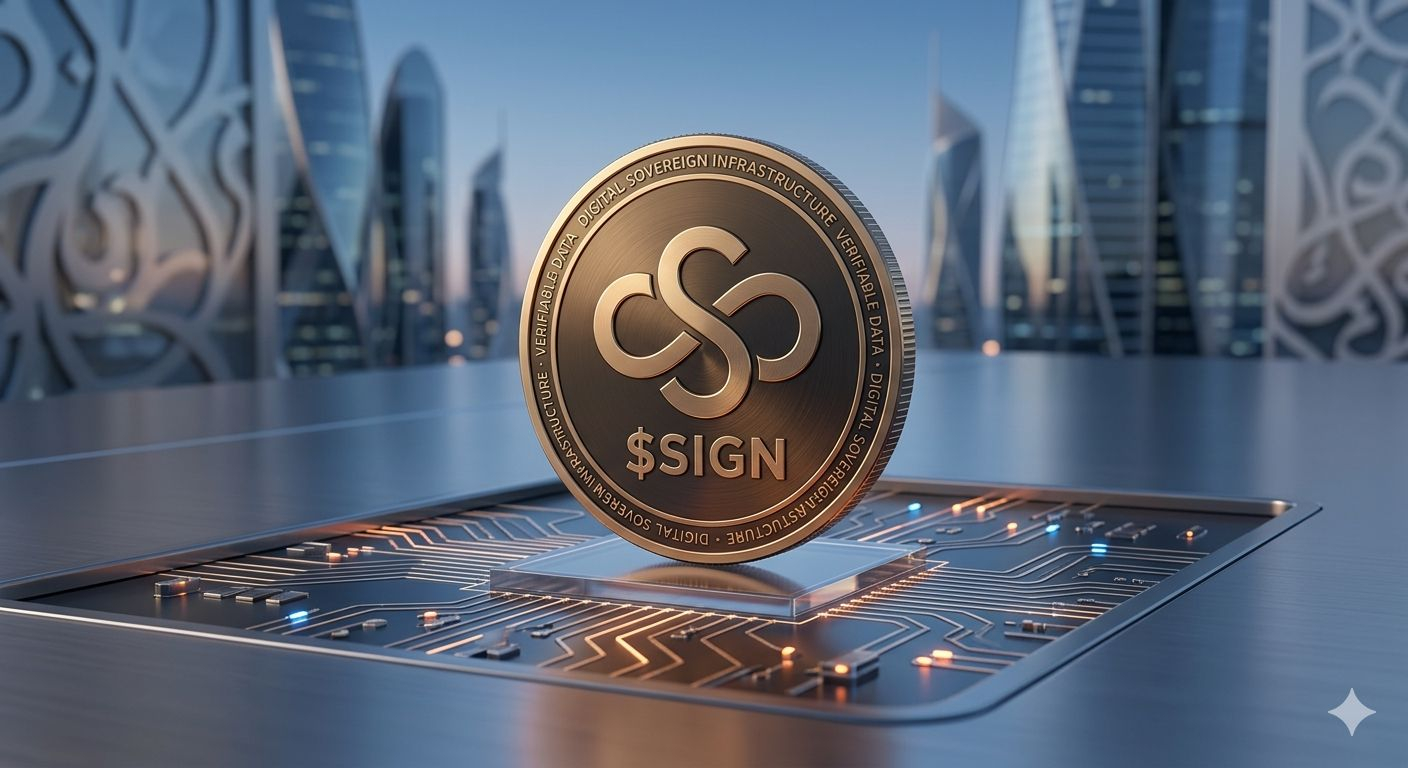
The Middle East is currently undergoing a historic economic transformation. From Saudi Arabia’s Vision 2030 to the UAE’s rapid expansion into AI and smart cities, the region is moving away from traditional oil-dependence toward a high-tech, diversified future. However, this shift requires more than just capital; it requires a new type of foundation—Digital Sovereign Infrastructure.
This is exactly where @SignOfficial is positioning itself as a critical player. As a decentralized protocol focused on attestations and verifiable data, Sign provides the "trust layer" that modern economies need to function without relying on fragmented, centralized, or foreign-controlled systems.
Why Digital Sovereignty Matters for the GCC 🇦🇪🇸🇦
In an era where data is the new oil, maintaining control over national identity systems and financial rails is non-negotiable. $SIGN acts as the utility backbone for this infrastructure, enabling:
Verifiable Credentials: Governments and institutions can issue tamper-proof IDs and certifications that are instantly verifiable across borders.
Decentralized Coordination: By using $SIGN to power its network, Sign allows for transparent value distribution and eligibility tracking through tools like TokenTable.
Economic Efficiency: Reducing the "trust deficit" means faster business onboarding, smoother cross-border trade, and lower administrative costs.
Beyond the Hype: Real Infrastructure 🏗️
While many projects in the space focus on short-term speculation, @SignOfficial is building for the long haul. Whether it's verifying team credentials for a startup in Riyadh or ensuring the integrity of supply chain data across the Red Sea, the goal is to create a neutral, decentralized layer where facts are undisputed.
The Middle East has the vision and the momentum. With #SignDigitalSovereignInfra, it now has the digital tools to ensure that its growth remains secure, independent, and scalable.
What are your thoughts on how decentralized identity will change regional trade? Let me know in the comments! 👇