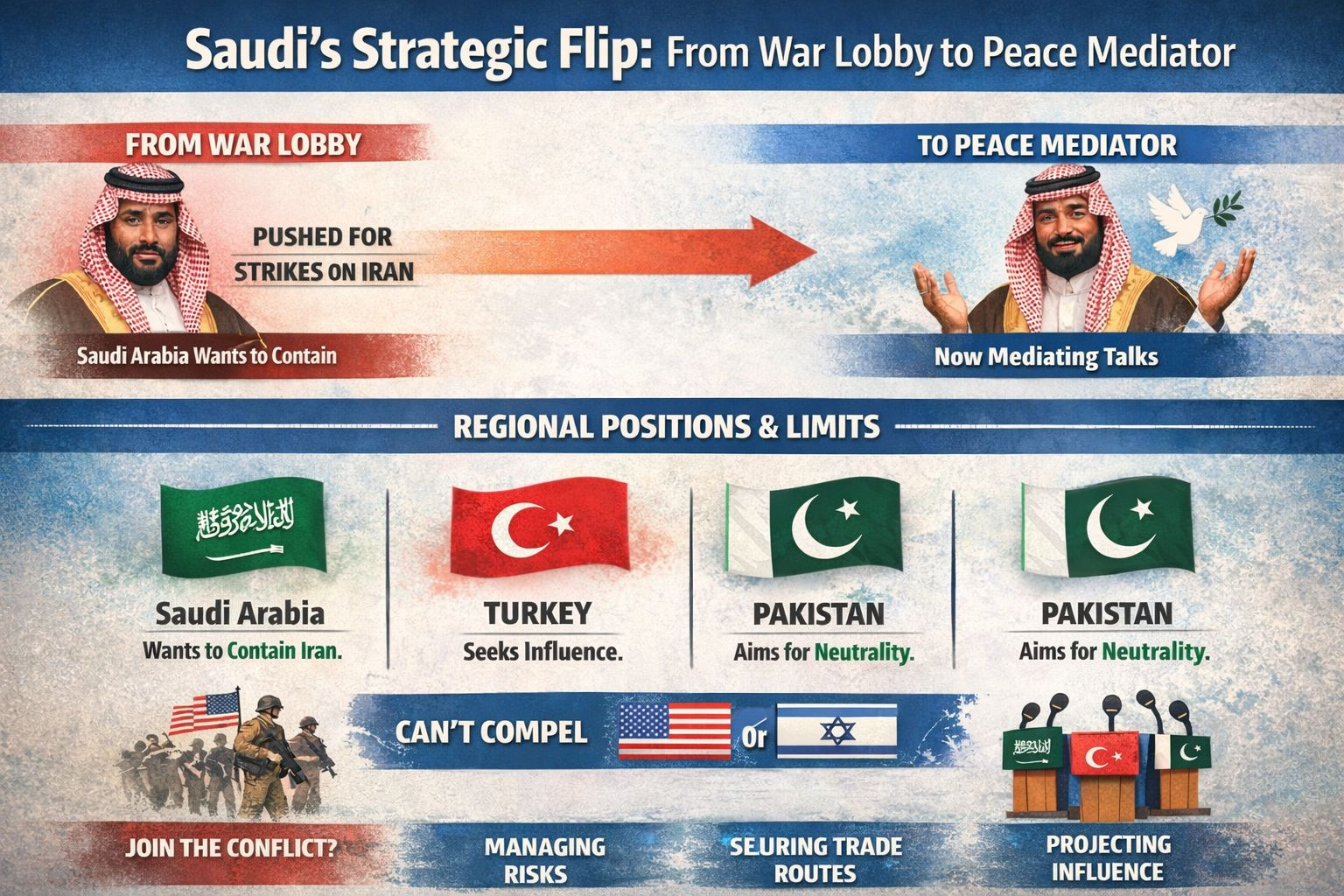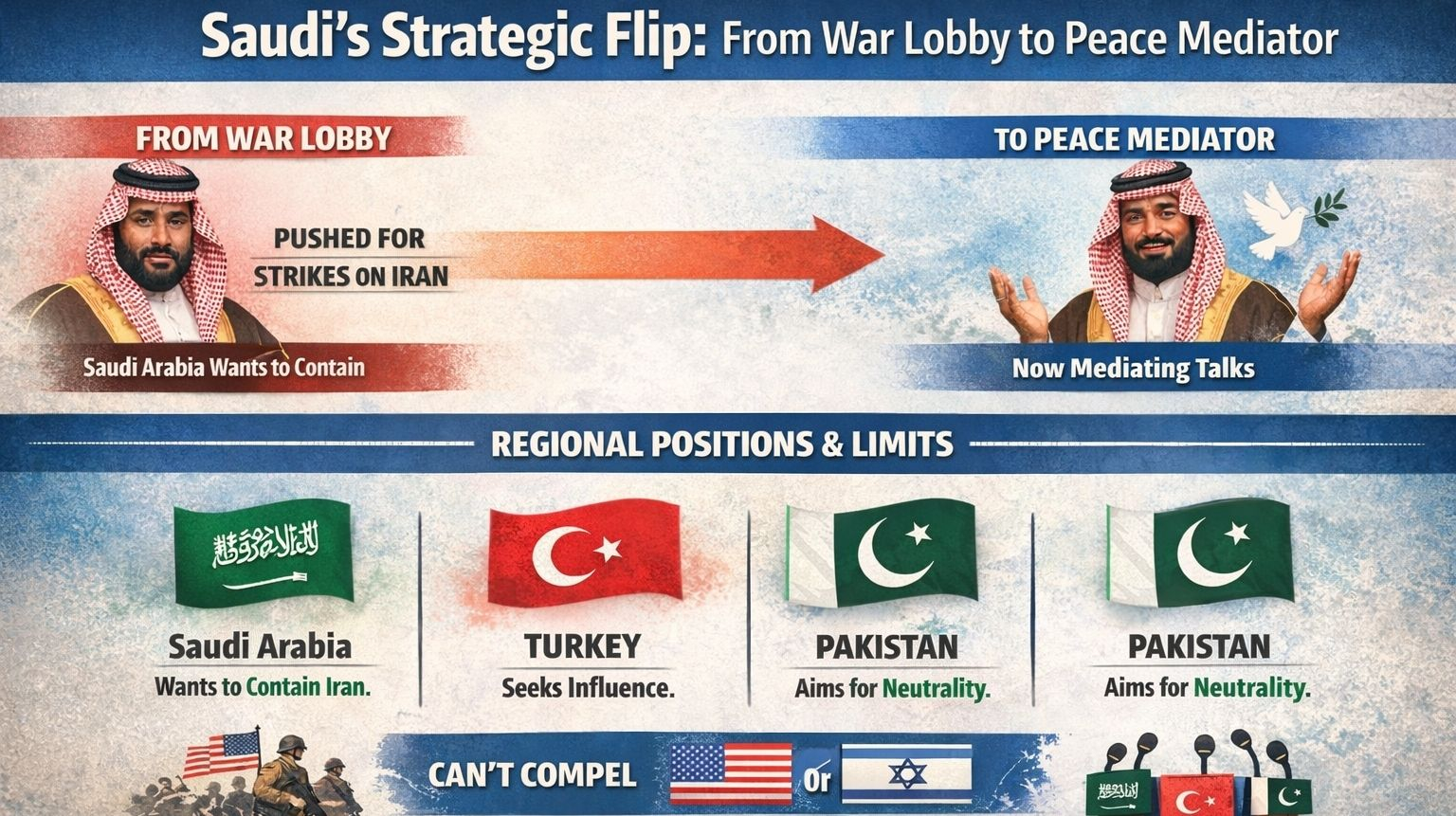
Islamabad, Pakistan — Pakistan recently hosted senior officials from Saudi Arabia, Turkey, and Egypt to discuss the escalating Iran-U.S.-Israel conflict. Officially, the meeting aims to reduce tensions and safeguard trade routes like the Strait of Hormuz. But beneath the surface, one striking narrative emerges: the country that once lobbied for war is now claiming to mediate peace.
The Flip: Lobbying for War to Negotiating Peace
Reports indicate that Saudi Arabia, under Crown Prince Mohammed bin Salman, previously lobbied the Trump administration to authorize strikes on Iran, potentially targeting regime change. Today, Riyadh positions itself as a neutral mediator. Analysts call this a dramatic strategic pivot, highlighting a deep credibility gap.
No Mediation, Only Positioning
Conflicting Goals: Saudi Arabia wants to contain Iran. Turkey seeks influence. Pakistan wants neutrality. Their agendas clash, making genuine agreement unlikely.Historical Tensions: Iran’s longstanding rivalries with Saudi Arabia and Turkey weaken the possibility of cooperation.
External Dependencies: Even if Pakistan, Saudi Arabia, and Turkey agree, they cannot compel the U.S. or Israel.
Strategic Purpose of Islamabad Talks
Even without producing peace, the talks serve key functions:
Clarifying Participation: Decide whether to join the conflict alongside the U.S. or remain indirect.
Managing Risk: Maintain communication to prevent miscalculations or accidental escalation.
Economic Security: Safeguard oil and trade routes, especially through the Strait of Hormuz.
Defining Roles: Each country can publicly project influence while protecting strategic interests.
Saudi Arabia’s Credibility Challenge
The irony is stark: the very country that once pushed for escalation is now acting as the peacemaker. Analysts argue this move is less about peace and more about optics and strategic positioning. The narrative allows Riyadh to assert influence in the region while shielding itself from direct blame for any escalation.
Pakistan’s Balancing Act
Pakistan walks a tightrope, maintaining neutrality while engaging key regional players. Hosting these talks allows Islamabad to assess intentions, manage risks, and maintain influence—even if genuine conflict resolution remains out of reach.
Bottom Line
The Islamabad talks are not a negotiation table for peace—they are a strategic chessboard. Real outcomes are limited to:
Determining participation in the war
Managing optics and influence
Reducing accidental escalations
Protecting trade and economic interests
> “The one who lobbied for war is now mediating peace. Islamabad shows how strategy can masquerade as diplomacy,” notes a regional analyst.
Until direct talks occur between Iran, the U.S., and Israel, all Islamabad achieves is positioning, risk management, and role clarification—not ending the conflict.
#OilPricesDrop #USNoKingsProtests #TrumpSeeksQuickEndToIranWar #TrumpSaysIranWarHasBeenWon #US-IranTalks