I spent my morning scrolling through another DAO proposal and honestly it is the same tired circus we have been seeing for years. You know the routine where a bunch of whales who have never written a line of code or moderated a single discord channel decide the entire roadmap because they have the biggest bags. It is a governance model built on sand where loud voices and deep pockets outweigh actual sweat equity. We have been promised that decentralized autonomous organizations would be the future of work but right now they are mostly just group chats with expensive voting tickets. The same friction exists in the real world asset space too because trying to prove you are an accredited investor or a beneficial owner for a piece of tokenized real estate feels like a full time job of leaking your personal data to ten different platforms just to claim a tiny bit of yield.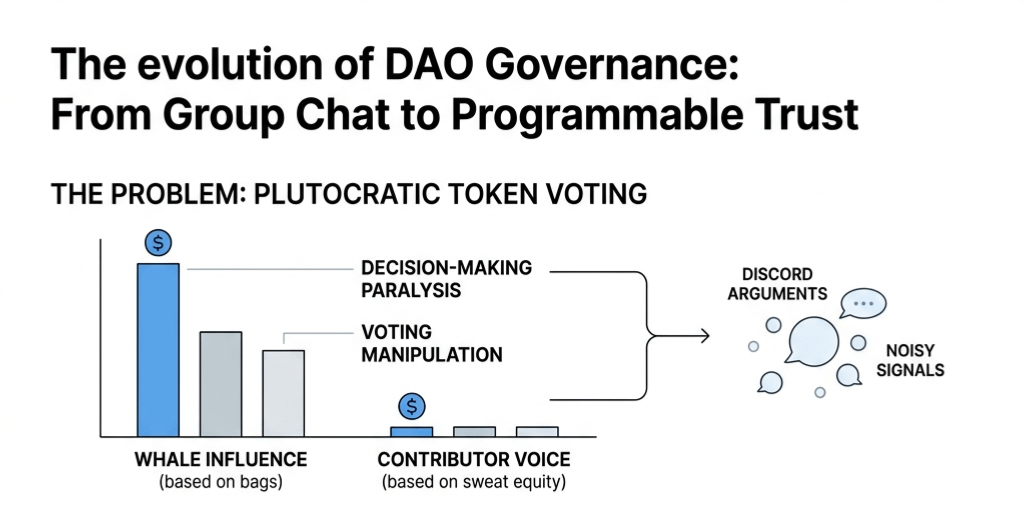
This is where I think we have been looking at the problem all wrong. We keep trying to build flashier front ends when what we actually need is better plumbing and that is exactly what Sign is doing. They are not launching another speculative token to fuel the hype cycle but instead they are building a way to make trust programmable. I am talking about a system where your reputation and your compliance status are not just words on a screen but structured attestations that a smart contract can actually read and act on without a human middleman. Instead of a manual vote on Snapshot that an admin has to execute you have a system where the chain itself checks if you actually did the work before it lets you move the needle.
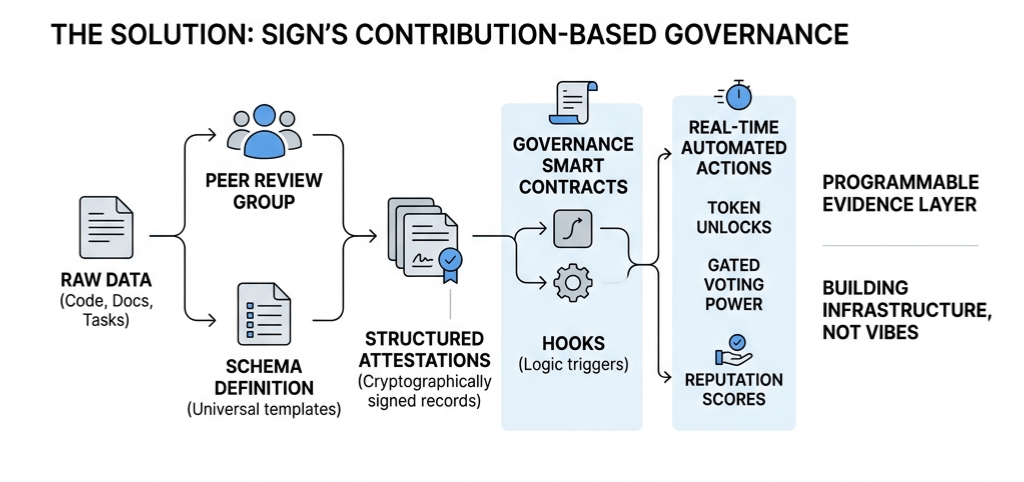
The way this actually functions in the wild is through something called schemas which are basically just standardized templates for data. Think of it like a universal form that everyone agrees to use so we can stop wasting time on custom integrations. When a DAO wants to track who is actually contributing they define a schema for a verified contributor that includes the task type and a quality score signed by a peer review group. Once that is set in stone you get these signed records called attestations. It is not a trust me bro situation because these are cryptographically signed and tied to your wallet. When you combine that with hooks which are little pieces of logic that fire off every time an attestation is created you suddenly have a governance system that can gate access or voting power in real time based on what you have actually achieved.
We are already seeing this play out with things like TokenTable which has handled billions in distributions by tying token unlocks to verified claims. It is a massive reality check for the sybil farmers and the airdrop hunters because you cannot just spin up a thousand wallets and expect a payday if the smart contract is looking for a specific attestation of work. For the institutional crowd eye balling real world assets this is the only way forward. No serious bank is going to dump raw identity data on a public ledger but they will use a system where a wallet carries an attestation saying it passed KYC without revealing the actual passport number. It bridges that gap between the speed of the blockchain and the bone deep reality of regulatory compliance that usually kills these projects before they start.
As we head into 2026 I am betting that the projects that survive are the ones that stop treating trust like a vibe and start treating it like infrastructure. We are moving away from the era of digital gold and moving toward an era of the digital container terminal where every piece of data has a manifest and a signature that the system can verify at a glance. It is not the sexiest narrative in the world but it is the only one that actually scales. If we want DAOs to manage serious treasuries and RWAs to move beyond pilot programs we need this layer of programmable evidence to sit underneath everything. It is the difference between a high school club and a global coordination engine.