


@SignOfficial $SIGN #SignDigitalSovereignInfra
i didn’t expect sign protocol to mess with my head this much, honestly.
like… i’m just scrolling, checking charts, half distracted — and then this idea keeps sticking.
we’re in a market where everything feels recycled.
same plays, same hype cycles.
i literally just closed a trade earlier today thinking “yeah, seen this before.”
but sign… doesn’t sit in that same box.
it’s not just another app.
it’s trying to standardize how trust moves.
and yeah, that sounds clean.
almost too clean.
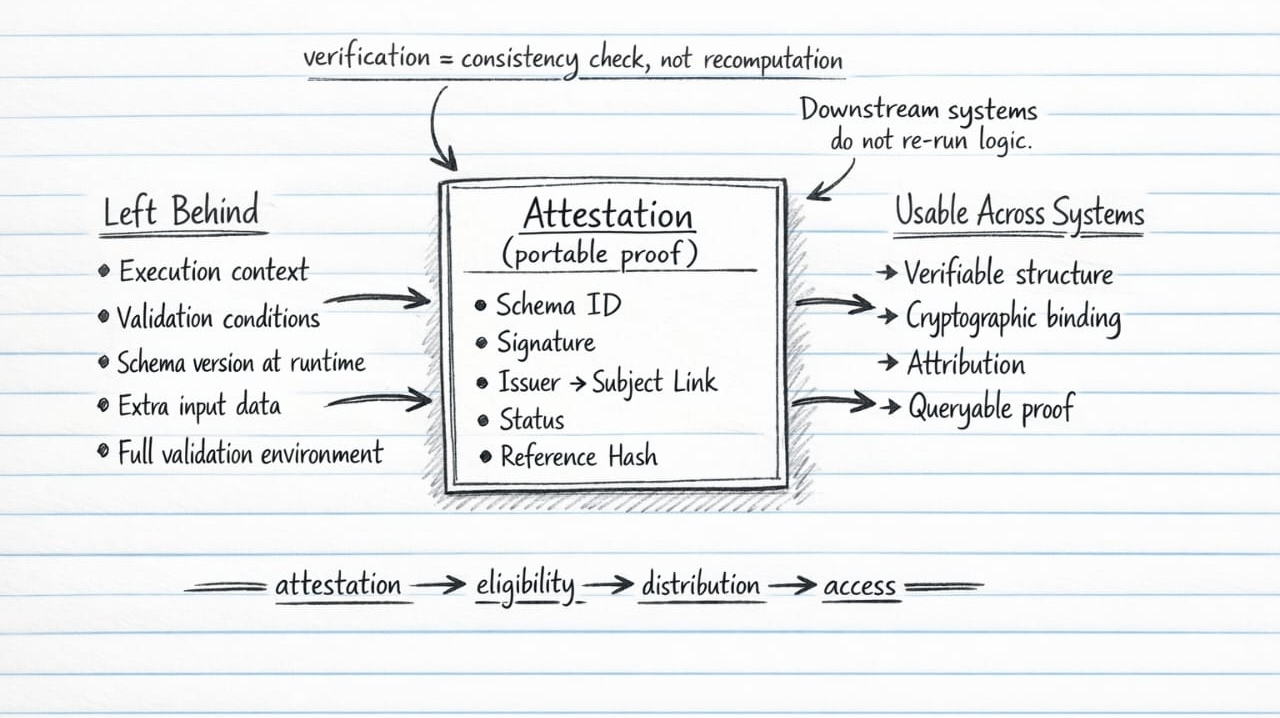
the idea is simple — verify once, reuse everywhere.
no repeating yourself, no re-checking the same thing again and again.
efficient. makes sense.
but something about it keeps bothering me.
because trust… isn’t just verification.
it’s context.
like, i’ve seen setups that look perfect on one timeframe —
and then completely fail when you zoom out.
same data. different meaning.
so what happens when a “verified” credential moves into a completely different environment?
is it still meaningful… or just technically valid?
that’s where it starts to feel a bit off.
the system assumes trust can travel cleanly.
real life usually doesn’t.
that’s the split.
and then there’s power — which no one really talks about properly.
on paper, yeah, it’s decentralized.
no single authority controlling everything.
but let’s be real… influence doesn’t disappear.
it just shifts.
some issuers will matter more.
some validators will carry more weight.
over time, reputation quietly turns into control.
not enforced. just… formed.
i’ve seen this before in trading too.
same market, same rules — but certain players always move things more than others.
decentralized structure.
uneven influence.
useful. not enough.
and then there’s the part that worries me the most — not big failures.
not hacks. not exploits.
the quiet stuff.
low-quality attestations.
validators doing the bare minimum.
credentials that pass… but don’t really mean much.
nothing breaks.
but the signal gets weaker.
and once signal quality drops, trust doesn’t disappear —
it just becomes unreliable.
and that’s worse.
because you don’t notice it immediately.
different problem.
what really gets me stuck though is responsibility.
on paper, the roles are clean — issuer, validator, user.
everything looks structured.
but when something goes wrong…
who actually owns it?
the issuer?
the validator?
or just… “the system”?
because spreading responsibility can also dilute it.
and trust systems don’t survive weak accountability.
that’s where the clean model stops helping.
still… i’m not ignoring it.
because if sign even gets part of this right —
it changes a lot.
less repetition.
faster onboarding.
way smoother interaction between systems.
that’s real value.
but it all leans on something the protocol can’t fully control…
people.
and yeah… that’s always where things get messy.
i’m not fully convinced yet.
but i can’t ignore it either.
