
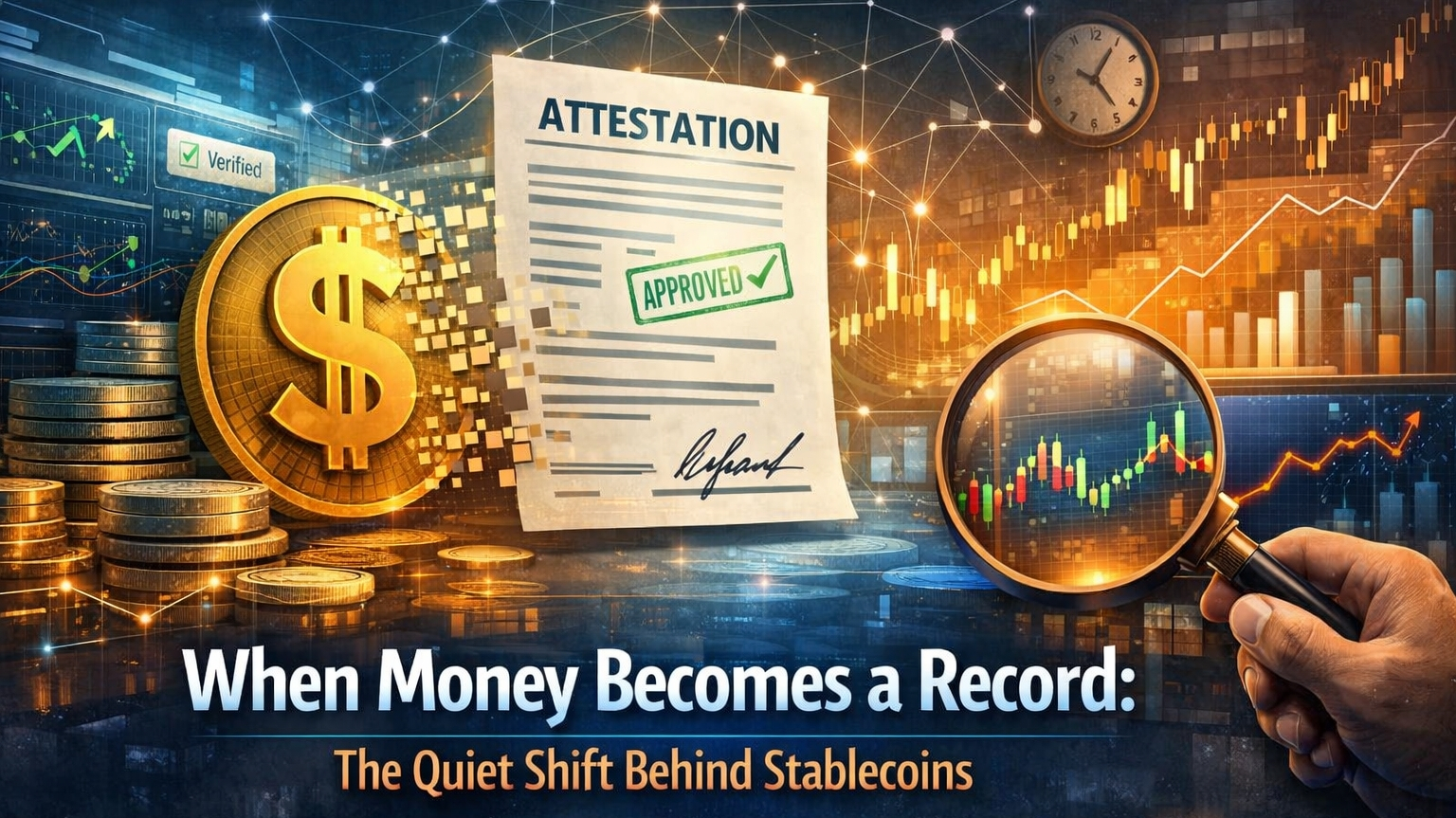

It helps to start from a simple place: money, at least in its digital form, is less a thing than a promise that keeps getting restated. A stablecoin makes that especially visible. It is not trying to be value on its own; it is trying to behave like a reliable reference to value somewhere else. Every transfer, every balance, every redemption request is built on top of that ongoing claim that the reference still holds.
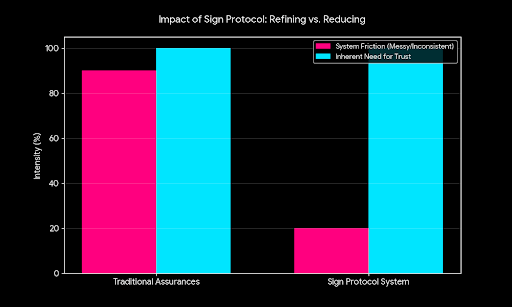
What Sign Protocol does is step into that layer of claims and give it structure. Instead of loose assurances scattered across systems, it encourages a world where statements are formalized, signed, and made portable. At a glance, that feels like progress. It removes some of the guesswork. It creates a shared language for saying, “this is true right now, according to this issuer, under these conditions.
But the more you sit with it, the more you notice that the system is not actually reducing the need for trust. It is refining how trust is expressed.
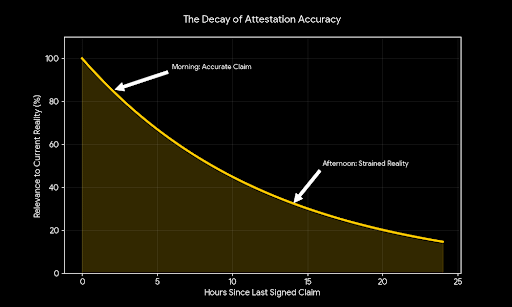
Stablecoins don’t struggle because information is missing. They struggle because information ages quickly. A reserve position can be accurate in the morning and strained by the afternoon. A policy can feel stable until it meets a situation it wasn’t designed for. The problem is not whether a claim can be written clearly; it’s whether that claim can keep up with a world that doesn’t stay still.
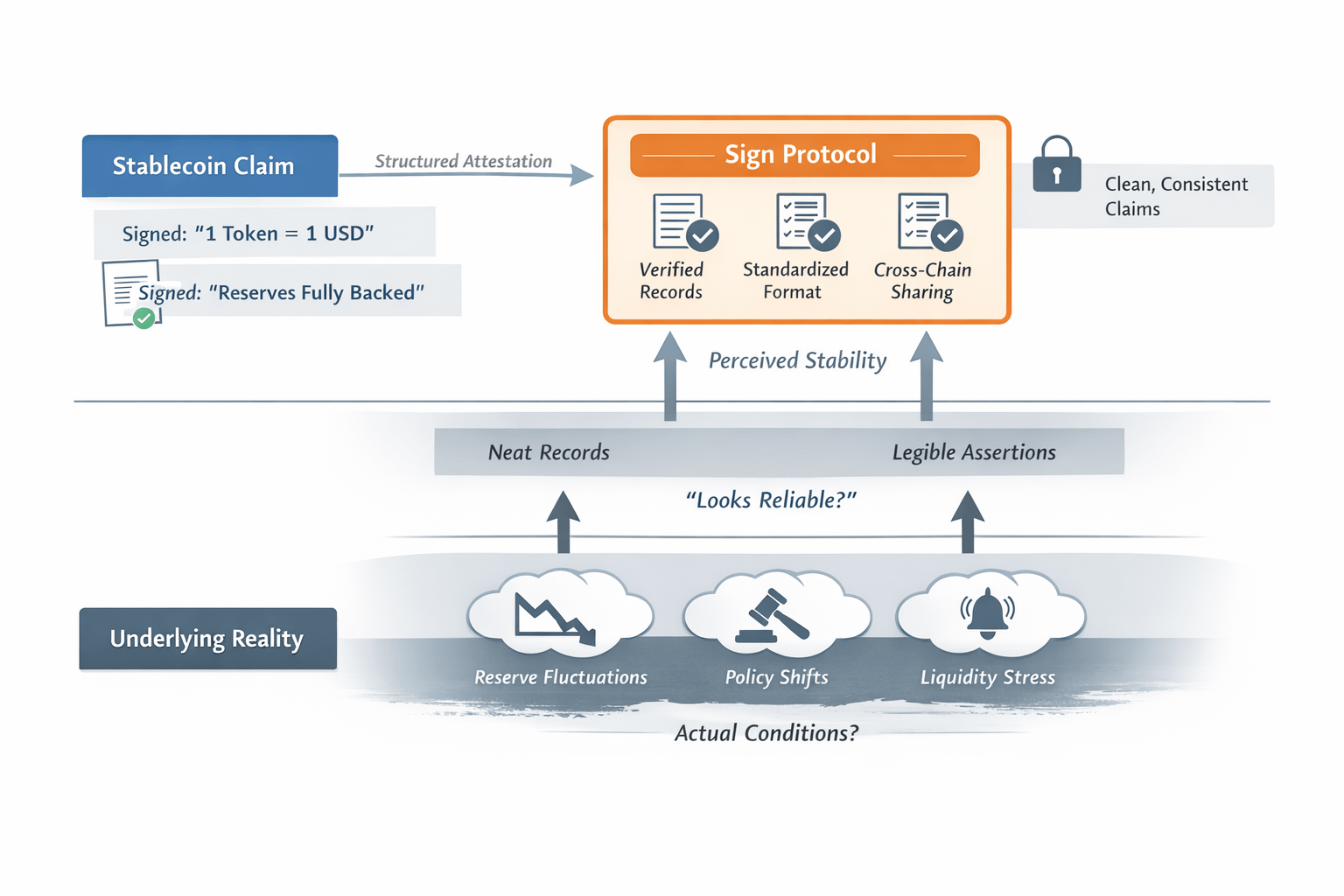
Sign Protocol makes claims easier to write, easier to verify, and easier to share across contexts. That matters. It lowers friction in a system that has historically been messy and inconsistent. But clarity has a side effect. When something is well-structured and easy to read, it begins to feel dependable, even if what it describes is still shifting underneath.
That’s where the tension quietly builds.
If a stablecoin says it is backed, the real question is not how that statement is formatted or where it is stored. The real question is what happens when that backing is tested. Does the claim adjust smoothly? Does it lag behind reality? Does it get rewritten under pressure? A protocol for attestations can record each of those moments with precision, but it cannot prevent them from happening.
Over time, a system like this can subtly change behavior. When participants know that every meaningful action becomes a signed, structured claim, they begin to operate with that output in mind. Not necessarily in a deceptive way, but in a way that prioritizes producing claims that are clean, defensible, and easy to validate. The record becomes part of the product. And when the record looks coherent, it can mask how much negotiation and adjustment is happening behind it.
This is not a flaw so much as a reality of systems that try to organize complexity. There is real value in making claims consistent and portable. Without that, every integration becomes a reconstruction effort, every verification a bespoke exercise. Sign Protocol reduces that friction. It gives the ecosystem a way to speak more clearly to itself.
But speaking clearly is not the same as being stable.
In calm conditions, the difference barely shows. Most of the time, stablecoins don’t face sustained pressure. The claims align closely enough with reality that the system feels solid. It is only when conditions tighten when liquidity becomes constrained, when redemptions accelerate, when external forces start shaping internal decisions—that the gap becomes visible. And in those moments, the question is no longer whether the claims are well-structured. It is whether they still mean what they meant when they were first made.
Sign Protocol can make that shift easier to observe. It can show how claims evolve, who updates them, and how quickly they respond to change. That kind of visibility is useful. But it also reveals something more fundamental: the protocol is not stabilizing the system itself. It is stabilizing how the system describes itself.
Whether that distinction matters depends on how the system behaves when it is under real strain. If the structure of claims helps participants react faster, coordinate better, and maintain alignment with reality, then it becomes more than just a cleaner interface it becomes part of the system’s resilience. But if the structure mainly makes the system look orderly while the underlying conditions remain volatile, then it risks becoming a layer that organizes uncertainty rather than resolving it.
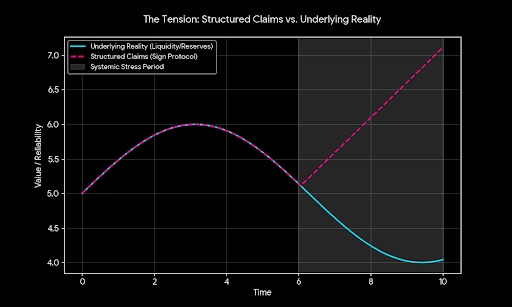
The outcome doesn’t hinge on how convincing the design is or how clean the narrative feels. It hinges on whether, when the pressure comes, the claims continue to track reality closely enough to be trusted not just as records of what was said, but as signals of what can still be done.