
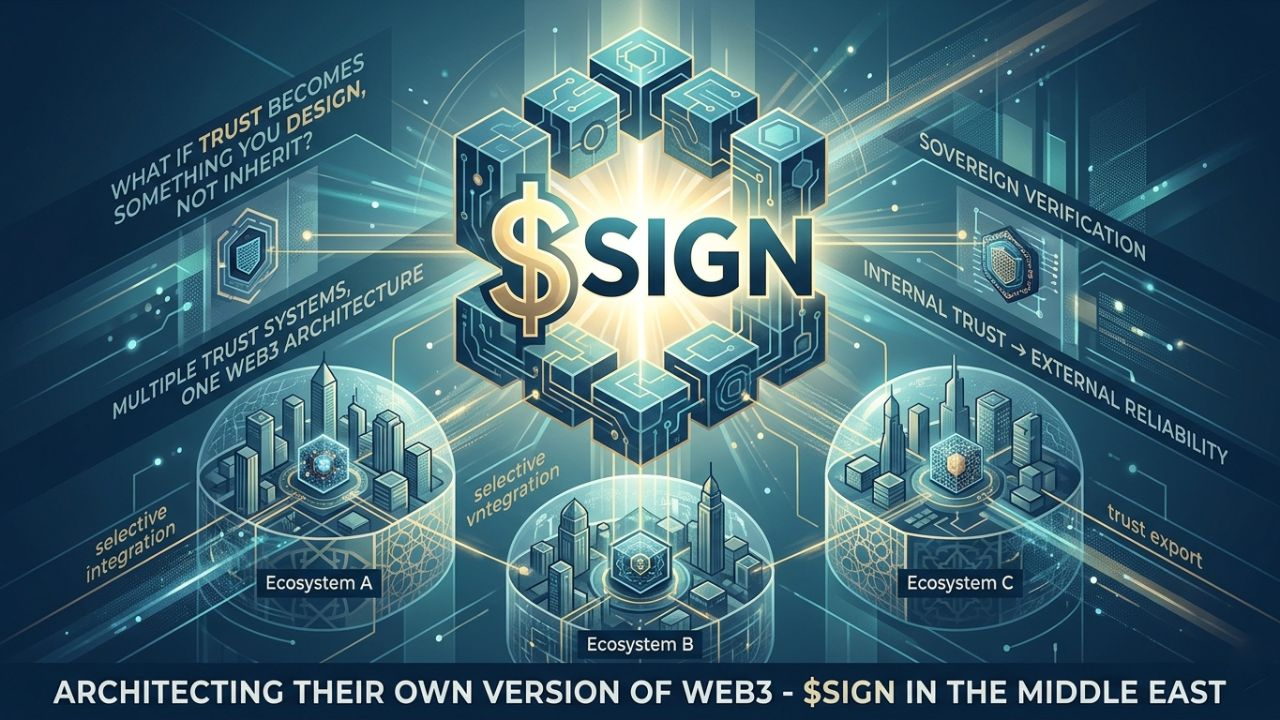
We’ve been assuming one system, one standard, one way to verify everything. But when you look at how the Middle East operates, that assumption feels off.
Strong focus on sovereignty - Independent economic direction - Selective integration, not blind adoption
So why would such regions rely on a shared global verification layer?
That’s where $SIGN starts to feel different. It doesn’t try to unify everyone under one rulebook, instead it allows each ecosystem to define how trust works on its own terms, from identity to agreements to validation logic.
And here’s the part that got me thinking… most projects are still trying to gain trust from users, but SIGN building a system where trust can be created internally and exported externally
That flips the whole perspective. Instead of asking “can we trust this system?” the question becomes “who designed this trust system, and why?”
In a region like the Middle East, that difference matters more than people think. Because control isn’t just about assets, it’s about who validates reality in your system.
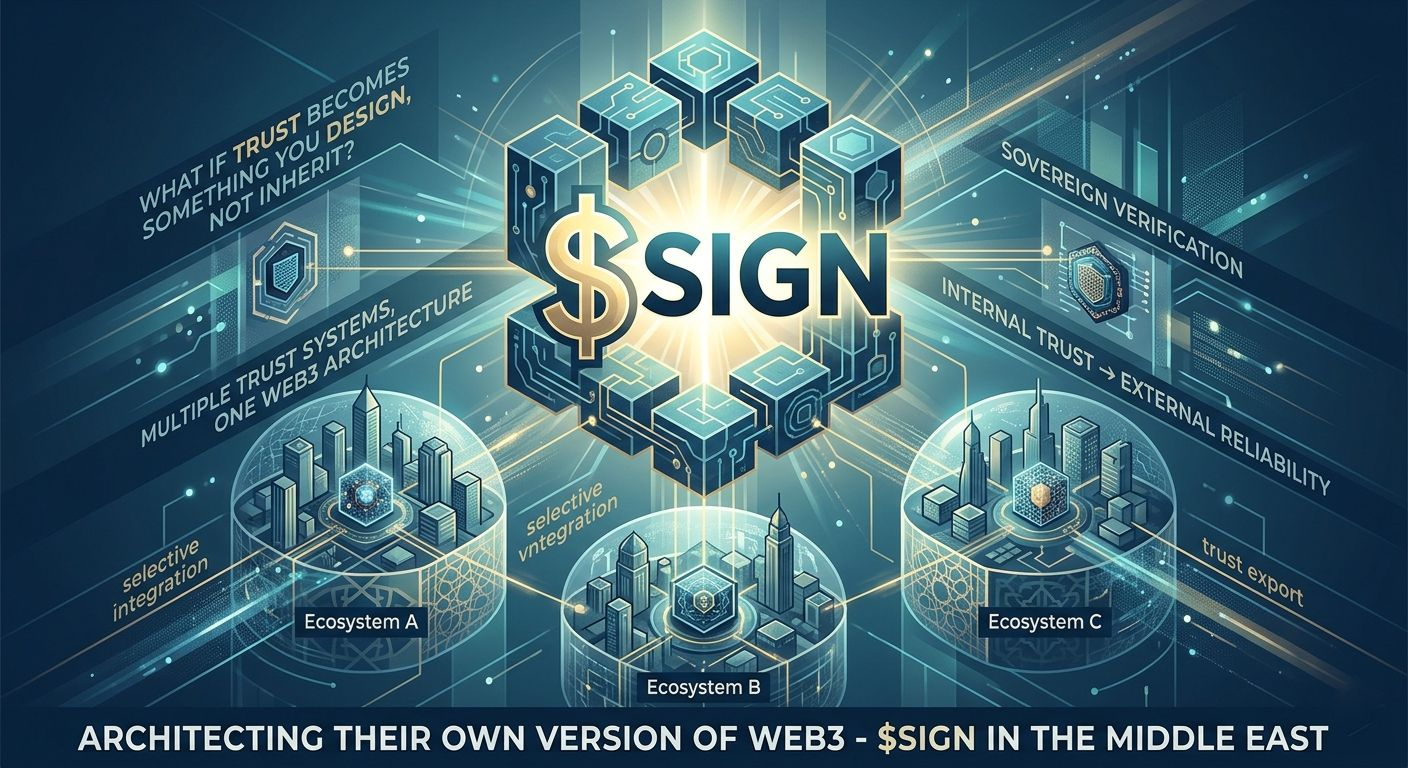
On one side, the market is chasing liquidity and short-term narratives, on the other side, $SIGN quietly aligning with a deeper shift where regions don’t just join Web3, they architect their own version of it.