
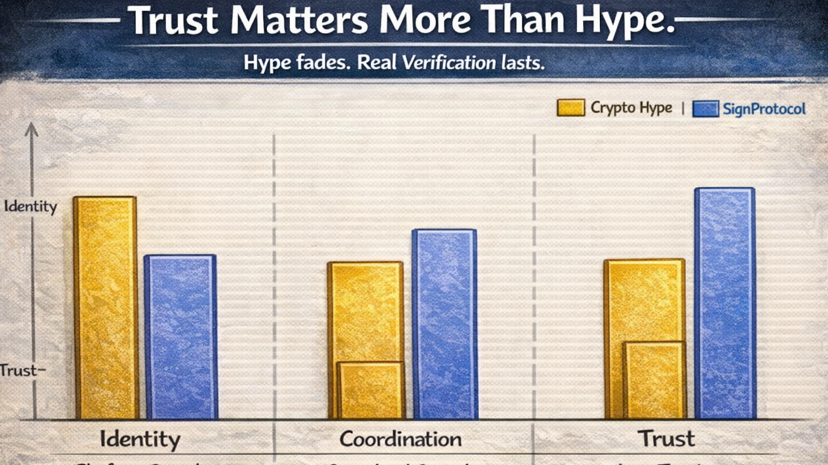

@SignOfficial #SignDigitalSovereignInfra $SIGN
I have seen many crypto projects try to become important by being loud.
They know how to attract attention quickly. They create big narratives, push exciting promises, and make everything feel urgent. For a moment, it works. People start watching, talking, reposting, and imagining big outcomes. But after enough time in this space, you start noticing something important. Attention is easy to create. Lasting value is not.
That is exactly why @SignOfficial stands out to me in a different way.
It does not feel like a project built mainly for short term excitement. It feels like something built around a real weakness inside the digital world. And that weakness is trust.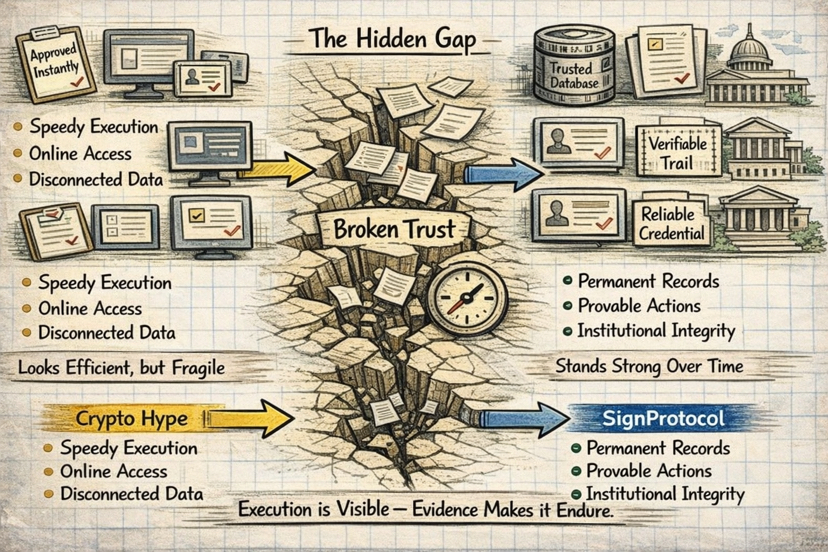
For all the progress technology has made, trust online still feels fragile. We live in a time where almost everything moves through screens. Documents, agreements, identities, records, rewards, access, and even reputation are increasingly digital. But despite all of that progress, people still keep running into the same question again and again: how do we know something is real?
That question sounds simple, but it sits underneath almost everything.
How do you know a credential is valid?
How do you know a signature is authentic?
How do you know a wallet is eligible?
How do you know a record has not been altered?
How do you know a claim is more than just a claim?
The truth is that many digital systems still rely on weak forms of proof. Too much trust is placed in screenshots, editable files, isolated databases, unofficial confirmations, or social reputation. In smaller environments, that may seem manageable. But once systems begin to scale across borders, institutions, communities, and blockchains, weak trust becomes a real structural problem.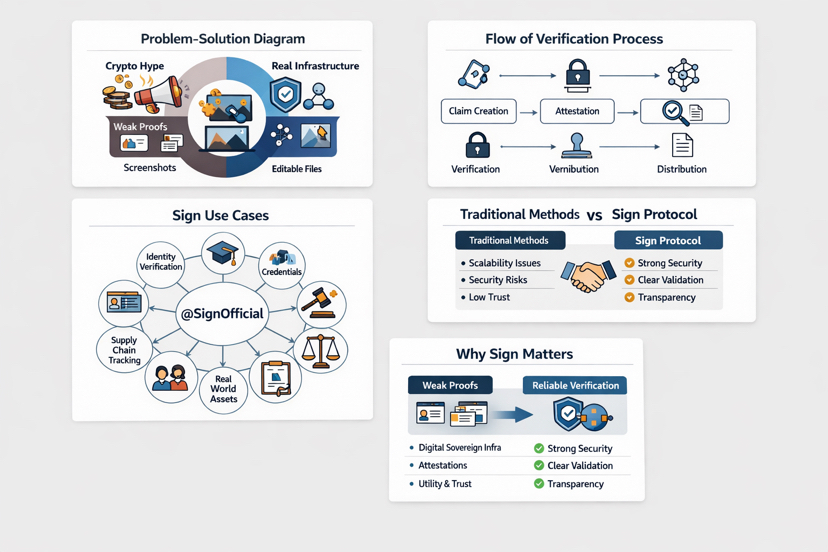
That is where Sign starts to feel important.
What makes the project interesting to me is that it is building around verification, attestation, and distribution. These are not the loudest parts of crypto, but they may be some of the most necessary. Without strong ways to verify information and coordinate value, digital ecosystems remain messy, inefficient, and easy to manipulate. Sign Protocol gives this problem a more serious answer.
At its core, the idea is powerful because it is practical. Instead of leaving important claims floating in uncertainty, it creates a framework where those claims can become verifiable. That changes the feeling of the system itself. A digital environment becomes much stronger when truth is not only stated, but structured in a way that can be checked. 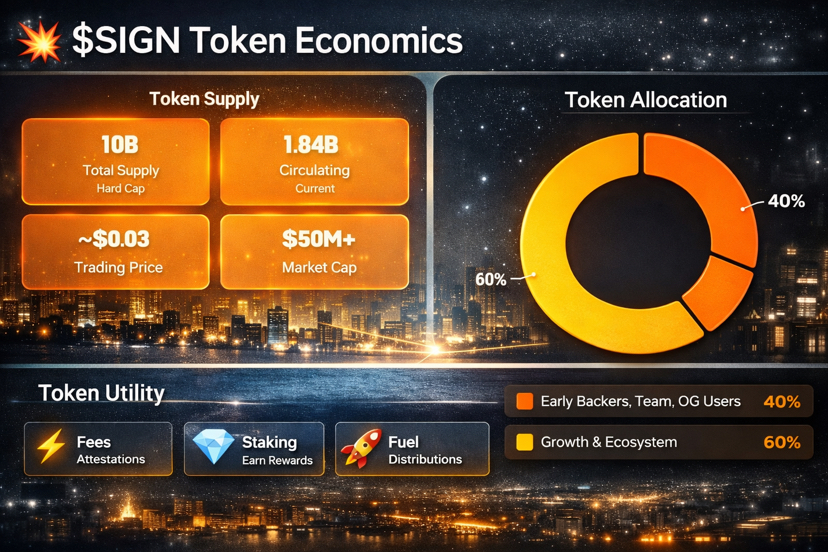 That matters more than hype ever will.
One reason I keep paying attention to $SIGN is because the project does not feel trapped inside one small use case. It touches something broader. Verification is not only about identity. It can connect to credentials, access, records, governance, eligibility, compliance, and token distribution. That gives Sign a wider relevance than many projects that depend on one temporary narrative to stay visible.
To me, that makes it feel less like a trend and more like infrastructure.
And infrastructure often gets underestimated because it is not always flashy. It does not always create instant emotional excitement. But the systems that last are usually the ones that make everything around them work better. They remove friction. They create clarity. They reduce uncertainty. They make participation more credible. In the long run, that kind of value becomes much more important than temporary attention. Another reason the project feels more serious is that it does not come across as pure theory. There is a visible effort to make these ideas usable. That part matters a lot. In crypto, a concept can sound brilliant and still fail if people cannot actually use it in a meaningful way. Utility is what separates a strong idea from a lasting one.
That is why I respect projects that try to turn trust into something operational instead of something abstract.
also think timing matters here.
The digital space is moving toward a stage where stronger proof is becoming more necessary, not less. More conversations are happening around digital identity, compliance, distribution systems, real world assets, governance, and cross platform reputation. As these systems become more interconnected, the old ways of handling trust start to look weaker. Manual verification does not scale well. Informal trust breaks easily. Fragmented records create friction. And without better infrastructure, growth becomes harder to manage.
That is why Sign feels aligned with where things are going.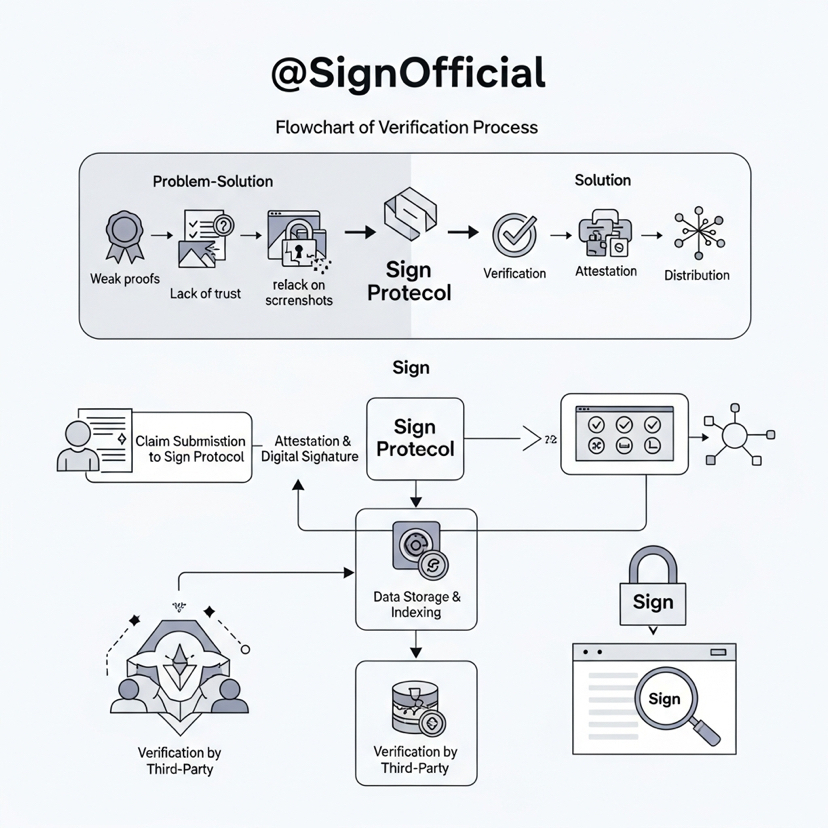
It is not trying to win by being the loudest project in the room. It feels more focused on becoming useful in areas that the digital world will continue needing over time. That gives it a kind of depth that many projects never reach.
also appreciate that the project gives off a more grounded impression. In crypto, it is common to see communities built mostly around price, excitement, and short term incentives. But projects that touch identity, verification, and contribution often create a different kind of value around participation. They can make users feel recognized, eligible, and connected to a system in a more meaningful way. That kind of depth is not easy to build, and it usually matters more than people first realize.
For me, this is the real reason @SignOfficial keeps standing out.
It is solving a problem that already exists.
It is working in a category that becomes more important as digital systems mature.
And it feels connected to utility in a way that does not disappear when the noise fades.
Of course, no project is without risk. Crypto changes fast. Regulation shifts. Markets overreact. Narratives move in unexpected directions. But even with all of that, I always pay closer attention to projects whose purpose still makes sense when the excitement is removed.
That is the test I come back to.
If the hype disappeared tomorrow, would this still matter?
For many projects, the answer becomes unclear very quickly.
For Sign, I think the answer is much stronger.
Because it does not feel built only to be discussed.
It feels built to be used.
And in a market full of noise, that difference means everything.