
@SignOfficial I’ll be honest, every time I see “new Layer 1” my brain kind of shuts off for a second. Not because it’s useless, but because we’ve heard this exact pitch like fifty times now. Faster chain, better throughput, fixes everything, this time it’s different. Sure.
But also… the problem never really went away.
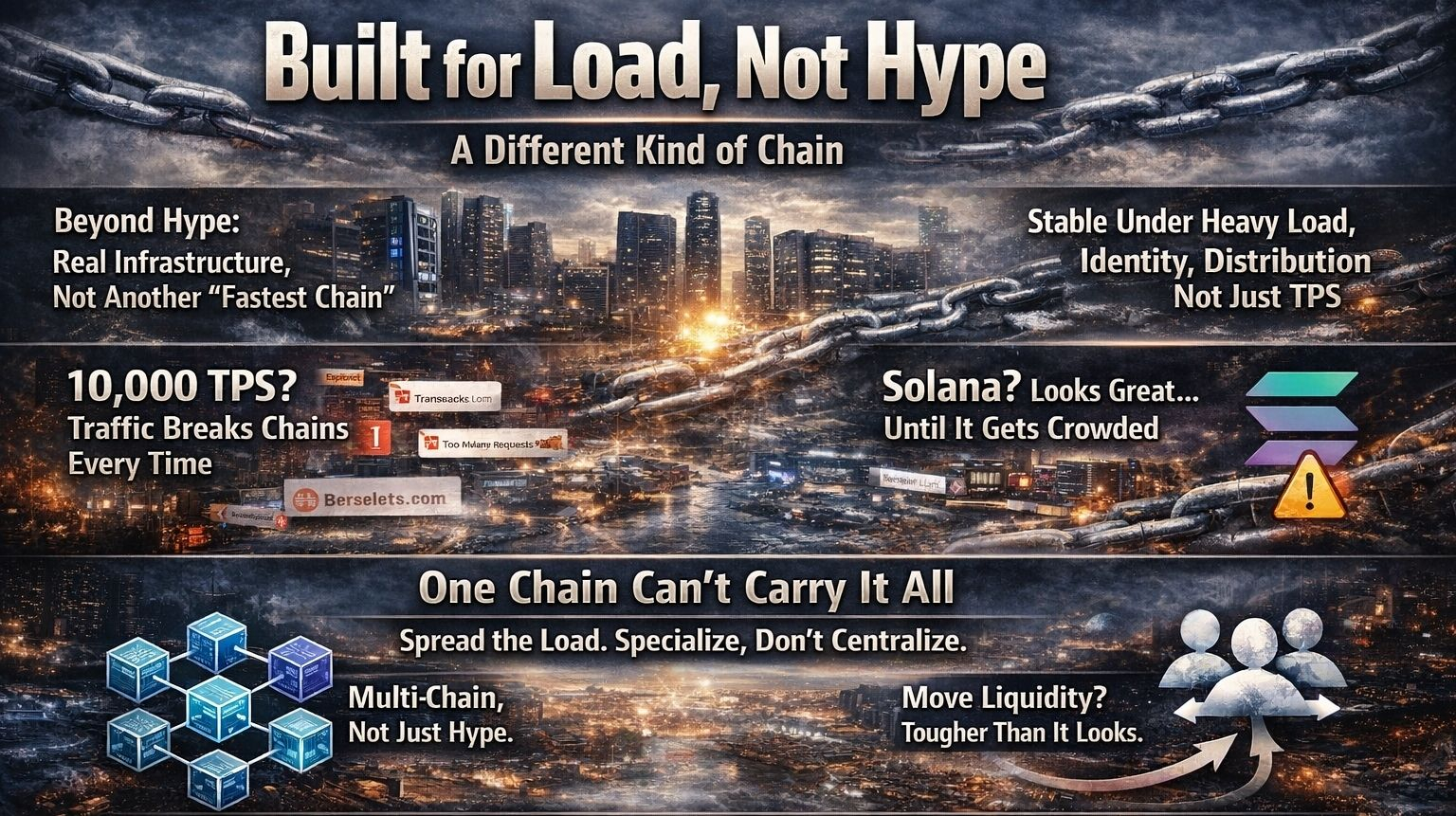
It’s not just bad tech that breaks blockchains. It’s traffic. Real usage. People actually showing up at the same time and doing things. That’s where everything starts to crack. Fees spike, transactions stall, UX goes out the window. Suddenly that “10,000 TPS” number feels like it was written on a napkin.
And yeah, Solana feels smooth. When it works, it really works. Fast, cheap, kind of what people expected crypto to feel like years ago. But we’ve also seen what happens when load ramps up. Things get weird. Not unusable, but not exactly stable either. It’s not a dig, it’s just reality. Scale is hard.
So when something like SIGN shows up positioning itself as infrastructure instead of just another “we’re the fastest chain” narrative, I at least pay a bit more attention. Credential verification, token distribution, stuff that actually sits underneath everything else instead of trying to be the next casino hub. That part makes sense.
Because the obvious answer, whether people want to admit it or not, is that one chain probably isn’t enough. Not if this thing is supposed to go anywhere beyond niche communities and rotating hype cycles. You spread load. You specialize. You stop pretending a single network will carry the entire ecosystem forever.
Still, the hard part isn’t building it. It’s getting people to use it.
Liquidity doesn’t move easily. Users don’t either. Everyone talks about multi-chain, but most people just stay where the action already is. That inertia is real. You can have solid tech, good design, even a clear purpose, and still end up empty because nobody bothered to bridge over.
That’s the part that makes me hesitate.
But at the same time, infrastructure plays are usually slow burns. They don’t explode overnight. They either quietly become necessary, or they fade out without anyone noticing.
SIGN feels like it’s at least aiming at a real problem instead of chasing the same recycled narrative. That doesn’t guarantee anything. But it’s more grounded than another “revolutionary Layer 1” that’s really just a slightly different version of the last one.
I don’t know if it wins. I don’t know if it even gets traction.
But the idea that we need better ways to handle identity, distribution, and load across chains… that part is hard to argue with.
It might work. Or nobody shows up.
@SignOfficial #SignDigitalSovereignInfra $SIGN
