
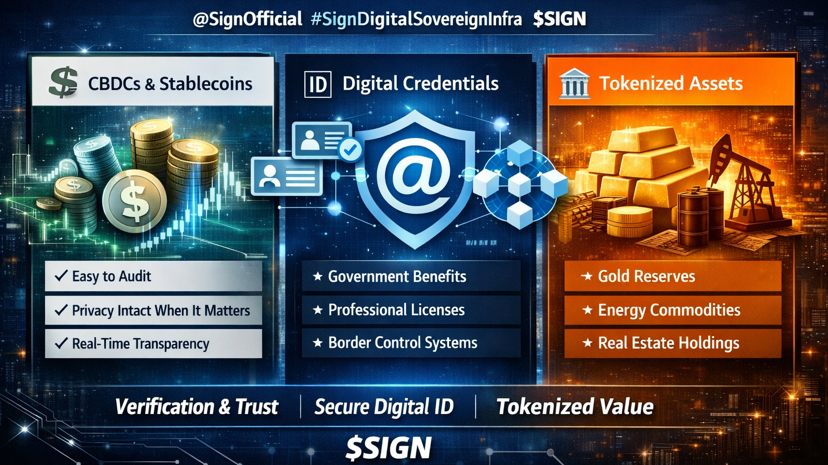

@SignOfficial #SignDigitalSovereignInfra $SIGN
There is no shortage of crypto projects that know how to be seen.
Some of them arrive with loud branding, oversized promises, and the kind of energy that makes people feel they need to react immediately or risk missing something important. For a while, that approach works. Attention builds fast. Conversations spread. Timelines fill up. But once the excitement cools down, many of those same projects begin to feel much smaller than they first appeared.That pattern has become so common that it is hard not to notice.
That is exactly why Sign stands out to me in a different way.
It does not come across like a project trying to force relevance through noise. It feels more like something built around a weakness that already exists across the digital world, whether people talk about it directly or not. The weakness is trust. Not trust as a slogan, but trust as a working part of systems people rely on every day.
The internet has made sharing, publishing, moving assets, and connecting across borders easier than ever. But the ability to prove that something is valid, authentic, current, and reliable still feels far less mature than the rest of the system around it. That gap creates more problems than people realize.A document can be copied.
A record can be altered.
A claim can be repeated without proof.
A wallet can receive something, but that does not automatically explain why it qualified.
A profile can look legitimate while still offering no real foundation for trust.
This is where Sign starts to look important.
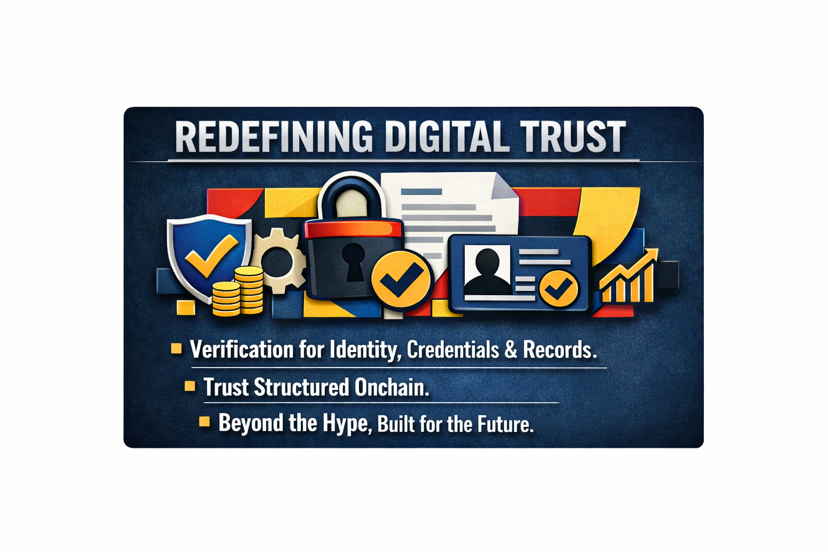
What makes the project meaningful to me is that it focuses on verification, attestations, and structured distribution. That may not be the flashiest part of crypto, but it is one of the parts that determines whether digital systems actually become dependable over time. In a space that often rewards attention first and substance later, Sign feels like it is working in the opposite direction. It is trying to strengthen the layer that many other projects simply assume will somehow take care of itself.
That matters because weak proof eventually creates weak systems.
If identity cannot be verified properly, access becomes messy.
If records cannot be trusted, coordination becomes fragile.
If eligibility cannot be checked clearly, distribution becomes controversial.
If important claims remain easy to imitate, then scale only multiplies confusion.
A lot of crypto discussion still revolves around speed, price action, or whatever narrative is currently moving the market. But underneath all of that, there is a quieter question that serious systems always return to: how do we make trust more operational instead of leaving it vague?
That is one of the main reasons I keep paying attention to @SignOfficial.
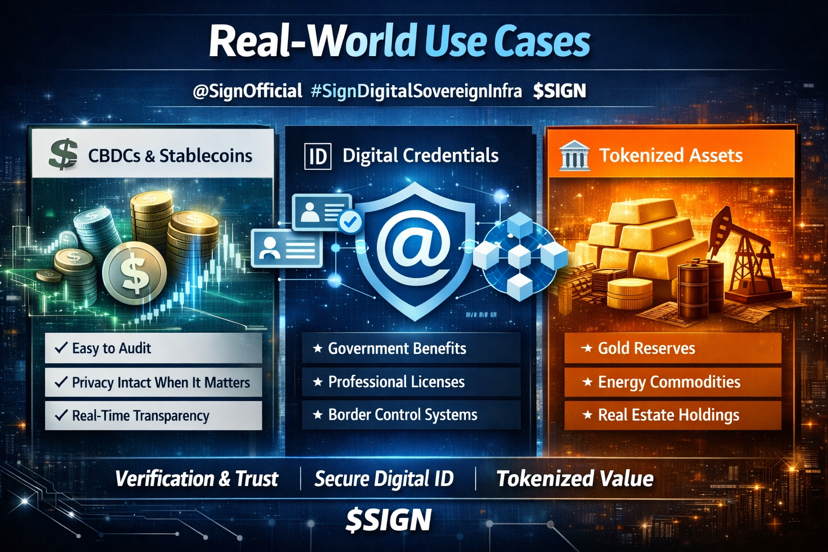
The project does not seem locked into a narrow story. Its relevance can stretch across credentials, digital identity, records, governance, claims, and token distribution. That gives it more staying power than projects that depend only on short-term speculation. It feels less like something designed for one cycle and more like something that could remain useful as digital systems become more complex.
That broader usefulness is a big part of why it feels different.
A lot of crypto projects sound exciting when they are described in theory. The real question is whether that idea can become practical. Can people actually use it? Can organizations rely on it? Can the product move from concept into an everyday layer of coordination?
That is where Sign becomes more interesting.
It is not just talking about proof in an abstract way. It is building around how proof can be created, checked, and used inside real workflows. That shift from concept to function is important. In crypto, people often overvalue vision and undervalue implementation. But long-term relevance usually belongs to projects that can make their ideas usable, not just impressive.
Another thing I find meaningful is that Sign does not feel disconnected from the people around it. Many crypto communities look active from a distance, but once you spend enough time there, the activity often feels thin. It becomes obvious that much of the engagement is driven by short-term rewards, routine promotion, or surface-level enthusiasm. With Sign, there seems to be more space for contribution, recognition, and real participation. That gives the ecosystem a different kind of depth.
And I think that matters more in 2026 than it did before.
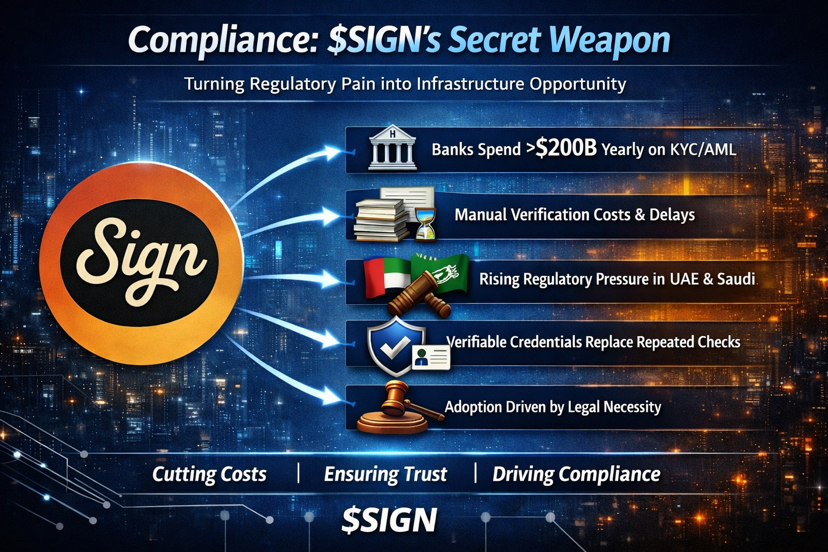
The market is gradually moving back toward more serious conversations. Digital identity is becoming harder to ignore. Verification is becoming more important. Distribution models are being examined more carefully. Compliance, records, and structured eligibility are no longer side topics. They are becoming part of the main discussion around what digital systems need if they are going to mature.
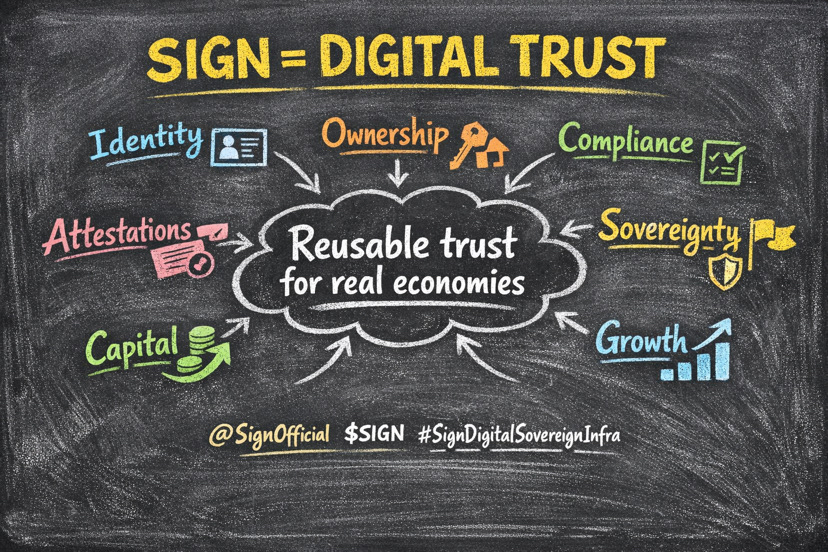
When that shift happens, projects built around clear utility start to look stronger.
That is why Sign does not feel temporary to me.
It feels aligned with a need that keeps growing.
The more digital systems expand, the more they need stronger ways to establish what is true, who qualifies, what is valid, and how value should move. Without that, growth becomes messy. Systems become harder to trust. Coordination becomes more political, more manual, and more vulnerable to confusion. Sign seems to be addressing that exact pressure point.
To me, that is where its real value sits.
Not in artificial excitement.
Not in exaggerated promises.
Not in the idea of being the loudest project in the room.
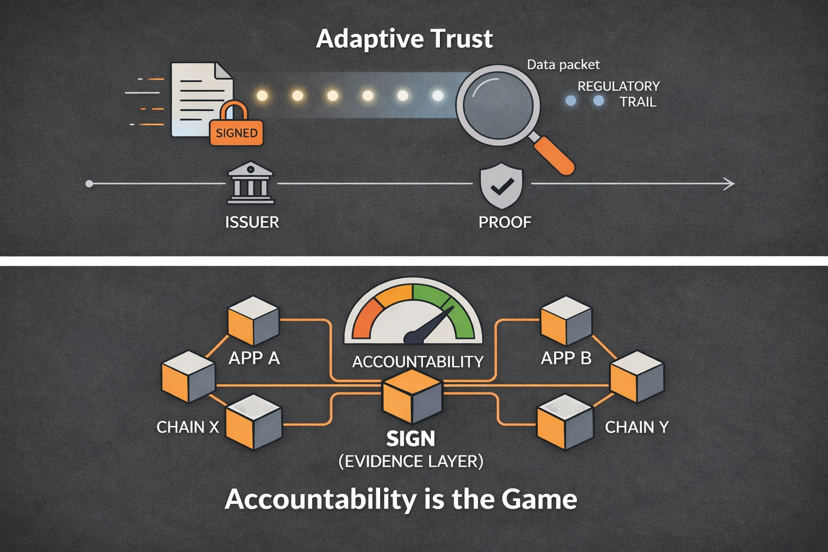
Its value comes from working on something that many systems will eventually need, whether they recognize it early or not.
Of course, being useful does not remove risk. Crypto still changes quickly. Narratives can move without warning. Regulatory pressure can reshape entire sectors. Markets can ignore substance for long periods of time. None of that disappears. But when I look at projects in this space, I pay more attention to the ones that still make sense even after the hype fades.
That is the standard I keep coming back to.
And by that standard, Sign feels stronger than most.
It feels like a project built with a practical purpose.
It feels like infrastructure with range.
It feels like something designed to support trust where trust is usually weakest.
And in a market full of projects that want to be noticed, that may be exactly why this one feels worth noticing.