
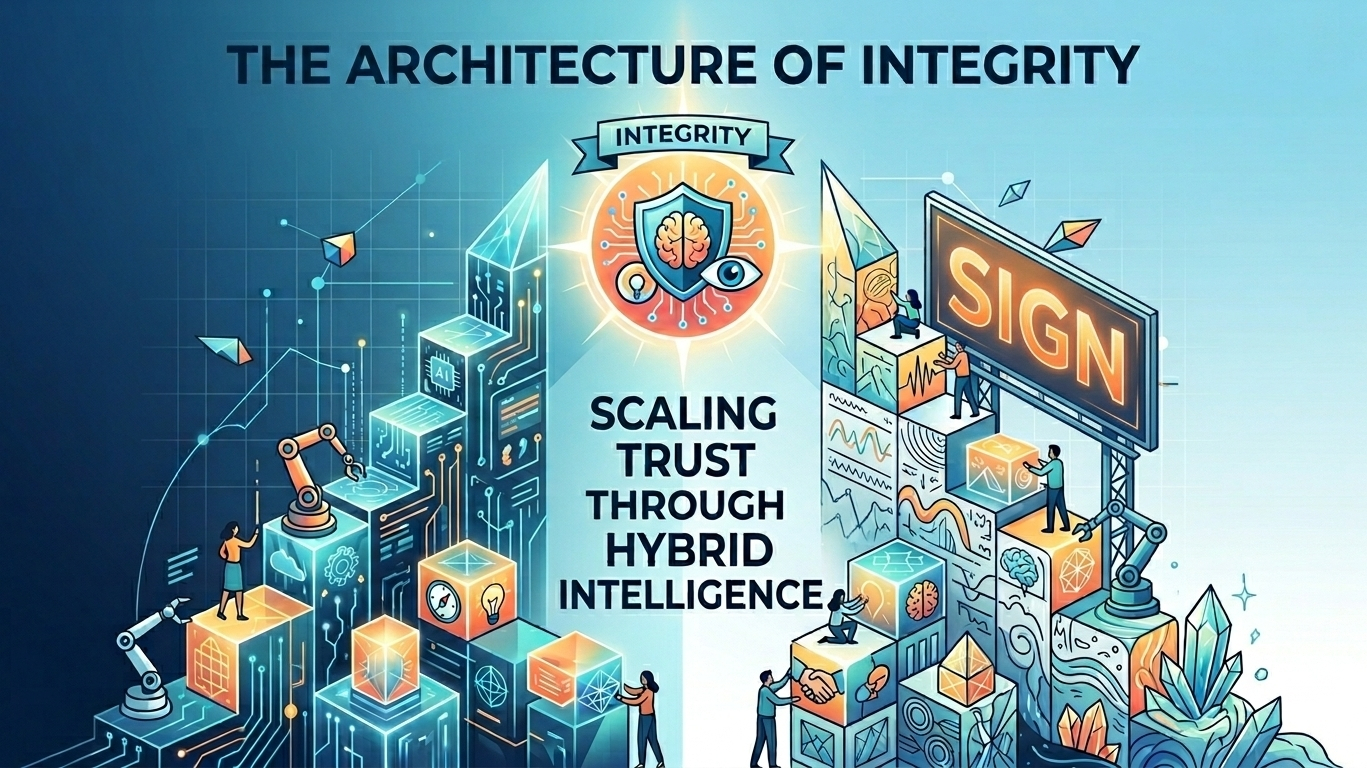

In a digital landscape that is rapidly shifting, organizations are no longer forced to choose between the glass house of transparency and the black box of total secrecy. The expectation has shifted, modern systems must be open enough to earn public trust, yet resilient enough to protect sensitive assets and satisfy rigorous global regulations. This is where the SIGN deployment architecture moves from theory into practical high stakes application. 🚀🚀

Rather than adhering to a rigid, one size fits all ideology, SIGN is built for the friction of the real world. It acknowledges that a central bank, a community led DAO and a global logistics firm all face vastly different operational demands. By anchoring itself in three core pillars 𝐭𝐫𝐚𝐧𝐬𝐩𝐚𝐫𝐞𝐧𝐜𝐲, 𝐜𝐨𝐧𝐟𝐢𝐝𝐞𝐧𝐭𝐢𝐚𝐥𝐢𝐭𝐲 and 𝐬𝐜𝐚𝐥𝐚𝐛𝐥𝐞 𝐭𝐫𝐮𝐬𝐭 the architecture provides a foundation that doesn't just store data, but validates the integrity of the entire ecosystem as it grows.
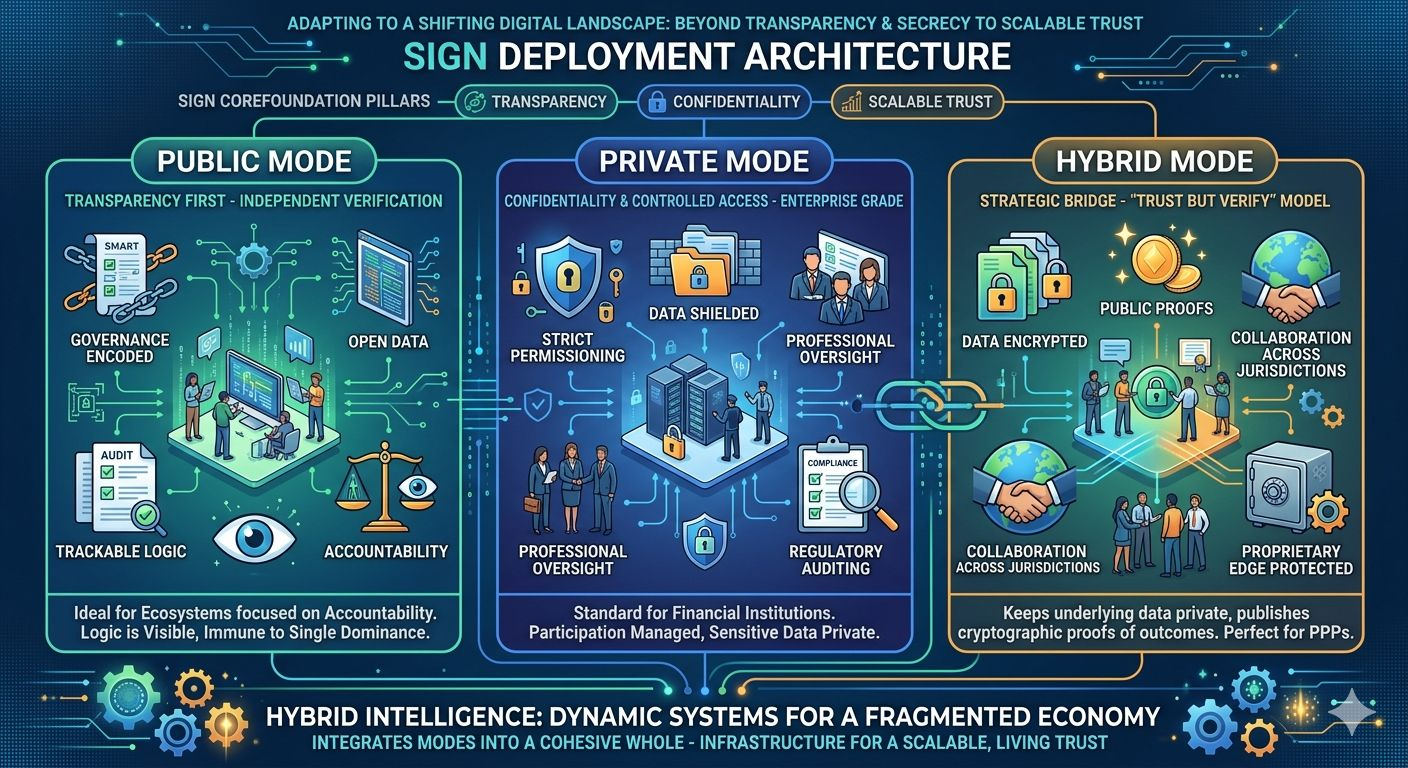
One of the most potent features of this framework is its multi modal flexibility. It offers three distinct environments public, private and hybrid allowing organizations to deploy based on their specific appetite for openness or control.
Public Mode is the engine for transparency first initiatives. It is designed for ecosystems where accountability is the primary currency. Here, governance isn't a suggestion, it is encoded into the system through chain parameters or smart contracts. This allows for independent verification, ensuring that while individual privacy is respected, the logic of the system remains visible, trackable and immune to the whims of a single dominant entity.
Private Mode shifts the focus to confidentiality and controlled access, making it the standard for financial institutions and enterprise grade networks. In this environment, security is paramount. Participation is managed through strict permissioning and membership controls, ensuring that sensitive data remains shielded from unauthorized eyes. Governance is enforced through internal structures that allow for professional oversight and regulatory auditing without exposing the internal workings to the open web.
Hybrid Mode acts as the strategic bridge, blending the best of both worlds. It allows an organization to keep its underlying data encrypted and private while simultaneously publishing cryptographic proofs of its outcomes for public verification. This creates a "trust but verify" model that is ideal for public private partnerships. It enables collaboration across different jurisdictions and industries without requiring any party to sacrifice their proprietary edge or their users' privacy.
Ultimately, SIGN represents a shift toward "Hybrid Intelligence." This is the recognition that in a fragmented global economy systems must be dynamic enough to evolve. By integrating these three modes into a cohesive whole SIGN provides the infrastructure for a future where trust is not a static goal, but a scalable, living part of the digital fabric.
@SignOfficial #signdigitalsovereigninfra $SIGN #SignDigitalSovereignInfra