
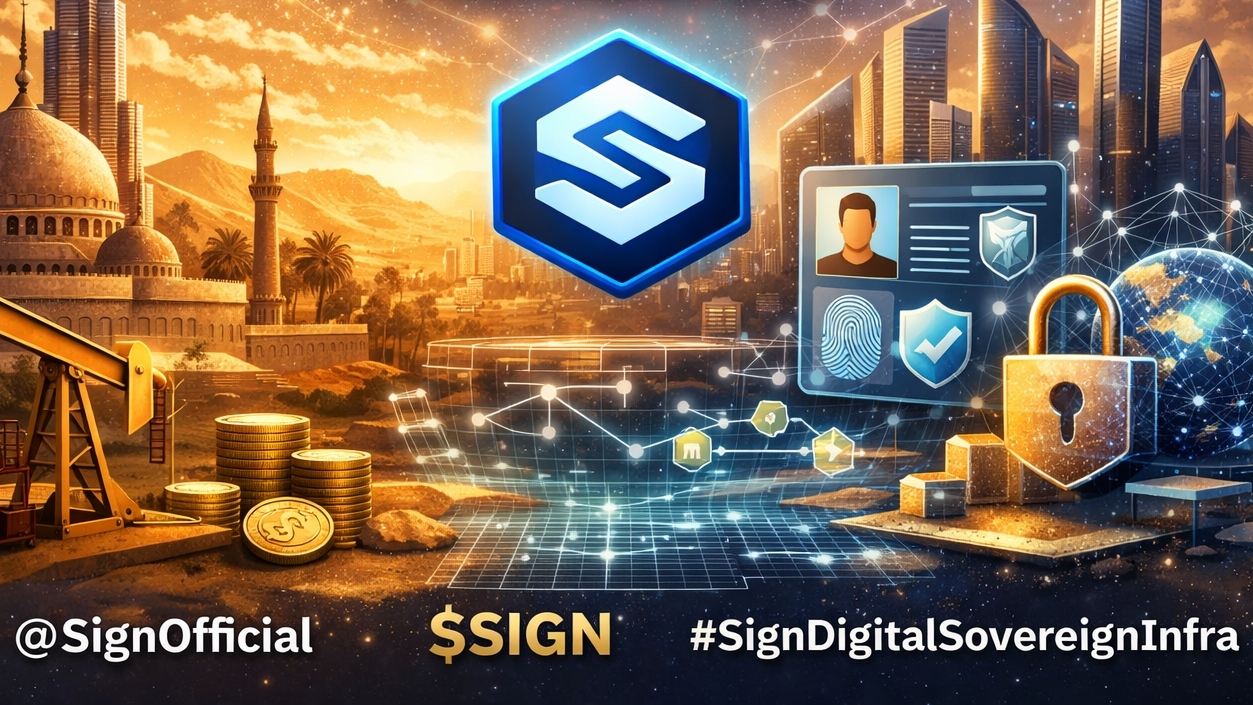
The Middle East is rapidly transforming into a global hub for digital innovation, and one of the key drivers of this evolution is the concept of digital sovereignty. Governments and institutions across the region are increasingly prioritizing control over their digital identity systems, data ownership, and secure infrastructure. In this context, @SignOfficial is emerging as a foundational layer for enabling this transformation through its powerful and flexible protocol.
At its core, $SIGN provides a decentralized framework for verifiable credentials, identity systems, and trust infrastructure. This is particularly relevant for Middle Eastern economies where cross-border trade, financial inclusion, and government-led digital initiatives require secure and interoperable systems. By leveraging blockchain technology, Sign ensures transparency, immutability, and user ownership of data—key pillars for building trust in digital ecosystems.
Moreover, $SIGN empowers enterprises and governments to design customized solutions that align with their regulatory environments while maintaining global compatibility. This balance between sovereignty and interoperability is critical for sustainable economic growth in the region. From digital identity verification to credential authentication, the applications of Sign are vast and impactful.
As countries in the Middle East continue investing in smart cities, fintech, and digital governance, infrastructure like @SignOfficial will play a decisive role in shaping the future. It is not just a protocol—it is a strategic enabler of economic resilience and innovation in the digital age.