
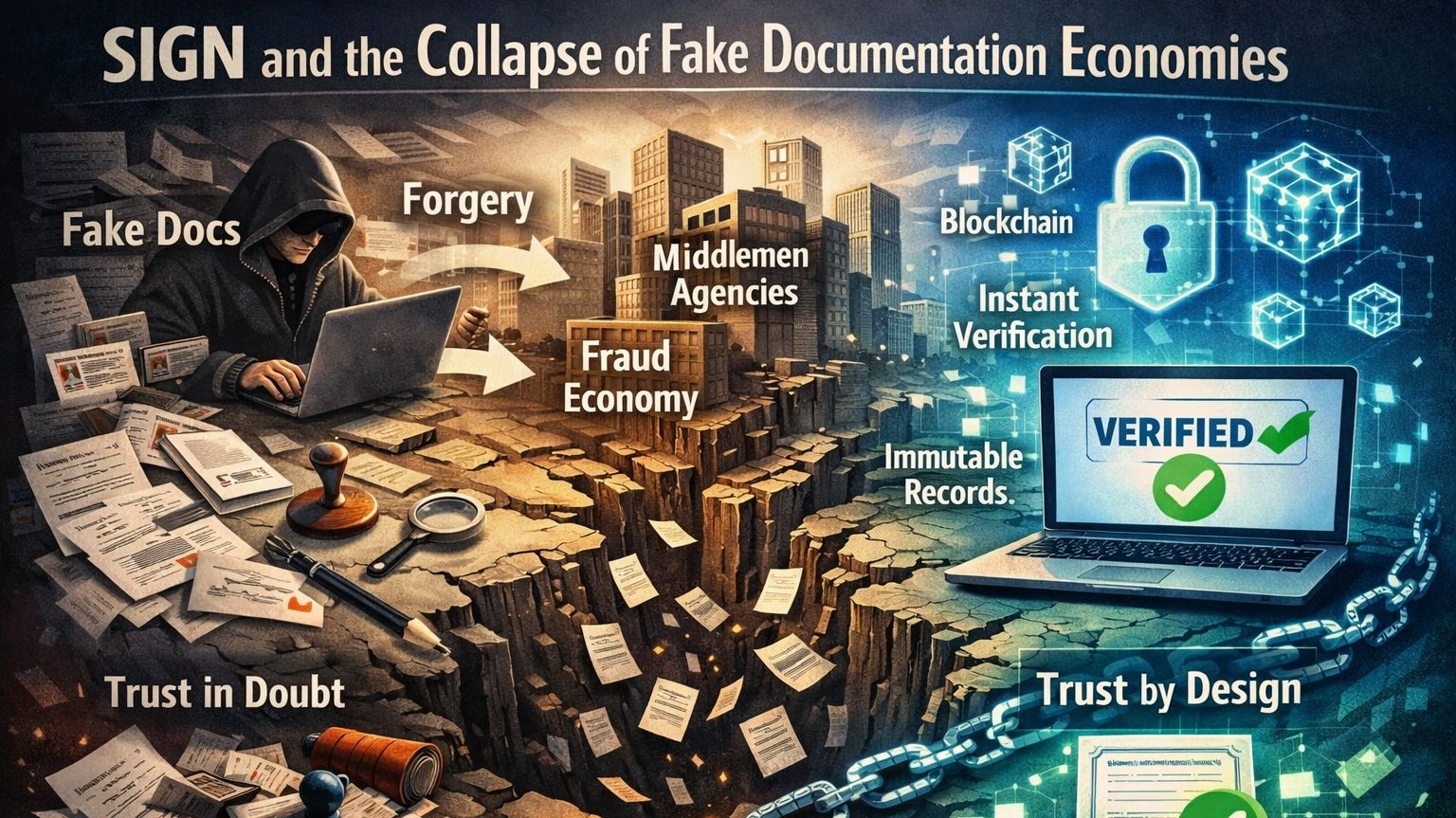

I still remember the first time I realized how much of the world quietly runs on documents that no one fully trusts.😂
It was during a small conversation with a friend who was trying to apply for a job overseas, and he laughed while saying, “Half the process is just proving I’m not lying.”
He had folders filled with certificates, identity proofs, recommendation letters, and yet every single one of them needed verification from somewhere else.
That moment stayed with me because it felt strange—why does proof always need another proof?
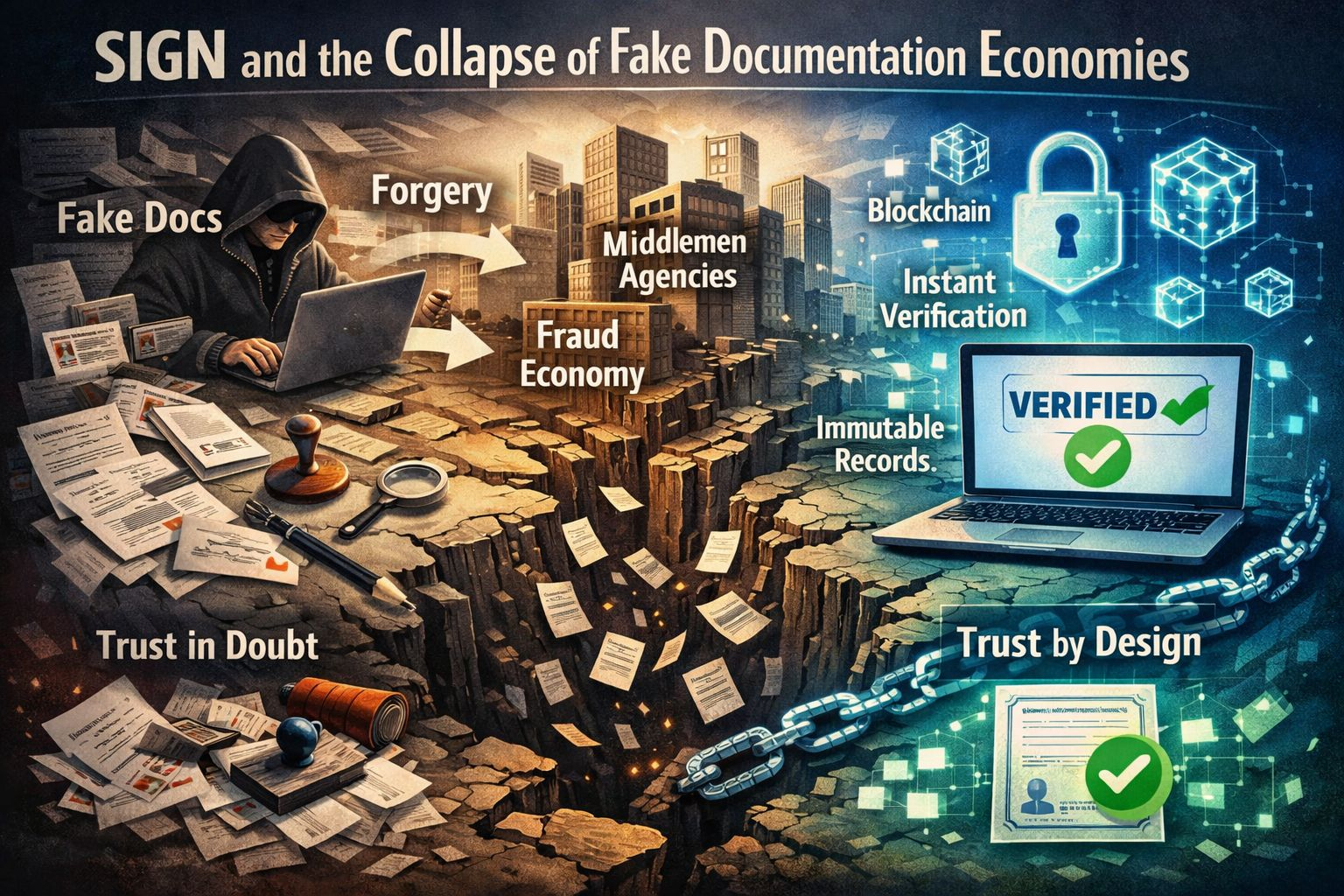
As I started noticing more, I realized this wasn’t just his problem—it was an entire hidden economy.
An economy built around verification agencies, middlemen, stamp providers, background check firms, and endless layers of approval systems.
And somewhere in the shadows of that system, another economy existed too—the fake documentation economy.
People creating forged certificates, manipulated records, edited PDFs, and counterfeit identities just to “pass” the system.
Not always out of malice, but sometimes out of survival, pressure, or opportunity.
Because when systems are slow, expensive, and fragmented, people find shortcuts.
I have seen how entire industries exist just to detect lies, while others exist just to create better ones.
It becomes a strange game—fake versus verification.
And both sides keep evolving.
But the real problem was never just fake documents.
The real problem was that truth itself was never native to the system.
Everything depended on trust after the fact.
That’s where something like SIGN starts to feel less like technology and more like a quiet shift in how reality is recorded.
I imagine a world where documents don’t need to be “checked” because they are already verifiable by design.
Where a certificate isn’t a file you upload, but a proof that can be instantly validated without calling anyone.
Where identity isn’t claimed, but proven cryptographically.
In that world, fake documentation doesn’t disappear because people become honest.
It disappears because it simply stops working.
There is no system to exploit.
No gap between claim and verification.
I think that’s what makes this shift so powerful.
It doesn’t fight fraud directly.
It removes the environment where fraud can exist.
I can almost picture the ripple effects.
Verification agencies shrinking because their role becomes automated.
Background checks becoming instant.
Recruitment becoming faster, cleaner, and less suspicious.
Even governments operating with fewer layers of paperwork and more layers of certainty.
And slowly, quietly, the fake documentation economy begins to collapse.
Not with a crash, but with irrelevance.
Because when proof is built into the system itself, there is nothing left to fake.
I find that idea both fascinating and slightly unsettling.
Because it also changes how we think about trust.
Trust is no longer a feeling or a judgment.
It becomes a property of the system.
Something that exists before interaction even begins.
And maybe that’s the biggest shift of all.
We move from a world where we ask, “Can I trust this?” to a world where that question no longer needs to be asked.
And in that silence, something old disappears.
Not just fake documents.
But the entire economy that depended on doubt.@SignOfficial #SignDigitalSovereignInfra $SIGN