

There’s something different about how S.I.G.N. presents itself.
It doesn’t promise to remove trust.
It tries to make it usable.
That shift sounds small, but it changes everything.
For years, crypto pushed the idea that trust could be minimized. Systems would replace it, code would enforce it, and institutions would slowly become irrelevant. That story worked for a while. It was simple, clean, and easy to believe in.
Reality turned out messier.
Value can move across chains, across platforms, across borders. But recognition doesn’t follow so easily. One system doesn’t automatically accept another’s proof. Identity fragments. Verification repeats. Rules collide. What should be seamless becomes slow and expensive.
This is the gap S.I.G.N. is trying to address.
Not by removing trust, but by structuring it so it can move.
That’s where the idea becomes interesting.
And also where it becomes uncomfortable.
Because the moment trust becomes something structured, it stops being neutral. It becomes defined. Standardized. Decided by someone, somewhere in the system. What counts as valid, who can issue proof, who gets accepted or denied.
These decisions don’t disappear.
They just become less visible.
S.I.G.N. feels like a product of a more mature crypto mindset. Less rebellion, more coordination. Less focus on escaping systems, more focus on making them work together.
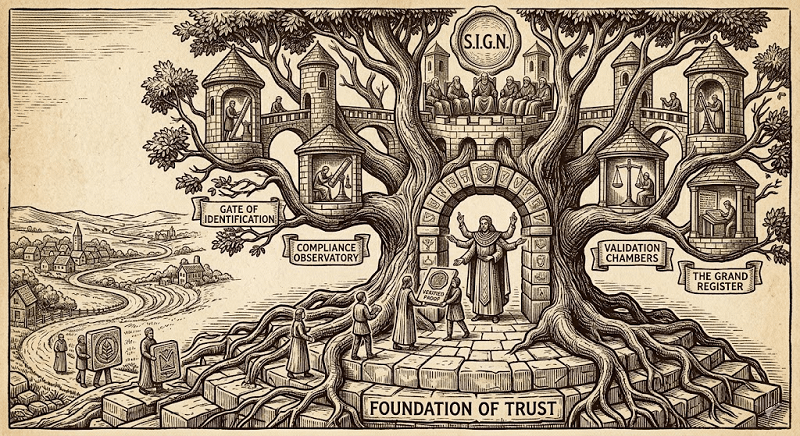
You can see why that direction is gaining traction.
The current environment isn’t short on innovation. It’s short on compatibility. Systems don’t fail because they can’t function. They fail because they can’t align. Too many layers, too many checks, too much repeated effort just to establish something as basic as legitimacy.
If S.I.G.N. reduces that friction, it solves a real problem.
That alone puts it ahead of most projects still chasing attention instead of utility.
But utility brings its own risks.
A system designed to verify faster can also exclude faster.
A framework built for clarity can remove flexibility.
Efficiency can come at the cost of nuance.
That tradeoff is rarely discussed when projects like this get attention.
Because the language sounds safe. Infrastructure. Trust. Coordination. These are comforting words in a market that often feels unstable. People want something that looks solid, something that feels like progress beyond speculation.
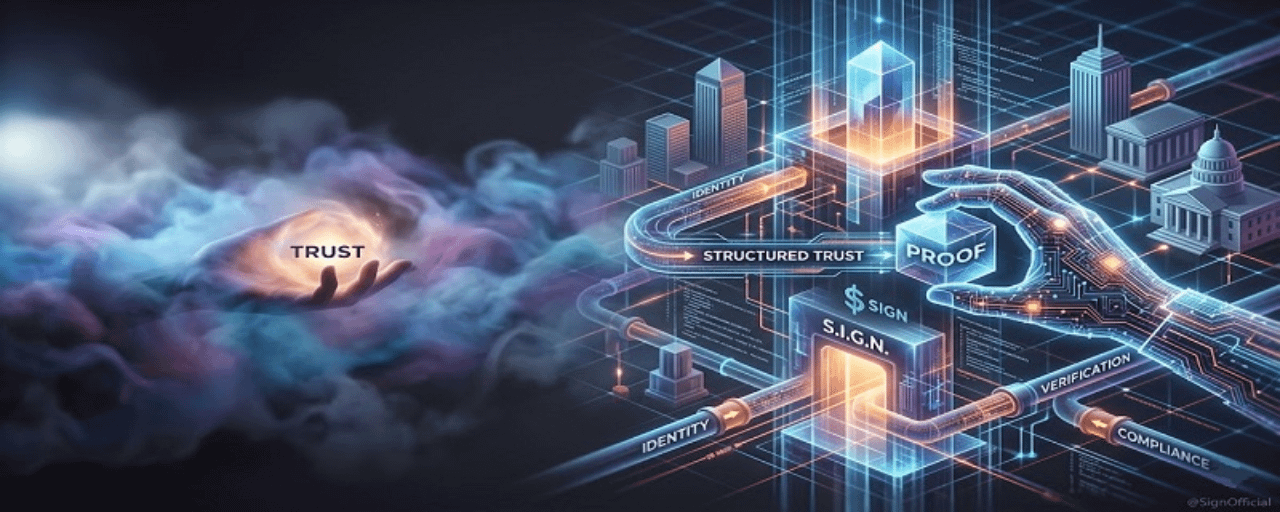
And S.I.G.N. fits that narrative.
Still, it’s important to separate usefulness from inevitability.
Good ideas don’t always win. Especially in crypto. Adoption depends on timing, incentives, integration challenges, and whether the value actually reaches the token layer. That last part is where many strong concepts break down.
$SIGN sits in a category where that question matters more than usual.
If the system becomes valuable, who captures that value?
The answer isn’t always obvious, and it’s rarely as direct as the market hopes.
There’s also the reality of who this kind of infrastructure is built for. If S.I.G.N. moves toward institutional use, progress won’t be fast. It won’t follow hype cycles. It will move through approvals, compliance layers, and long development timelines.
That kind of growth is real.
But it’s not always visible.
So the project shouldn’t be viewed as just another opportunity or just another narrative. It represents a shift in how crypto is thinking about itself.
From trustless systems to structured trust.
From disruption to coordination.
From independence to interoperability.
Whether that shift is a step forward or a quiet compromise depends on perspective.
If S.I.G.N. works, the result won’t be chaos or revolution. It will be order. Systems that recognize each other. Proof that moves cleanly. Decisions that happen faster and with less friction.
More clarity.
More control.
Less space in between.
And maybe that’s where the space is heading.
Not toward removing trust, but toward deciding how it should function.