
I’ve been wrestling with a concern that doesn’t come up enough in the SIGN conversation. We talk about governments adopting blockchain for IDs, CBDCs, and subsidy distribution. We celebrate the transparency, the immutability, the cryptographic guarantees. But here’s what keeps me up at night: who governs the governance layer?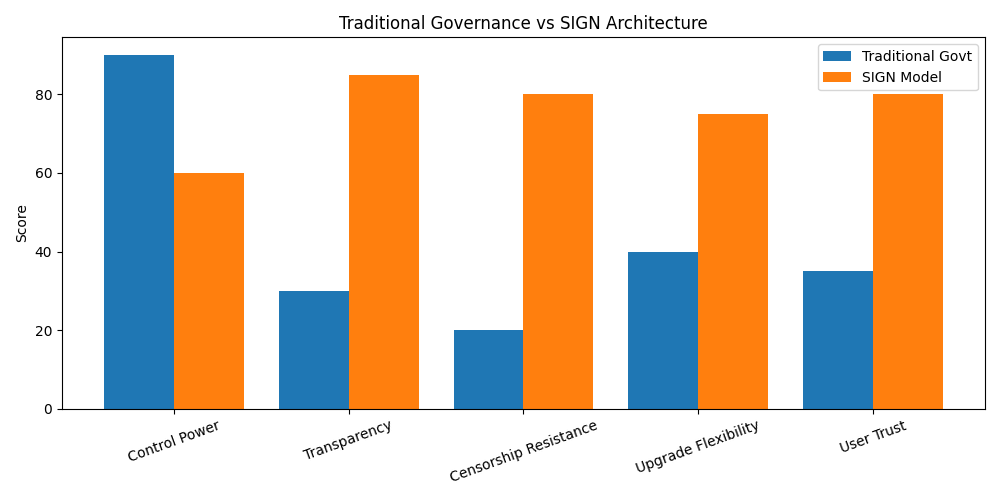
Because if a government builds its national infrastructure on SIGN, and SIGN itself is controlled by a small team or a centralized foundation, haven’t we just swapped one master for another?
I spent a few days digging into how SIGN actually handles this. And I found something that surprised me.
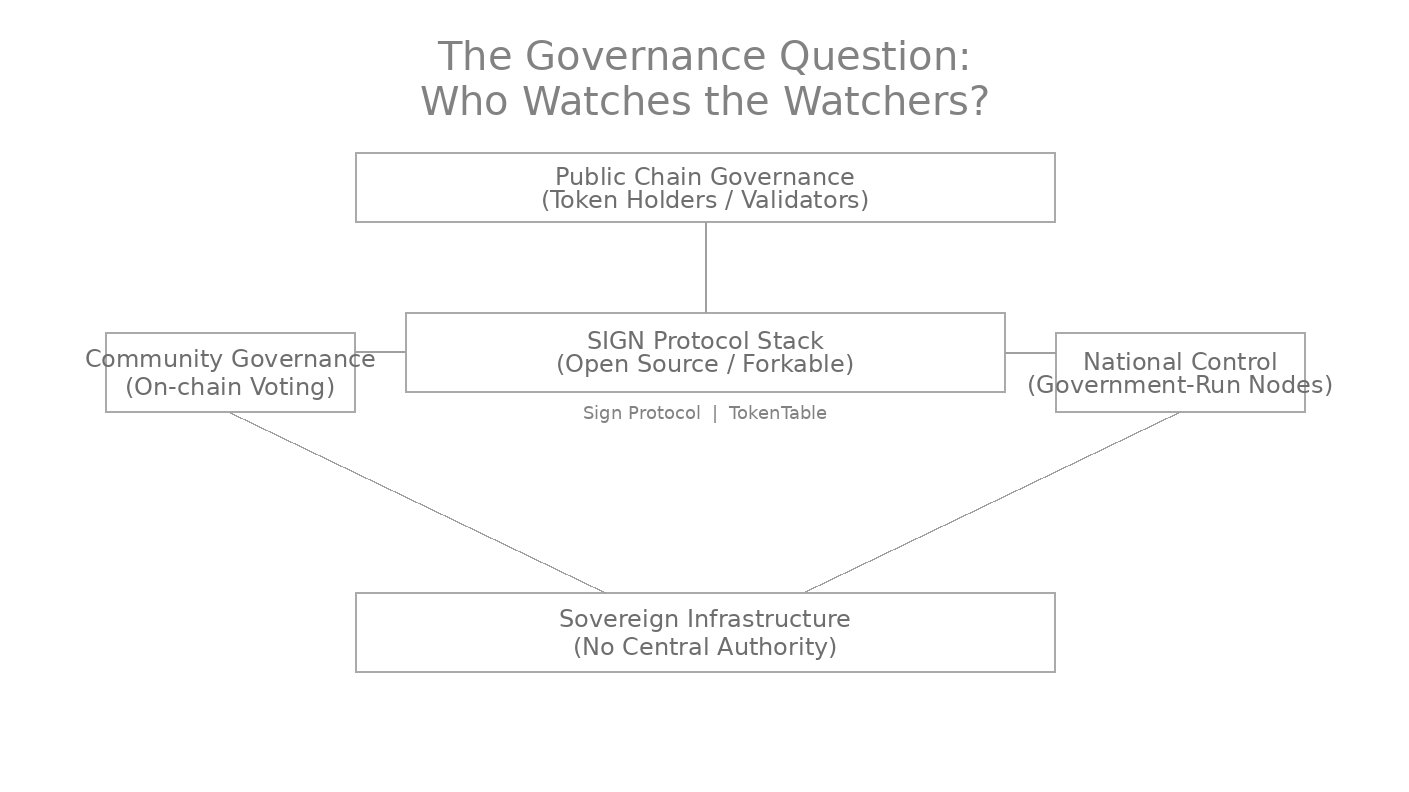
The project’s architecture isn’t just technical it’s designed with a clear separation of powers. The public chain is governed by token holders through on-chain voting. The privacy-permissioned layers are under the control of each individual government, not SIGN. And the core protocols Sign Protocol, TokenTable are open-source and designed to be forkable if the community ever disagrees with the direction.
That’s not perfect decentralization. But it’s a serious attempt at solving the governance problem.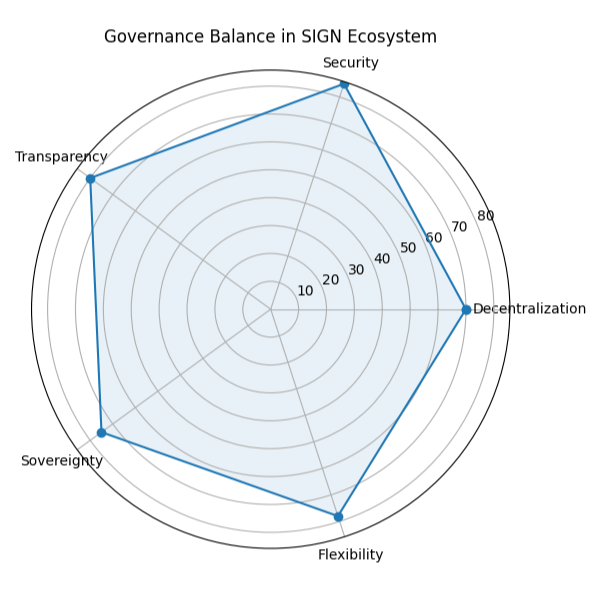
What matters to me is that SIGN isn’t trying to be the eternal arbiter. They’re building tools that nations can run themselves. The foundation’s role is to develop and maintain the open-source code, not to operate the networks on behalf of governments. A country like Kyrgyzstan runs its own nodes, holds its own keys, and governs its own permissioned chain. SIGN can’t shut it down. Can’t change the rules without consensus. Can’t reach into a nation’s digital infrastructure and flip a switch.
That’s the distinction that finally let me breathe easier.
I’ve seen too many projects promise “decentralization” while keeping all the control behind closed doors. SIGN’s model feels different. They’re essentially saying: here’s the open-source stack, here’s the public chain governed by the community, and here’s how you take ownership of your own instance. The power doesn’t live in a boardroom. It lives in the code and the validators.
Of course, there are risks. Token-based governance can be captured by whales. Governments might resist fully open voting systems. And the public chain’s influence over the broader ecosystem is still evolving.
But for the first time, I see a project that’s actually thinking about the endgame. Not just getting governments to sign on, but making sure that once they do, they’re not trading one gatekeeper for another. That’s the kind of long-term thinking that makes me take SIGN seriously. Because the question isn’t just how nations adopt blockchain it’s how they stay free while doing it.