
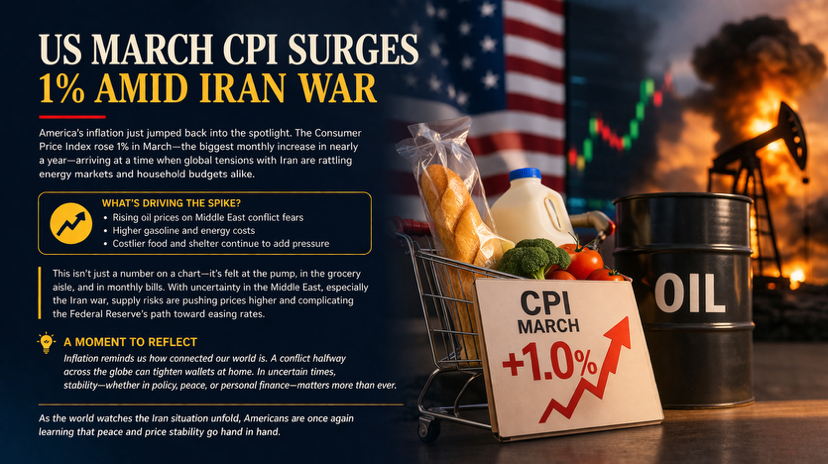

On the surface, a 1% jump in the U.S. Consumer Price Index (CPI) for March sounds like just another economic statistic — but this figure is far from ordinary. It’s being described by economists as the sharpest one‑month increase since 2022, and crucially, it coincides with a new geopolitical rupture: the ongoing war in Iran.
Why does this matter? Because inflation isn’t just numbers on a page — it’s the lived reality of families deciding whether to fill up the car, buy groceries, or pay rent. A surge of this magnitude has been largely tied to energy costs, where gasoline prices spiked rapidly as the conflict escalated and disruptions rippled through global oil markets. Short‑term shocks in fuel often cascade into broader price pressures — from logistics to food and manufacturing inputs — because energy is the lifeblood of a globalized economy.
Economists are watching closely. A single monthly uptick like this can influence the Federal Reserve’s policy decisions — from holding or even raising interest rates to counter persistent inflation to delaying potential rate cuts that markets had been anticipating. The ripple effects touch everything from the cost of borrowing to business investment.
At a deeper level, this moment underscores how interconnected the global economy truly is. A conflict thousands of miles away can influence everyday prices on Main Street USA — and beyond. It highlights a growing reality: geopolitical instability has morphed from an abstract headline into a tangible force shaping households’ budgets and central bank strategies alike.
Ultimately, a CPI surge of this magnitude is more than data — it’s a reminder that events in distant regions can quickly become part of the economic fabric of daily life. What happens next in diplomacy, energy markets, and global supply chains will shape not just numbers, but people’s lived experience.