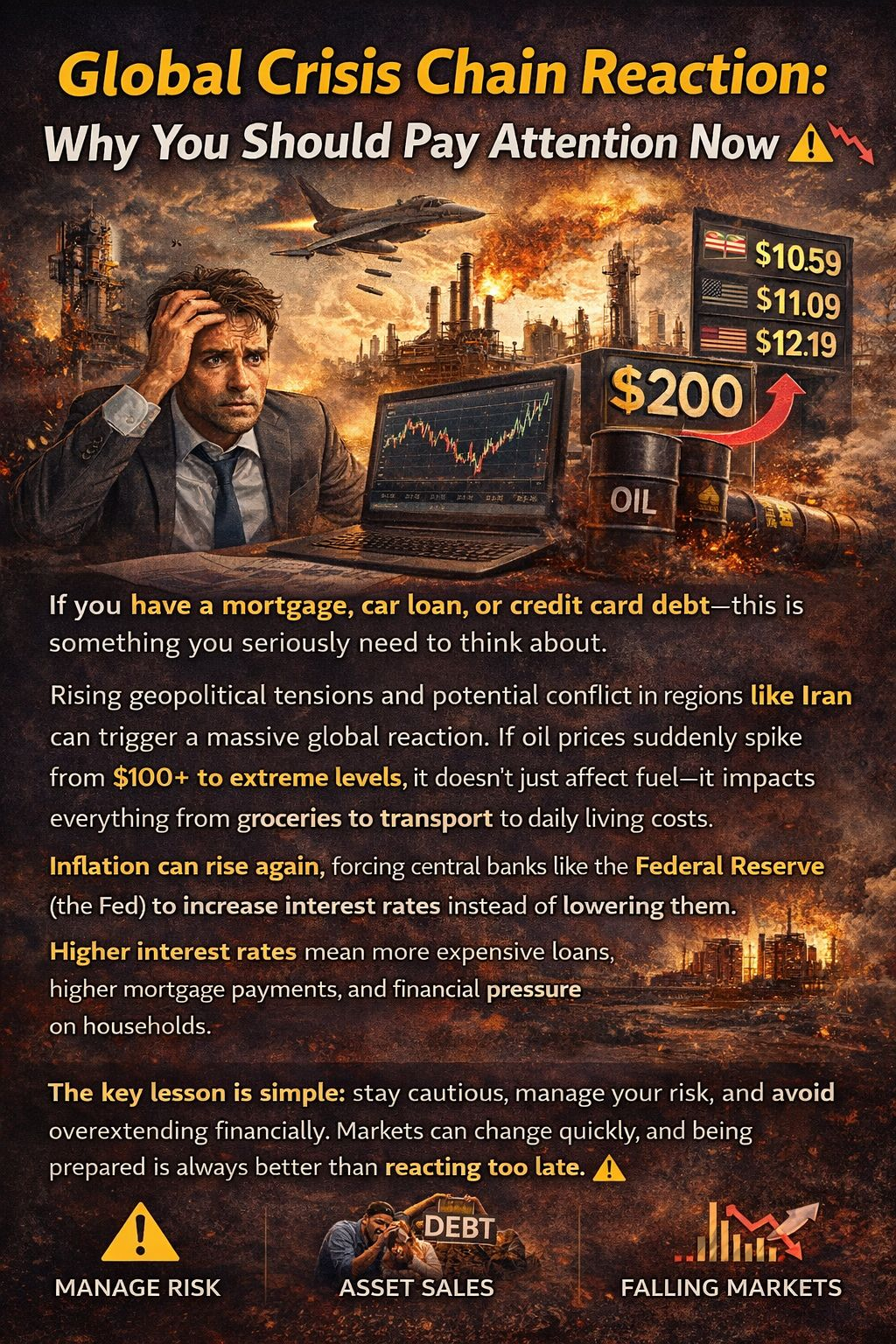
If you have a mortgage, car loan, or credit card debt—this is something you seriously need to think about. Rising geopolitical tensions and potential conflict in regions like Iran can trigger a massive global reaction. If oil prices suddenly spike from $100+ to extreme levels, it doesn’t just affect fuel—it impacts everything from groceries to transport to daily living costs. Inflation can rise again, forcing central banks like the Federal Reserve to increase interest rates instead of lowering them.
Higher interest rates mean more expensive loans, higher mortgage payments, and financial pressure on households. When people can’t afford payments, they are often forced to sell assets, which can lead to market crashes—similar to what happened during the 2008 Financial Crisis. This chain reaction can result in job losses, falling markets, and widespread financial stress.
The key lesson is simple: stay cautious, manage your risk, and avoid overextending financially. Markets can change quickly, and being prepared is always better than reacting too late.