
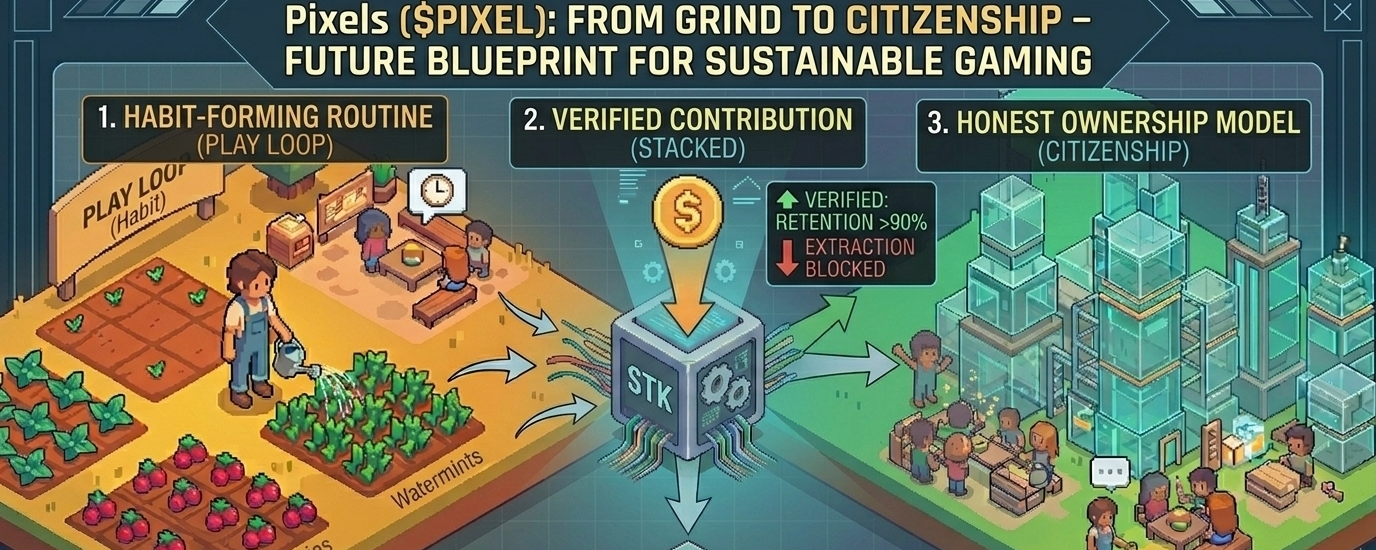
I woke up at 3:00 AM last night and my first thought wasn’t about the global economy. It was about whether I had remembered to harvest my virtual watermints.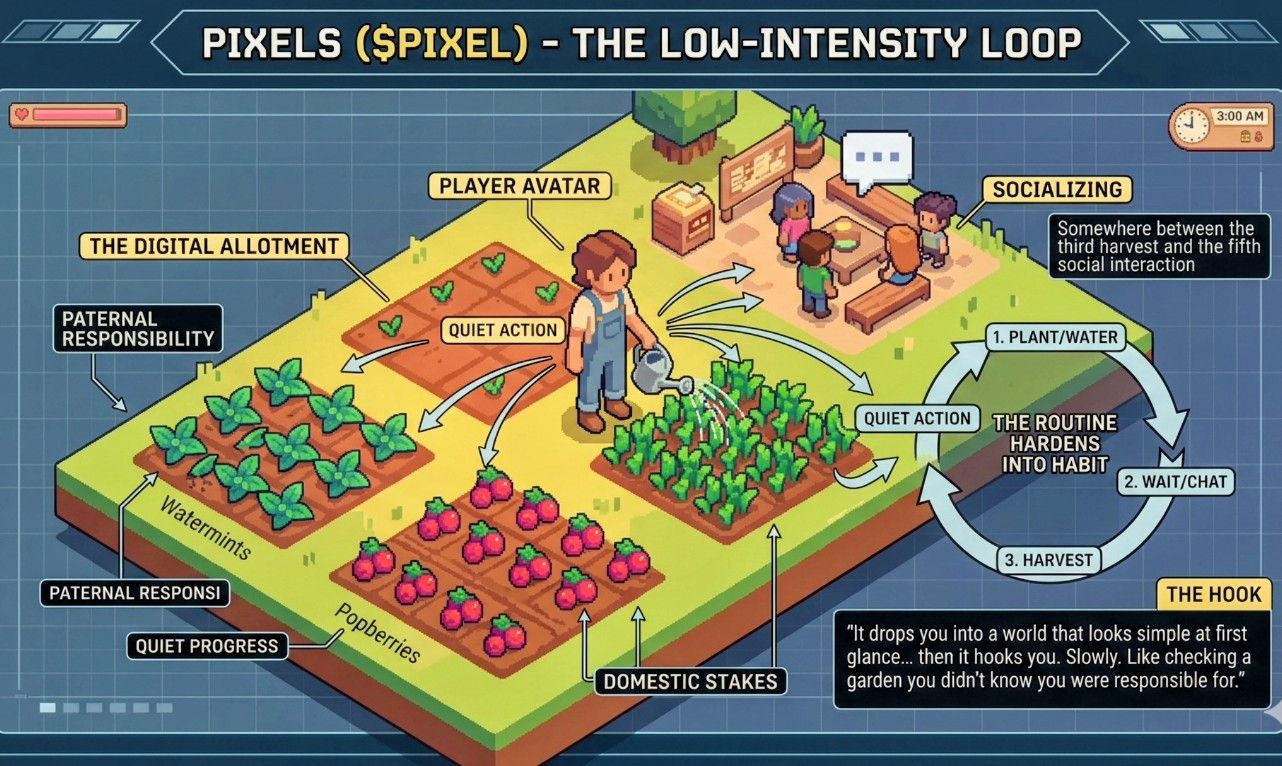
That is the quiet success of Pixels. It does not arrive with cinematic bombast or aggressive flashing lights. Instead, it enters through the back door, disguised as a low fidelity farming sim.
It feels less like a video game and more like a digital allotment, a small patch of pixels that you feel a strange responsibility to maintain.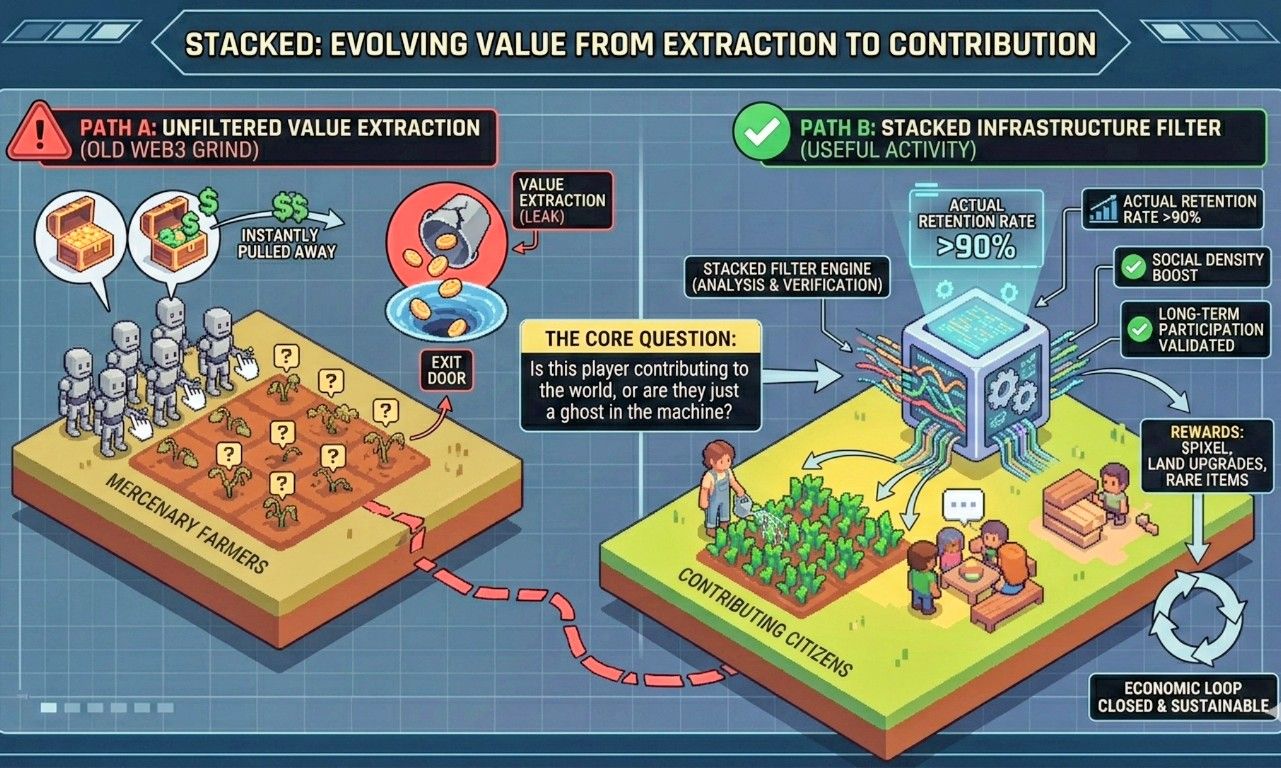
There is no grind here in the traditional sense because the stakes feel so domestic. You plant, you water, you wait, and you chat. Somewhere between the third harvest and the fifth social interaction, the routine hardens into a habit. You aren't playing for a high score. You are simply existing in a space that rewards your presence with a sense of quiet progress.
I have watched dozens of economies collapse because they prioritized user growth over user utility.
For years, Web3 gaming has been a giant, leaky bucket. Projects would throw tokens at anyone with a pulse, hoping to buy loyalty. What they actually bought was a swarm of mercenary farmers who showed up, drained the rewards, and quietly disappeared.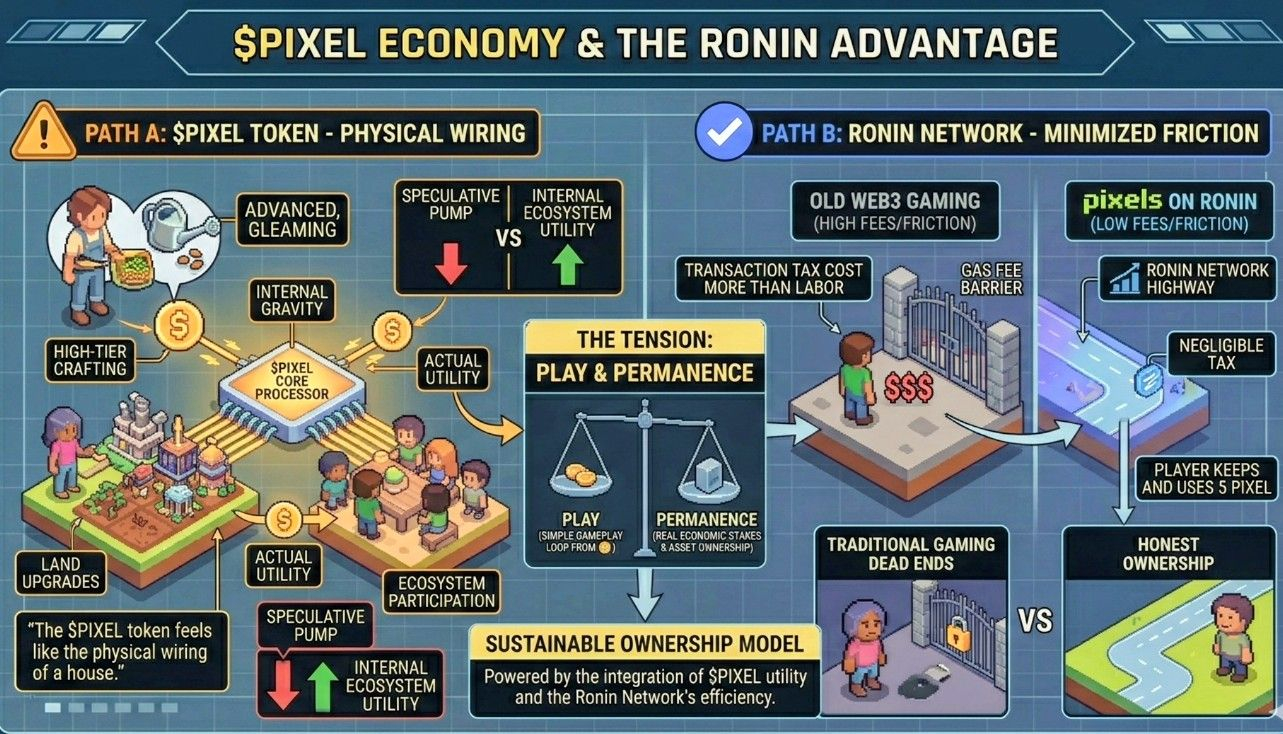
This is where the Stacked infrastructure changes the conversation. Rather than acting as a blind reward tool, Stacked functions as a filter. It asks a question most systems are too afraid to ask. Is this player actually contributing to the world, or are they just a ghost in the machine?
By shifting rewards away from raw extraction and toward useful activity, actual retention and social density, the system stops rewarding the exit door. It is an adaptive layer that watches how we move. If you are here to build the ecosystem, the path is paved. If you are here to strip mine it, the friction increases. It is a necessary shift from a giveaway culture to a contribution culture.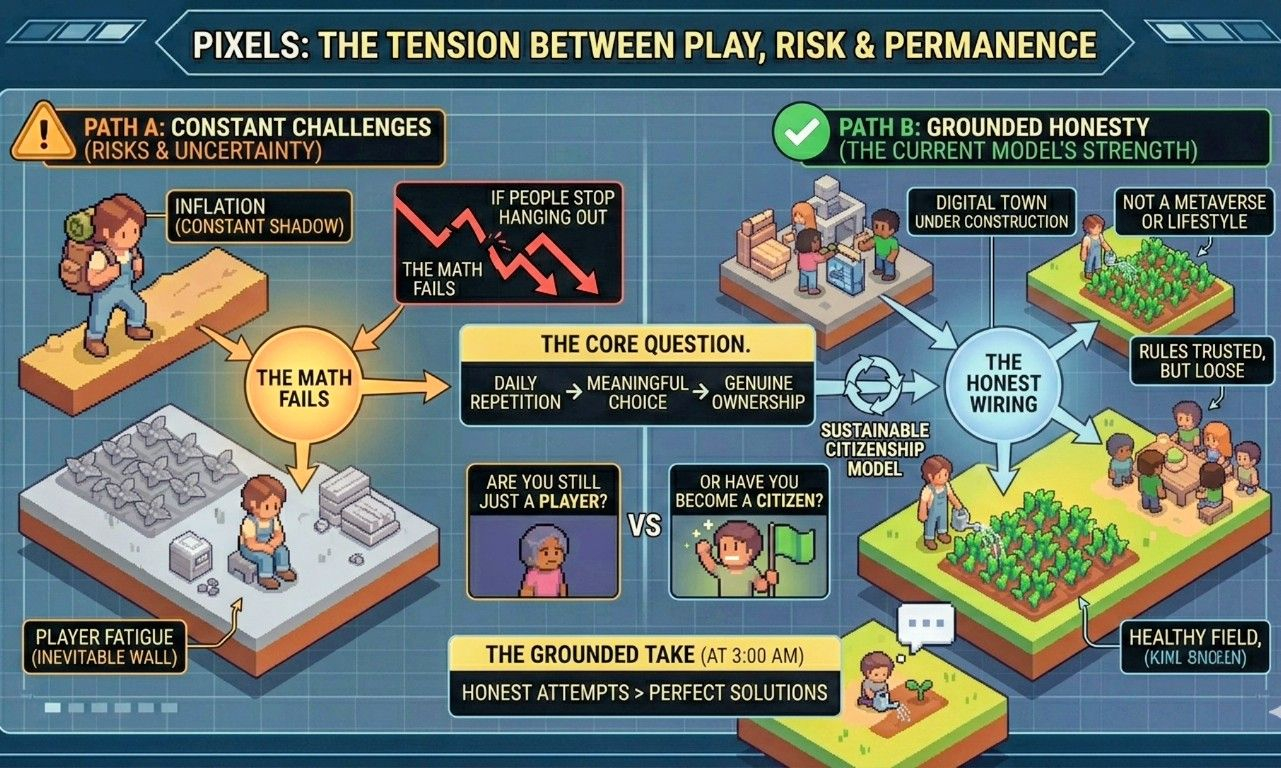
Traditional gaming has spent a decade perfecting the art of the one way street. Whether it is loot boxes or psychological traps, the house always wins because the house owns the exits. You pay for the privilege of owning a skin that you can never sell or trade. It is a digital dead end.
I look at the $PIXEL token differently. It does not feel like a speculative asset intended for a pump. It feels like the physical wiring of a house.
When I spend PIXEL to upgrade my land or craft an item,
I am interacting with a currency that has actual gravity within its own borders. Because it lives on the Ronin Network, the tax on my existence is negligible. In the early days of crypto gaming, a simple transaction could cost more than a week’s worth of labor. On Ronin, the friction disappears, allowing a player who earns five PIXEL to actually keep and use five PIXEL.
This creates a sense of honest ownership. It acknowledges that my time has value, and while the game might be simple, the economic stakes are real. It is a shared simulation where play and permanence exist in a constant tension.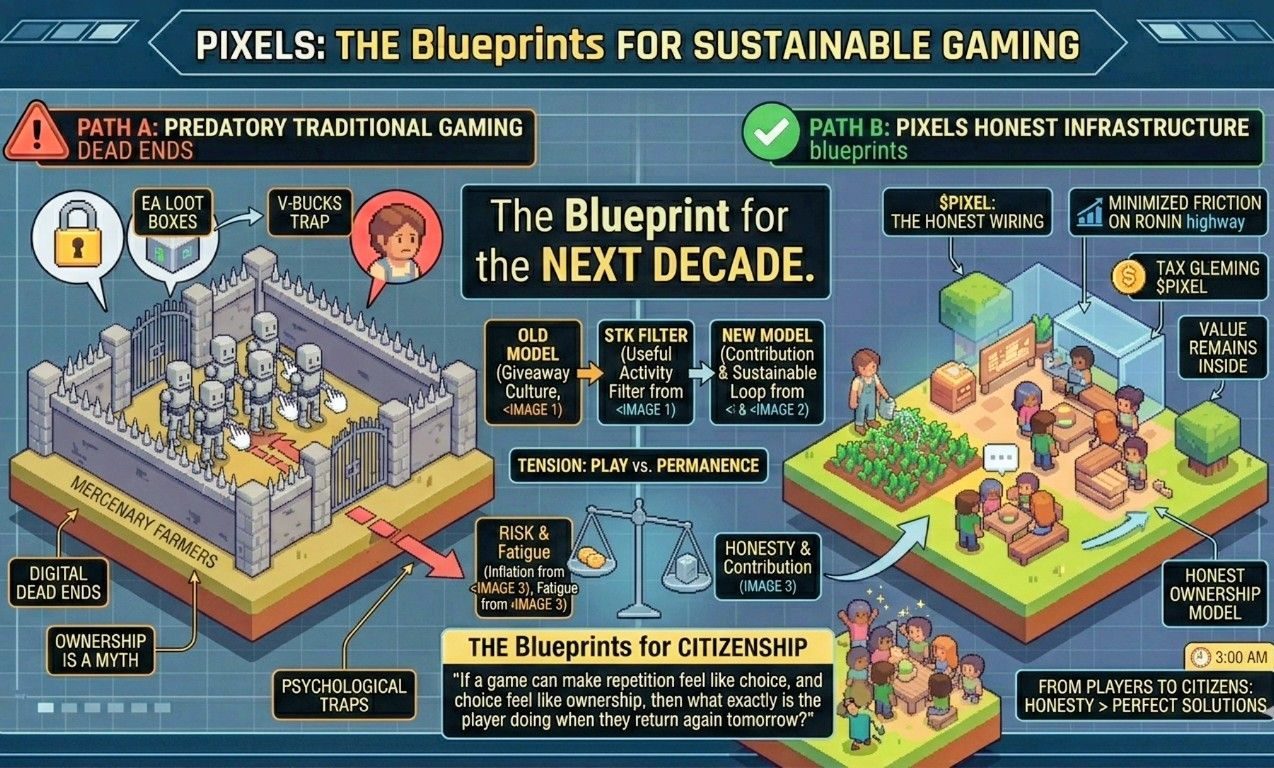
I am not suggesting that Pixels has solved everything. The risks are real. Inflation is a constant shadow, and player fatigue is an inevitable wall that every game eventually hits. If the game stops being a place people want to hang out, the math fails.
However, there is an honesty here that is missing from the rest of the industry. It isn't trying to be a metaverse or a lifestyle. It is a digital town under construction.
The question isn’t whether Pixels is the future of gaming.
The question is: if a system can make your daily repetition feel like a meaningful choice, and that choice feel like genuine ownership, are you still just a player, or have you become a citizen?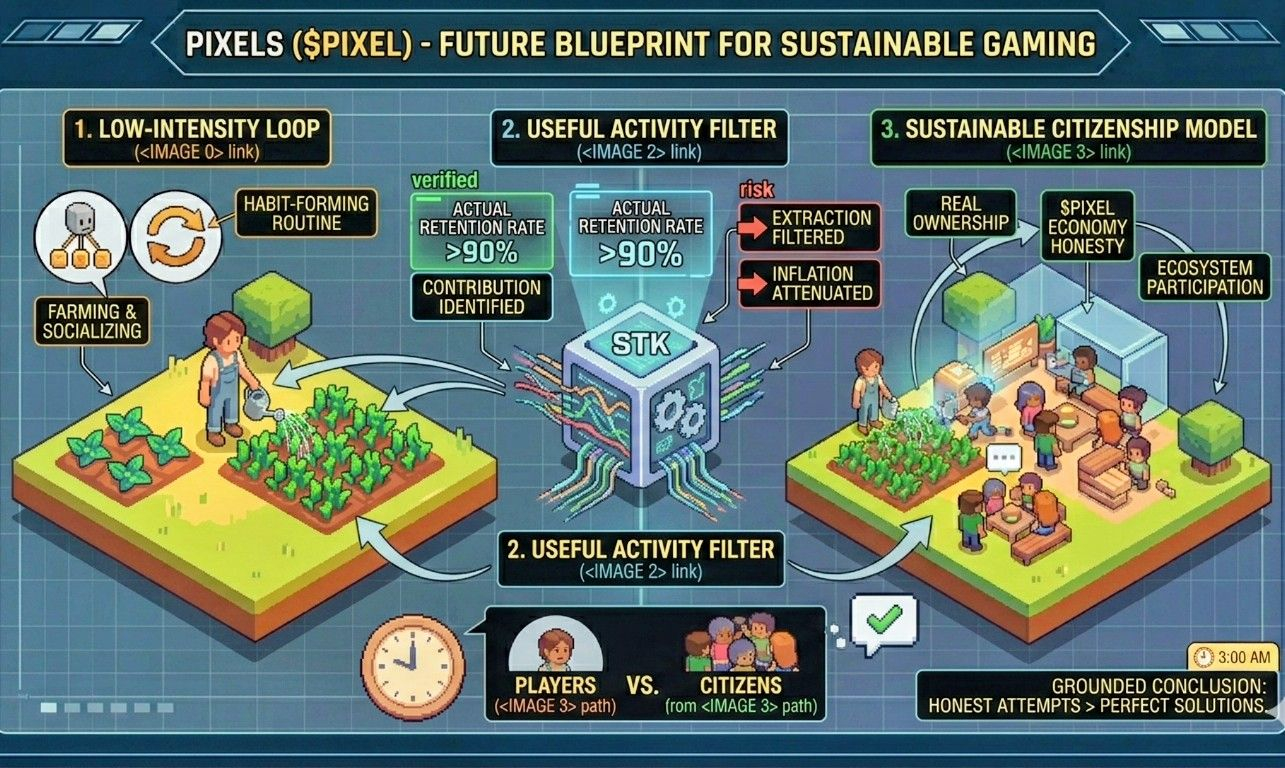
I’ll ponder that while I harvest my next batch of crops. Tomorrow. At 3:00 AM.