
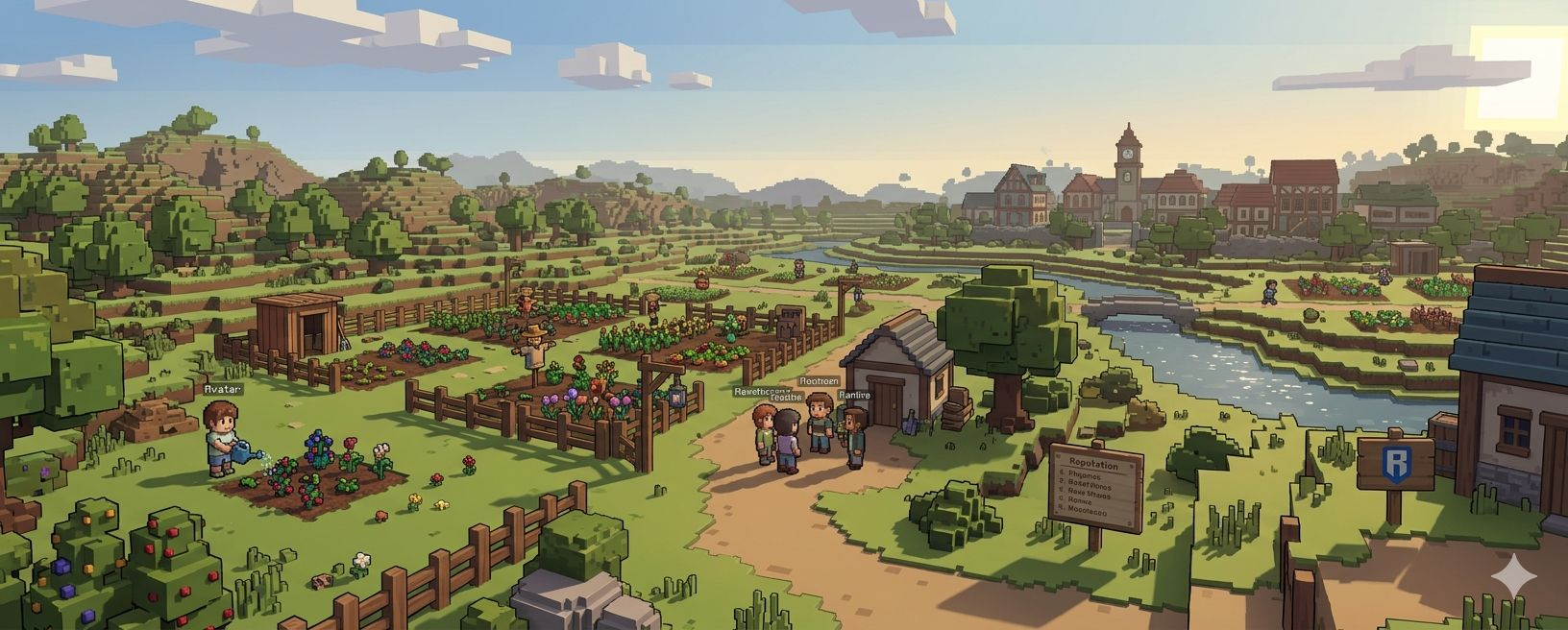

Pixels (PIXEL) is a farming game that doesn’t try very hard to impress you. That’s the first thing I noticed, and honestly, that’s usually a bad sign. I’ve seen plenty of systems—games, apps, platforms—that open quietly because they don’t have much depth yet. You poke around for a bit, then leave.
That’s not what happens here.
When I first logged in, nothing really stood out. I planted a few crops, walked around, tried to figure out where things were. No big hook. No “this is the moment” design. It felt… fine. Almost forgettable.
And then I kept coming back.
Not because I had to. Not because I was chasing rewards or optimizing anything. It just started to feel familiar. The map made more sense. The routines settled in. It stopped feeling like something I was testing and started feeling like somewhere I’d been before.
That shift is subtle, but it’s doing a lot of work.
The beginning is almost too simple. You get a small plot, basic tools, and a loose idea of what to do. Farm, gather, maybe explore. It’s not new. Most people have seen this loop in one form or another.
The difference is that Pixels doesn’t rush you out of it.
You can play badly. You can waste time. You can ignore efficiency completely and the system doesn’t punish you in any aggressive way. I’ve seen games try this and fail—they either feel empty or players bounce before anything meaningful happens.
Here, the slower pace actually works. You don’t feel pushed forward. When things open up later, it feels like you got there yourself instead of being dragged through a tutorial pipeline.
After a while, you start noticing other players, but not in the usual loud multiplayer way. It’s quieter than that. Someone walks past while you’re farming. A group is standing somewhere you’ve now learned is a busy spot. You see the same names again and again.
You start recognizing patterns.
Who farms where. Which areas are active. How different players approach the game. It creates this low-key sense that the world is shared without constantly reminding you that it’s shared. That balance is harder than it looks. Most systems either overdo it or get it completely wrong.
Guilds add another layer, but they don’t feel forced. They just give structure to something that already exists. And then there’s the reputation system, which I barely noticed at first. It just sits there, tracking consistency. Over time, it opens things up. Access, trust, options. It’s not loud, but it shapes the experience in the background.
That’s good system design. Quiet, but consequential.
The blockchain side is there, but it mostly stays out of the way. That alone puts it ahead of a lot of Web3 projects. I’ve seen this part turn into a mess—wallet friction, transaction delays, constant reminders that you’re interacting with infrastructure instead of a game.
Pixels avoids most of that.
You can play for hours without thinking about Ronin or tokens or any of it. Things just work. If you want to engage with ownership or the deeper mechanics, you can. But the game doesn’t keep dragging you back into that layer. It’s optional, which is exactly how it should be.
The economy also feels more controlled than I expected. Usually, these systems spiral. Too many rewards, too many resources, no real constraints. Everything becomes abundant, and then nothing matters.
That hasn’t happened here, at least not in an obvious way.
Inventory space forces decisions. You can’t keep everything, so you have to think about what’s worth holding onto. Crafting isn’t just filler—it actually affects how you plan your time. Even the reward structure feels measured. You’re not constantly being flooded with tokens. You log in, see what’s available, work through it, and that’s enough.
It creates a steady rhythm.
Another thing I didn’t expect to matter as much as it does: the game respects your time. You don’t need to sit there for hours to feel like you made progress. You can log in, do a few tasks, farm a bit, maybe explore or interact, and log out without feeling like you’re falling behind.
A lot of games get this wrong. They either demand too much or feel pointless in short sessions. This sits somewhere in between. It fits into your day instead of trying to take it over.
Ownership is there, but it doesn’t feel mandatory. You can play without land, without assets, without going deep into the token side, and still have a complete experience. If you do engage with it, it adds something. Your land matters more. Your progress feels more personal. Small advantages start to stack.
But it’s a choice.
That’s important, because I’ve seen systems where ownership becomes the entire point, and everything else bends around it. That usually doesn’t end well. Here, it feels like an extra layer, not the foundation.
Over time, the small things start to add up. You stop trying to collect everything. You develop your own way of playing. You recognize people without thinking about it. You settle into a routine that feels natural.
None of it is dramatic. There’s no big moment where it clicks.
You just realize you’ve been coming back.
The game doesn’t feel finished either. Not broken—just still evolving. Systems are still being shaped. The world still feels like it’s expanding. I’ve seen this go both ways. Sometimes growth turns into chaos. Sometimes it actually leads somewhere.
Right now, it feels like the second one, but I’d still keep an eye on it. Scaling systems is where things usually start to crack.
Still, what’s already here works in a way a lot of more ambitious projects don’t. It’s restrained. It doesn’t try to overwhelm you with features or force engagement at every step. It gives you a loop, a space, and enough structure to build your own rhythm.
That’s harder to pull off than it looks.
I didn’t have a moment where I thought, “this is great.” I’ve had plenty of those moments with other games, and most of them didn’t last.
This one just stuck around.
And that, more than anything, is why I’m still opening it.