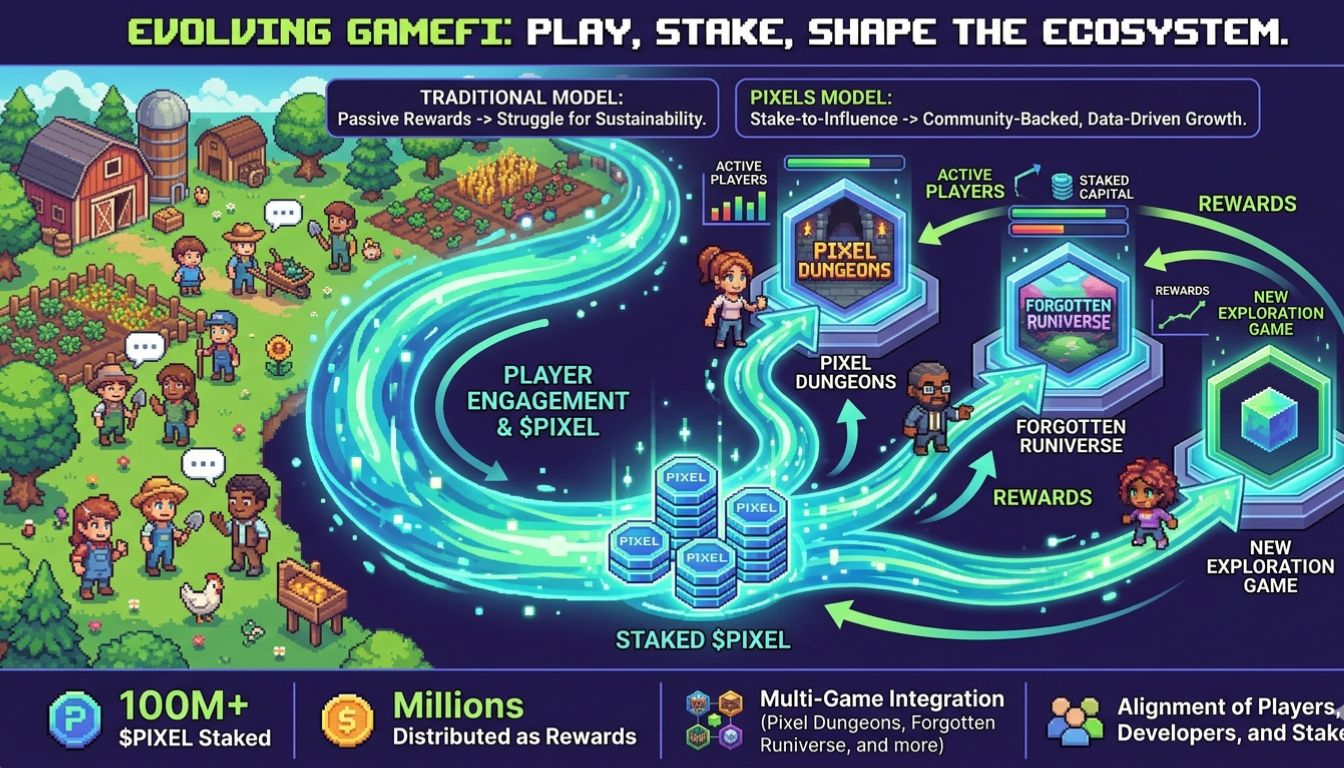
Most Web3 games started with one promise: play and earn. But over time, that model struggled to stay sustainable. @Pixels is taking a different route and it might be one of the most important shifts in GameFi right now.
At its core, Pixels is a social, open-world farming game built on blockchain, where players can farm, explore, and truly own digital assets.
But the real innovation isn’t just gameplay it’s the staking layer behind it.
With staking, players are no longer just participants they become decision-makers.
Instead of passive rewards, the system works like a stake-to-influence model. You can allocate your $PIXEL into different games within the ecosystem, effectively backing the experiences you believe in.
And here’s where it gets interesting:
Games compete for player attention AND staked capital
Rewards are tied to real in-game activity and performance
Ecosystem growth becomes data-driven and community-backed
This creates a feedback loop that traditional gaming never had.
The numbers already reflect this shift. Over 100M+ $PIXEL has been staked, with millions distributed as rewards showing real user commitment, not just speculation.
Even more impressive, this staking is spread across multiple integrated games like Pixel Dungeons and Forgotten Runiverse, turning Pixels into something bigger than a single title a multi-game ecosystem powered by one token.
What makes this model powerful is alignment.
Players want better games →
Developers want more players →
Stakers want better returns →
In Pixels, all three incentives connect.
This is no longer just play-to-earn.
It’s evolving into play, stake, and shape the ecosystem.
And that’s why feels different. It’s not just building a game it’s building a decentralized gaming economy where players act like publishers.
The real question isn’t whether this works today
It’s how big it becomes if this model scales.