
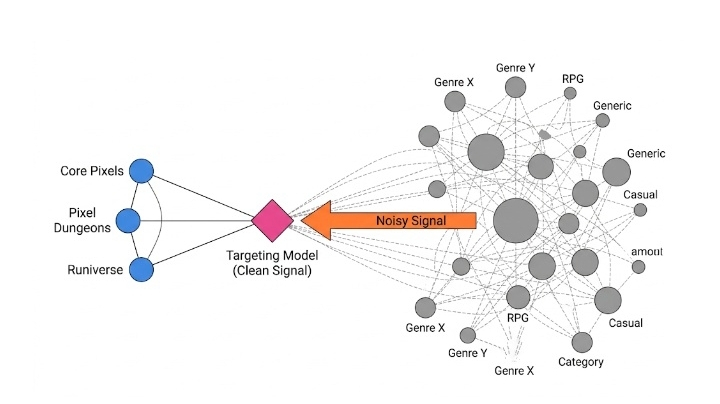
Pixels is building a data moat. the question is whether anyone notices before it's too late to compete
been tracking how Pixels aggregates behavioral data across games in its publishing network and honestly? the infrastructure they've quietly built while everyone was arguing about token price is more interesting than the token itself 😂
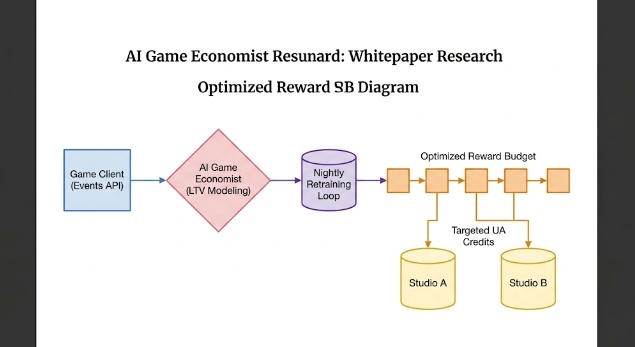
here's what most people miss. every quest completed, every crop harvested, every withdrawal triggered inside any Pixels-integrated game gets logged through the Events API. that data feeds LTV models, fraud scores, session depth curves, and churn vectors. nightly retraining. reward budgets reweighted toward cohorts that drive actual retention. the game isn't just a game. it's a data collection mechanism that happens to be fun enough to keep players logging in.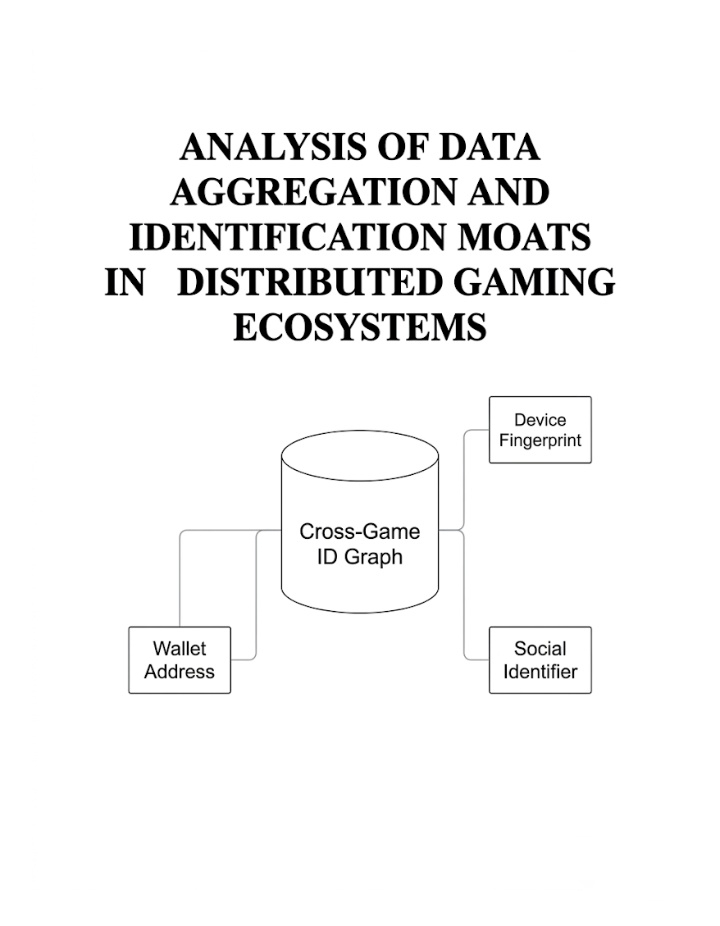
What Bugs me: -
the pitch sounds clean until you ask who actually owns the insight. studios contribute data and get UA credits back. Pixels retains the cross-game model. so a studio that integrates for 12 months and then churns out has donated a year of behavioral data to a competitor's targeting model. that's not a partnership structure --- thats an acqui-hire where the asset being acquired is your player data and the payment is discounted UA spend. most studios signing up probably aren't thinking about it that way.
the tokenomics angle nobody discusses: $PIXEL supply is 5B capped. 34% sits in the Ecosystem Rewards pool the engine that funds all UA credits distributed to studios. the data loop is supposed to make that pool more efficient over time: better targeting = lower reward cost per retained user = RORS above 1.0 = sustainable emissions. but the efficiency gains only compound if studios stay integrated long enough to contribute meaningful data. short-term integrations break the loop. the token is betting on long-term studio retention that has no enforcement mechanism behind it. no lock-in. no exclusivity. just hopedfor alignment.
my concern though: RORS is currently sitting around 0.8 meaning every reward token distributed is still generating a net loss at the protocol level. the whole thesis depends on crossing 1.0 before the ecosystem reward pool depletes to a point where emission budgets get squeezed. thats a race. data quality improving vs token economics deteriorating. the whitepaper is honest about this. most of the coverage isn't.
What they get Right:-
the ID graph is genuinely hard to replicate. connecting wallet address, device fingerprint, and social identifiers across games gives Pixels cross-game player identity in a way that Appsflyer and Adjust can't match by definition --- those tools are single-game attribution. Pixels is building multi-game identity. if that data stays clean and the fraud prevention holds, the targeting precision available to studios using the platform will be categorically diferent from anything available through traditional ad networks. that's a real moat. small right now. compounds with every game that joins.
what worries me: the nightly retraining model assumes consistent data volume. right now the Pixels ecosystem runs on Core Pixels, Pixel Dungeons, and Forgotten Runiverse. three titles. the model is training on a relatively narrow behavioral dataset. add ten more games with diferent genre mechanics and player demographics and the cross-game signals that look predictive today might not generalize. scaling the model is not the same as improving it. and nobody's talking about what happens to targeting quality during that transition period.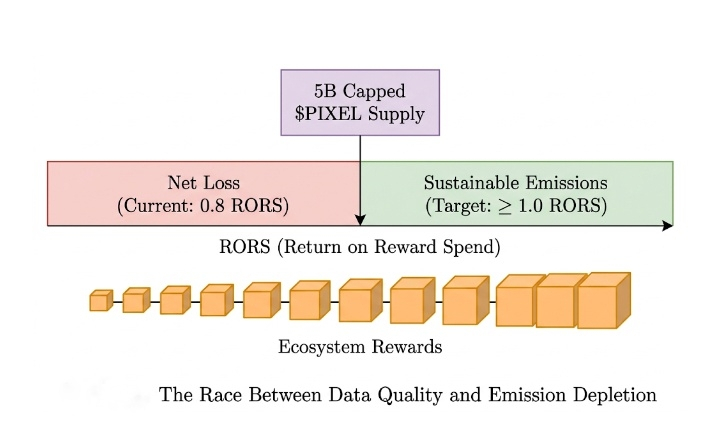
HoneStly don't know if the data moat compounds into something defensible at scale or whether it turns out the cross-game signals are noisier than they look with three titles feeding the model.
what's your take - .. genuinely differentiated infrastructure or a data story that only holds up while the dataset is small enough to look clean??
🤔