
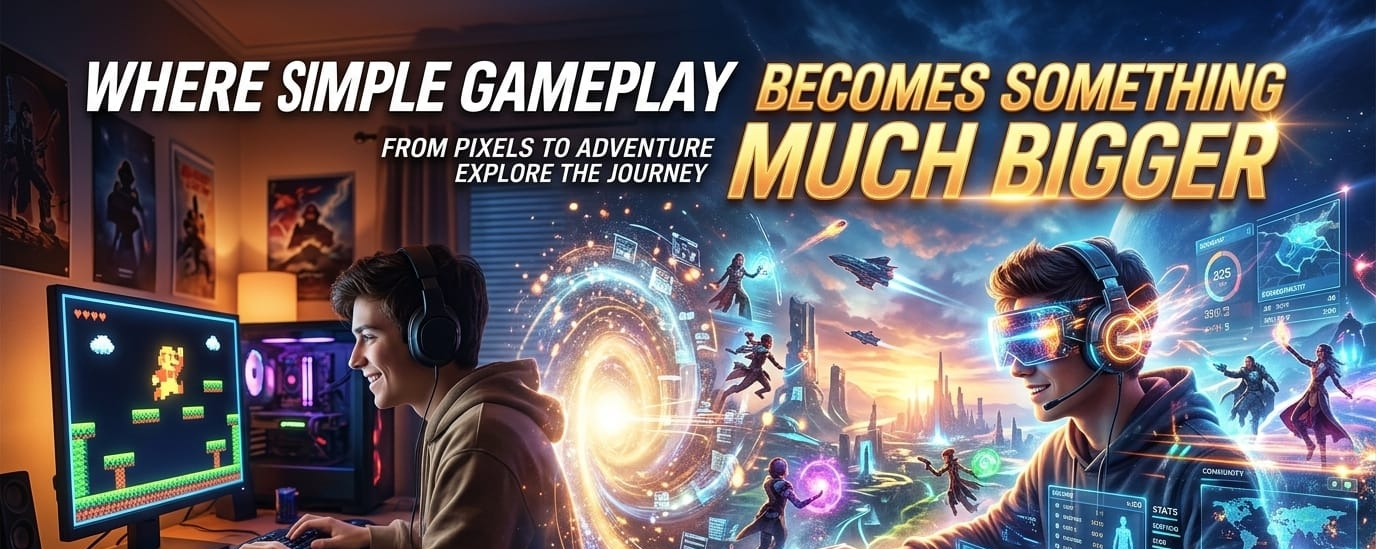
Pixels doesn’t try to win you over in the usual ways. There’s no dramatic intro, no overwhelming mechanics, no pressure to “figure everything out.” You just enter a soft, pixel-style world, start planting crops, gathering materials, and slowly finding your rhythm. It feels calm, almost familiar—like something you’ve played before. But the longer you stay, the more you realize there’s something deeper happening beneath that simplicity.
What makes Pixels interesting isn’t what it shows immediately, but what it’s quietly building over time.
A lot of this comes from the timing of when it appeared. It arrived after the first wave of blockchain games had already burned out. Back then, everything revolved around earning. People weren’t really playing—they were grinding. And when the rewards started to fall apart, so did the entire system. Players left, tokens crashed, and most projects couldn’t recover. It left behind a kind of skepticism: maybe games and real economies just don’t mix well.
Pixels took a different route. It didn’t remove earning, but it stopped making it the main reason to play. Instead, it focused on something much simpler—giving players a reason to stay. That shift changes everything. When people stick around because they enjoy what they’re doing, the economy forms more naturally. It doesn’t feel forced or artificial.
You see this in how the game actually works. You plant something, wait for it to grow, harvest it, and then decide what to do next. Maybe you craft something. Maybe you trade it. Maybe you save it for later. On its own, that loop is basic. But when thousands of players are doing it at the same time, it turns into something bigger. Resources start to matter. Time starts to matter. Even small decisions begin to have weight.
Ownership adds another layer to this. Land in Pixels isn’t just for show—it has purpose. If you own land, you’re not just decorating it; you’re using it. You’re producing, managing, and sometimes even depending on it. It creates this quiet sense that what you’re doing isn’t temporary. It stays. It builds.
Then there’s the PIXEL token, which is often misunderstood. In many games, tokens feel like rewards you collect and sell. Here, it feels more like something you use to move forward. It connects different parts of the experience—unlocking features, accessing systems, participating more deeply. It’s not just something you take out of the game; it’s something that keeps you involved in it.
What’s especially noticeable recently is how the game has grown. More players are joining, but it doesn’t feel like a sudden rush driven only by hype. It feels more like the result of steady improvements. The systems are becoming more detailed, the progression feels more meaningful, and there’s more to do than before. People aren’t just showing up—they’re staying longer.
And the direction it’s heading is becoming clearer. What started as a simple farming experience is slowly expanding into something closer to a full online world. New mechanics are being introduced, and the experience is becoming less predictable. It’s no longer just about repeating the same loop—it’s about choosing how you want to play and where you fit into the bigger picture.
That shift matters because it changes how people behave. When a game gives you multiple paths, you start to specialize. Some players focus on farming, others on crafting, others on trading or exploring. Over time, these roles connect. One player’s output becomes another player’s input. That’s when it stops feeling like a game economy and starts feeling like something more real.
Still, it’s not without its challenges. The connection to crypto means there’s always some level of uncertainty. Prices move, trends change, and player behavior can shift quickly. Balancing rewards is also tricky—too much, and things lose value; too little, and people lose interest. There’s no perfect formula for this, and Pixels is still figuring it out as it goes.
But maybe that’s part of what makes it feel genuine. It doesn’t come across as something pretending to have all the answers. It feels like a system that’s evolving in real time, shaped by both its creators and the people playing it.
In the end, Pixels isn’t trying to be loud or revolutionary on the surface. It’s doing something quieter. It’s exploring what happens when a game becomes a place where effort, ownership, and interaction all matter at the same time. Where playing isn’t separate from building, and where small actions slowly add up to something meaningful.
And that’s why it sticks with people. Not because it promises something huge right away, but because the longer you spend in it, the more it starts to feel like you’re part of something that’s still growing, still forming, and not quite finished yet.