
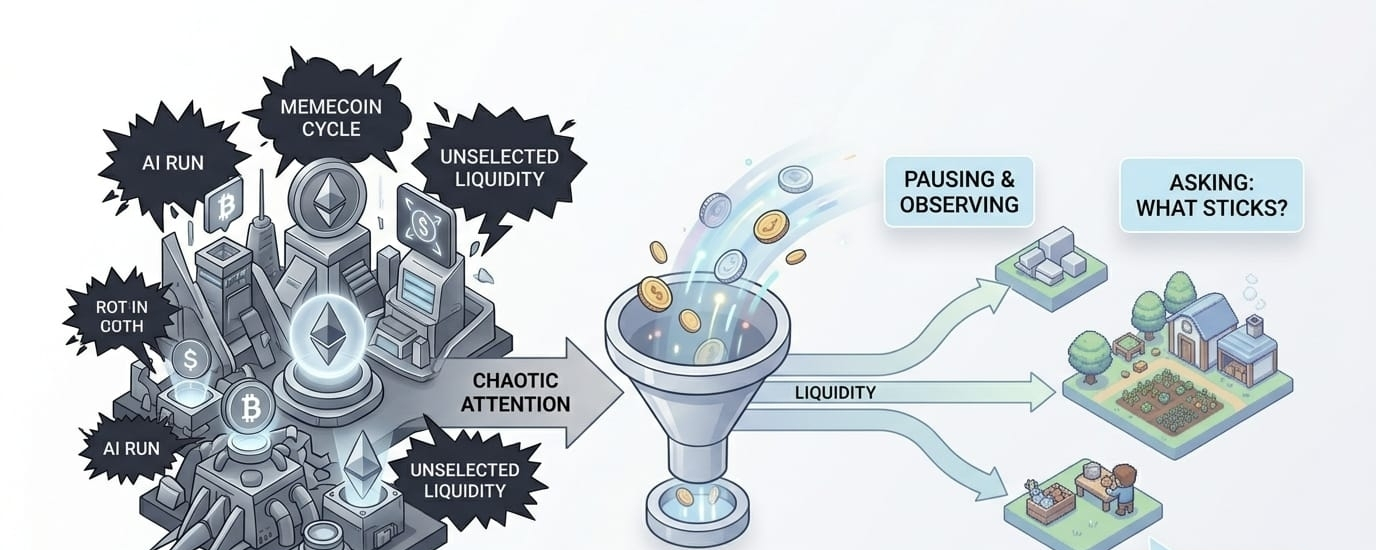
Lately, I’ve been noticing something subtle in the market. It’s not the loud narratives that are moving first anymore. AI had its run, memecoins keep cycling, infrastructure still builds in the background—but attention feels… more selective now. Liquidity isn’t chasing everything. It’s pausing, observing, almost asking: what actually sticks this time?
That’s kind of how I stumbled into Pixels.
At first, I’ll be honest, I didn’t take it seriously. A farming game? In Web3? I’ve seen this story before. Overcomplicated token systems, early hype, then slow bleed as users disappear. So when I saw PIXEL gaining traction on the Ronin Network, I was more curious than convinced. Something about the consistency of engagement caught my attention.
Then I spent a bit more time digging in—and that’s where things started to feel different.
Initially, I couldn’t quite figure out why people were sticking around. The gameplay itself isn’t revolutionary. It’s simple, almost nostalgic. Farming, gathering resources, exploring land. On the surface, it feels closer to something like old browser-based games than the hyper-polished AAA visions Web3 keeps promising. And yet… people are actually playing it. Not farming tokens. Playing.
That distinction matters more than I expected.
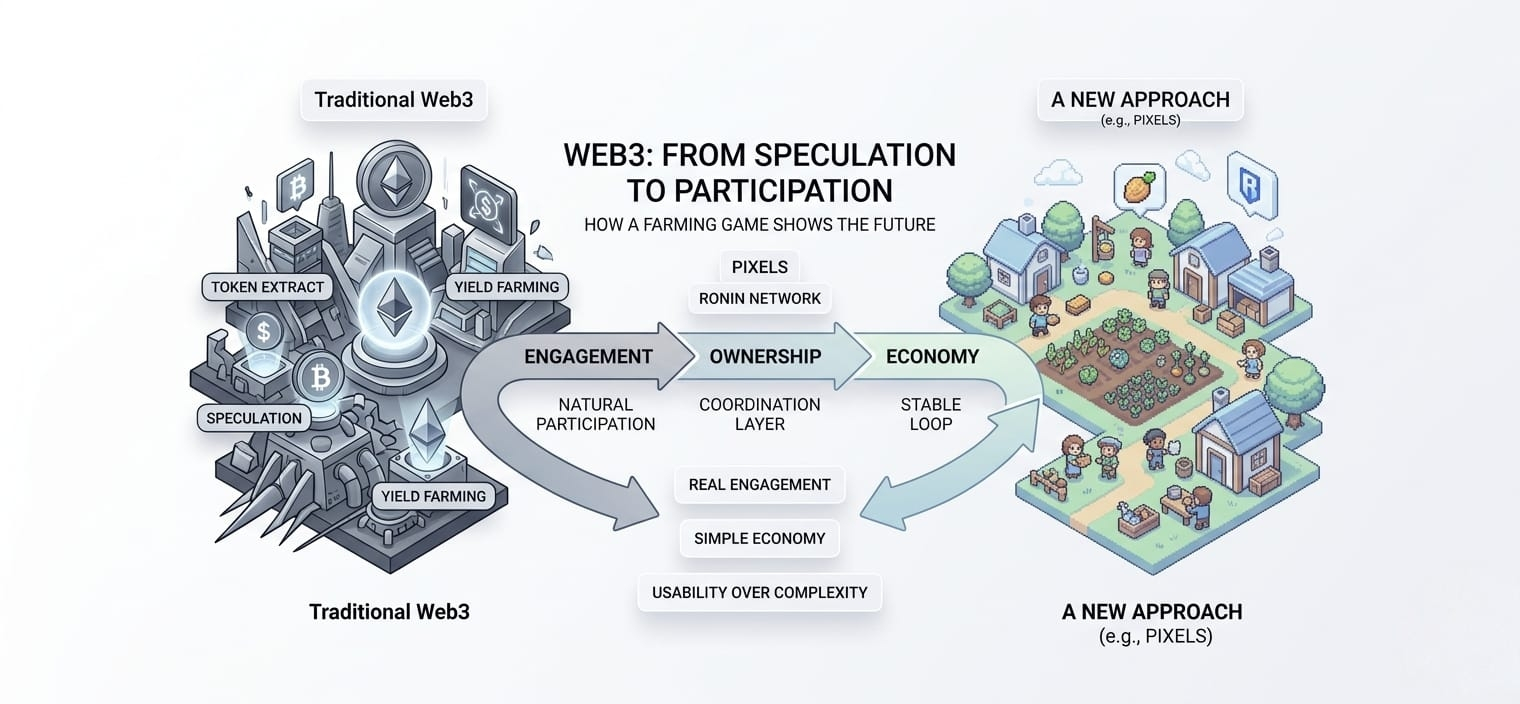
As I kept exploring, it clicked for me that Pixels isn’t trying to win with complexity. It’s leaning into something Web3 has struggled with for years: making participation feel natural instead of financialized. The token exists, yes. But it doesn’t dominate the experience. It supports it.
From what I’m seeing, PIXEL acts more like a coordination layer than just a reward mechanism. Players earn through activities that make sense within the game farming crops, crafting items, trading resources. It’s not about clicking buttons for yield. It’s about contributing to a small, functioning digital economy.
And that’s where it gets interesting.
I’ve always thought the biggest problem with Web3 gaming wasn’t the tech it was the incentives. When everything revolves around extracting value, the system burns out. Pixels feels like it’s trying to rebalance that. Instead of pushing players to optimize earnings, it gives them reasons to stay engaged. Ownership of land, social interaction, progression it all feeds into a loop that feels… stable.
The Ronin Network plays a big role here too. It’s not just about low fees or fast transactions. It’s about environment. Ronin already has a user base that understands gaming economies because of Axie Infinity. Pixels is building on top of that existing behavior instead of trying to create it from scratch. That reduces friction in a way most projects underestimate.
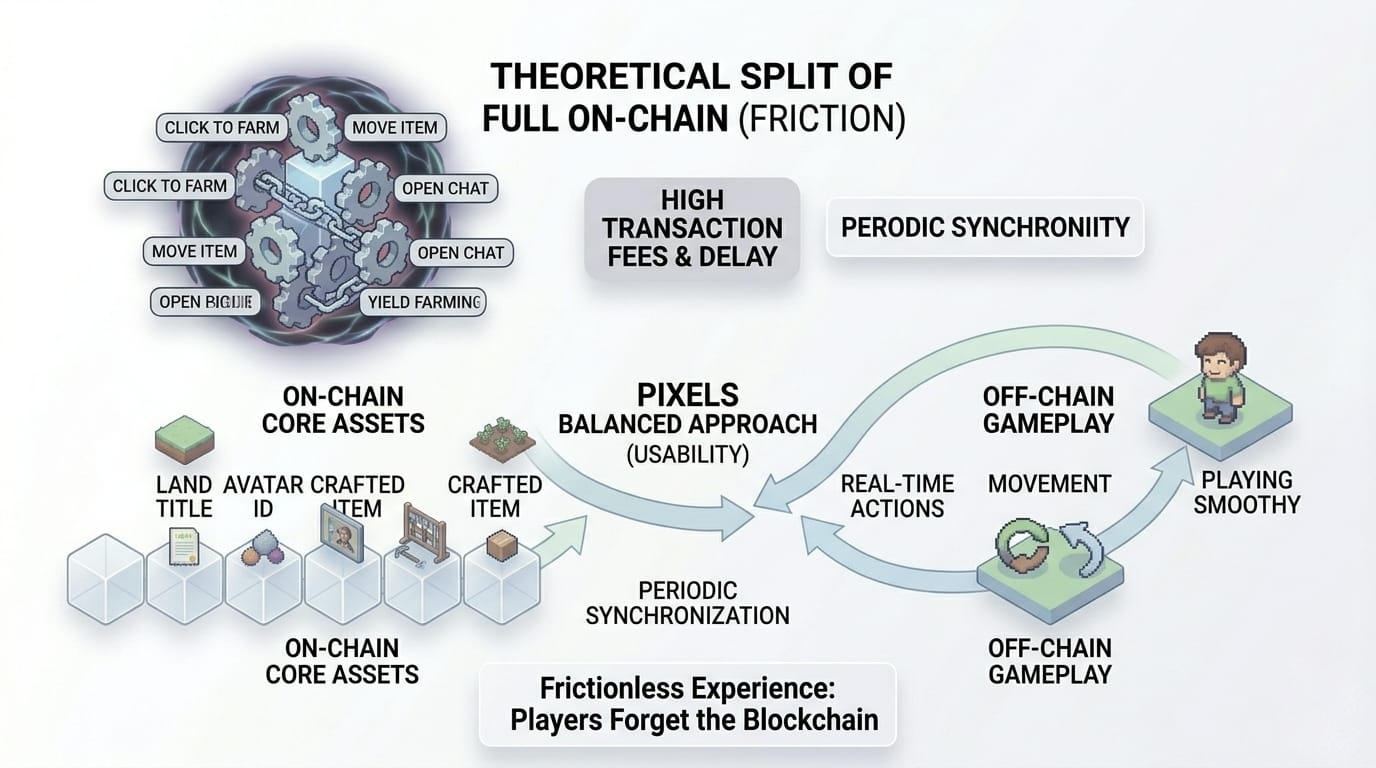
Technically, the system isn’t overly complicated. Assets are on-chain where it matters—land, items, identity but gameplay remains smooth because not every action requires a blockchain interaction. That balance between decentralization and usability is something I think more projects are starting to understand. Full on-chain everything sounds good in theory, but in practice, players just want the game to feel responsive.
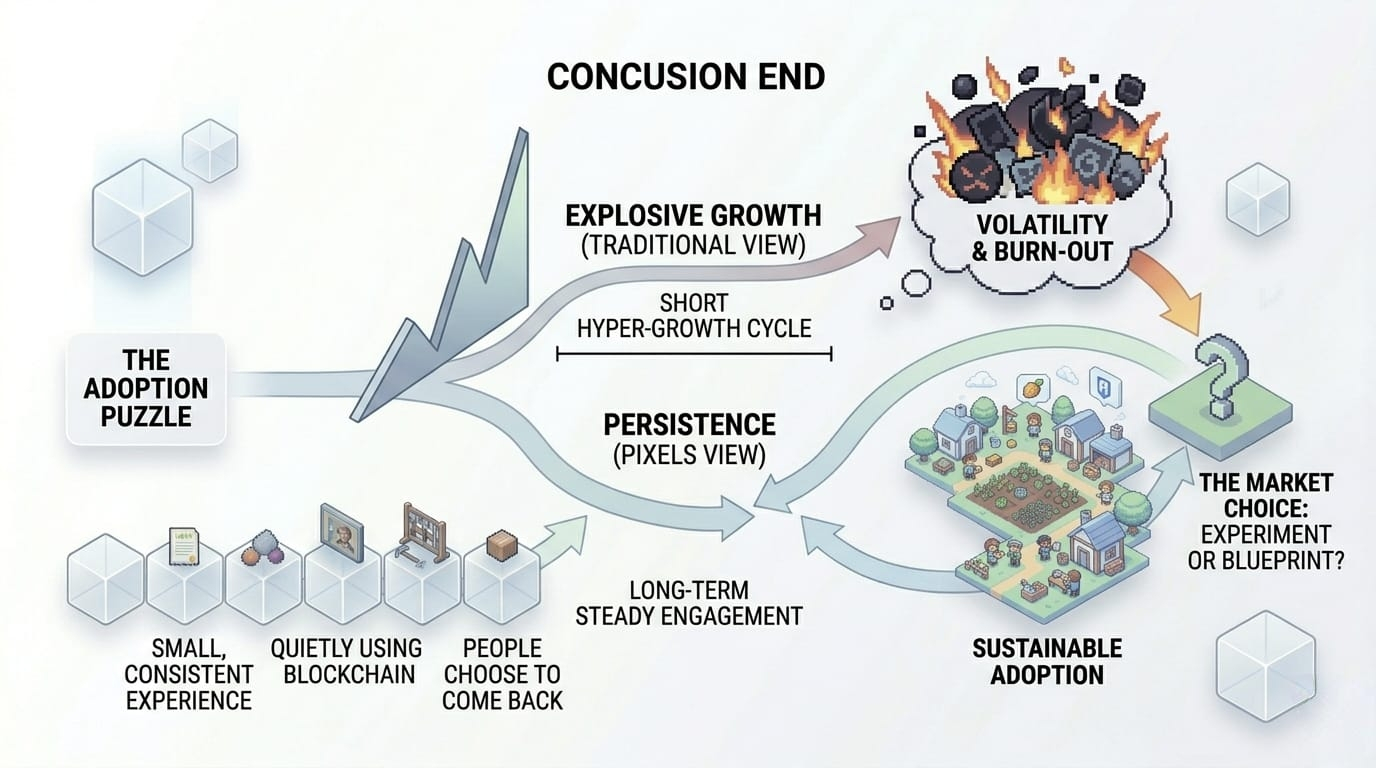
What also stood out to me is how the ecosystem is growing without forcing it. I’m seeing more integrations, more community-driven activity, and a steady flow of new players rather than sudden spikes. It’s not explosive growth, but it’s persistent—and in this market, persistence often matters more.
Comparing this to other Web3 games I’ve looked at, most either lean too hard into speculation or get lost trying to build something technically impressive but emotionally empty. Pixels sits somewhere in between. It’s not groundbreaking tech, but it understands behavior. And honestly, that might be the bigger edge.
That said, I don’t think this is risk-free at all. Token inflation is always something I watch closely in these ecosystems. If rewards outpace demand, the balance breaks quickly. There’s also the question of longevity can a simple gameplay loop hold attention over months or years? And competition isn’t going away. Traditional gaming studios are slowly entering this space, and they bring a level of polish that Web3 projects still struggle to match.
One thing I keep coming back to, though, is this: Pixels doesn’t feel like it’s trying to prove Web3 is revolutionary. It just quietly uses it where it makes sense.
And maybe that’s the shift we’re starting to see.
Not louder promises. Not bigger visions. Just systems that work well enough for people to forget they’re even using blockchain.
I didn’t expect a pixelated farming game to make me think about that. But here I am, wondering whether this is how adoption actually happens not through breakthroughs, but through small, consistent experiences that people choose to come back to.
So now I’m thinking… is Pixels just another experiment riding a cycle, or is it a glimpse of what sustainable Web3 design actually looks like when the noise fades?
