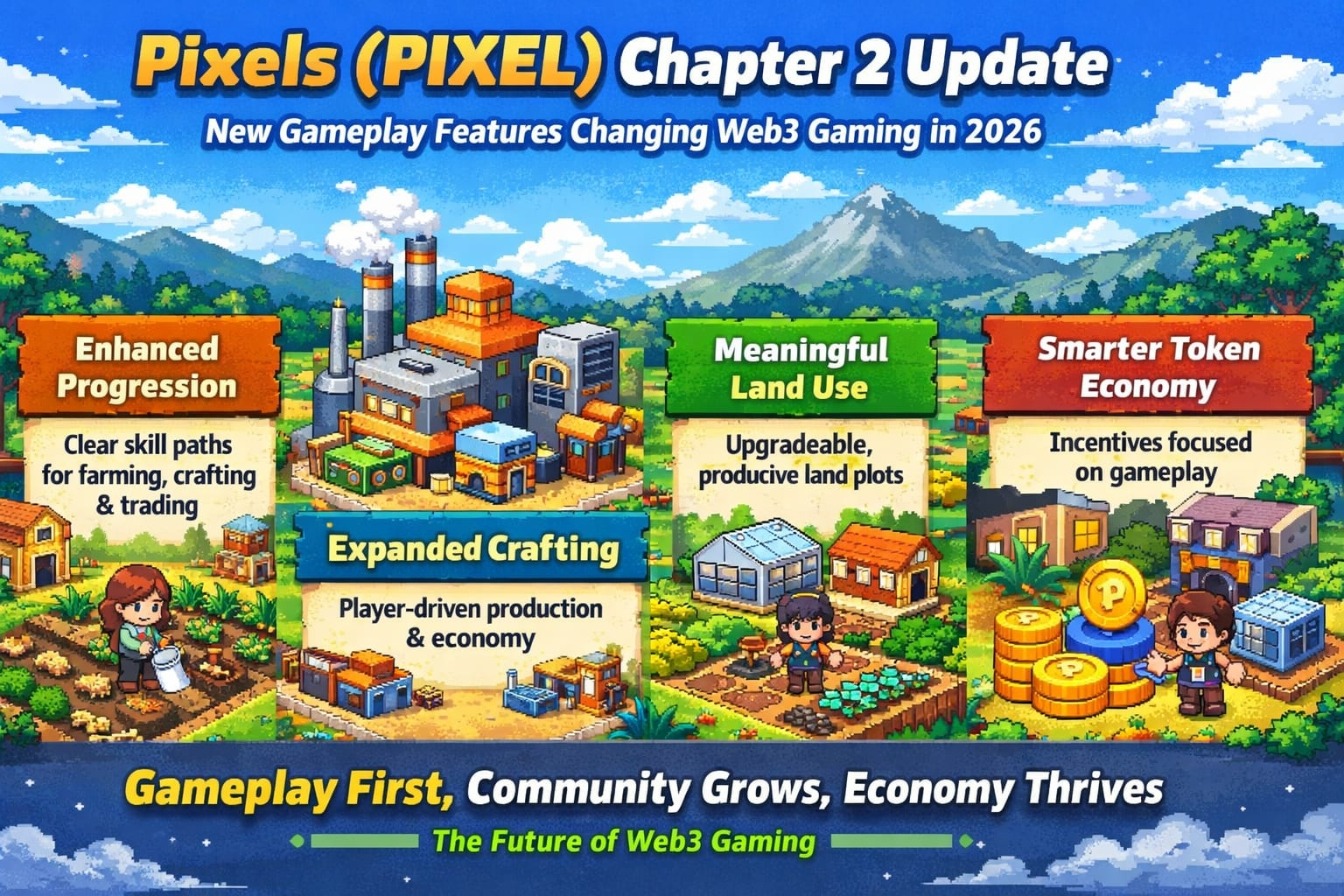
Pixels Chapter 2 was more than a routine update. It felt like a statement about where Web3 gaming needs to go next. At a time when many blockchain games were still relying on token hype and quick rewards, Pixels chose a different path. It focused on making the game itself better through stronger progression, smarter systems, and a more balanced economy. That decision is why the update still stands out in 2026.
One of the biggest changes was how progress felt for players. Earlier Web3 games often became messy, with too many disconnected features and little sense of direction. Chapter 2 made Pixels easier to understand while adding more depth. Players could build their own path through farming, crafting, trading, and managing resources. Instead of grinding without purpose, progress started to feel personal and rewarding.
The crafting system also became far more interesting. Players were no longer just planting crops and collecting simple materials. They could create goods, improve production, and take part in a larger player economy. Some focused on efficiency, others on trading, and others on building valuable resources for the community. That shift made the world feel more alive because players were creating value for each other.
Land ownership became meaningful too. In many Web3 projects, virtual land was often sold as a status symbol but offered little real use. Pixels handled this better by tying land and spaces to productivity, upgrades, and long-term progress. Owning land was no longer just about showing off. It became part of how players played and grew.
The token side of the game also matured. Instead of making rewards the main attraction, Pixels used $PIXEL to support activity inside the ecosystem. Players had more reasons to use tokens within gameplay rather than simply collect and sell them. That may sound simple, but it is one of the most important differences between a healthy game economy and an unsustainable one.
Looking back from 2026, Chapter 2 showed something valuable. Web3 gaming does not need louder promises. It needs better games. Pixels proved that when gameplay comes first, community grows naturally, and the economy has a real foundation. That is the model more blockchain games need to follow.