
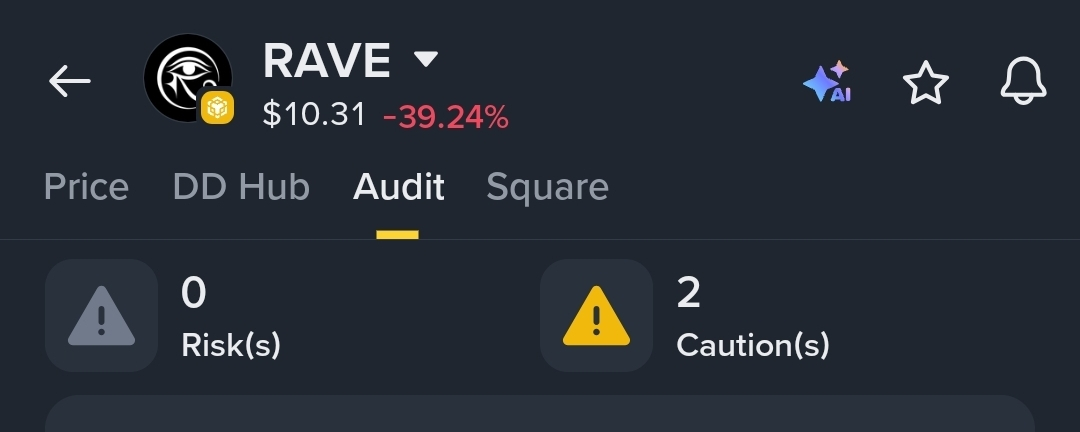
In the fast-moving world of decentralized finance (DeFi), an "Audit" report acts as a health check for a token's code. However, as seen in recent reports for $RAVE , an audit doesn't always mean a "clean bill of health." Instead, it often highlights structural features that could pose significant risks to your capital.
Here is an analysis of the specific "Caution" flags currently appearing on the token audit.
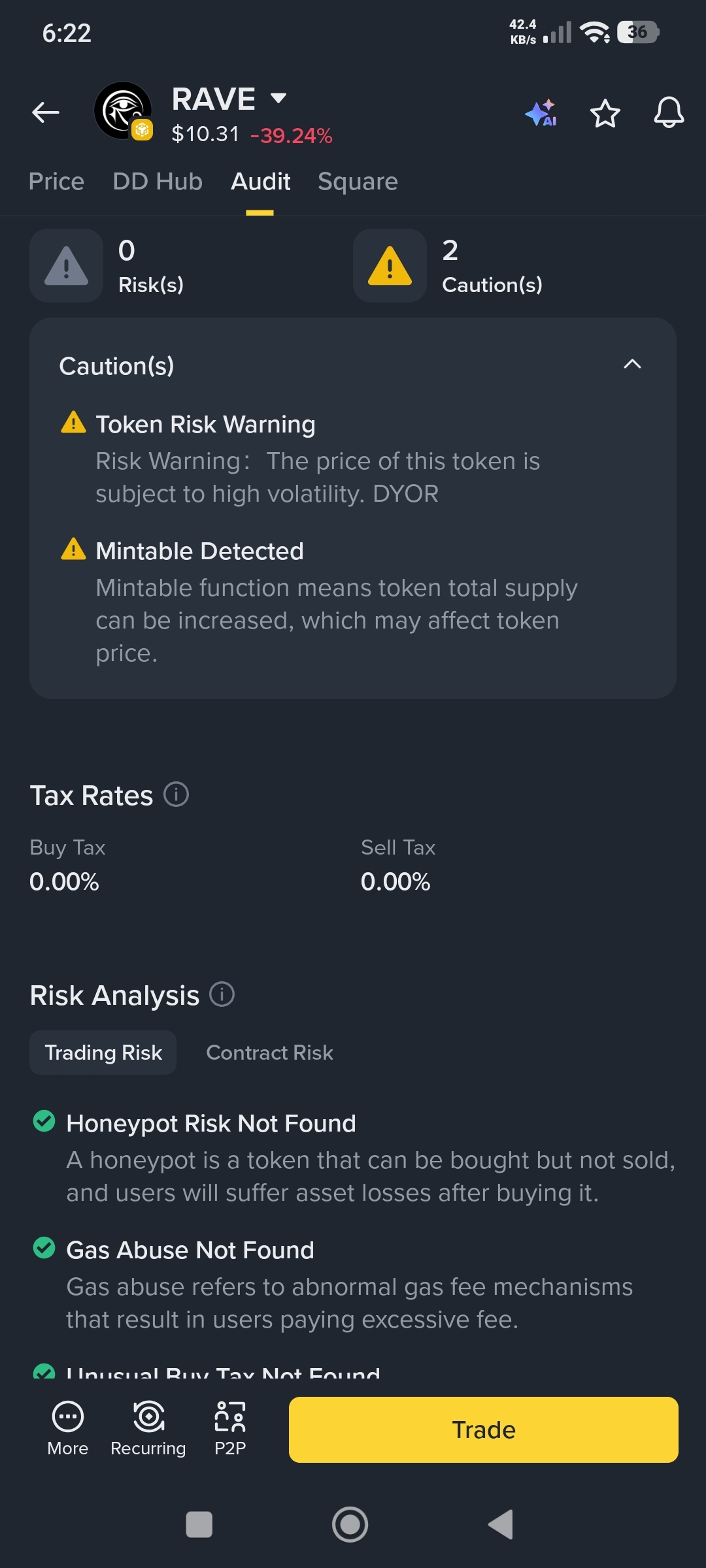
1. Token Risk Warning: High Volatility
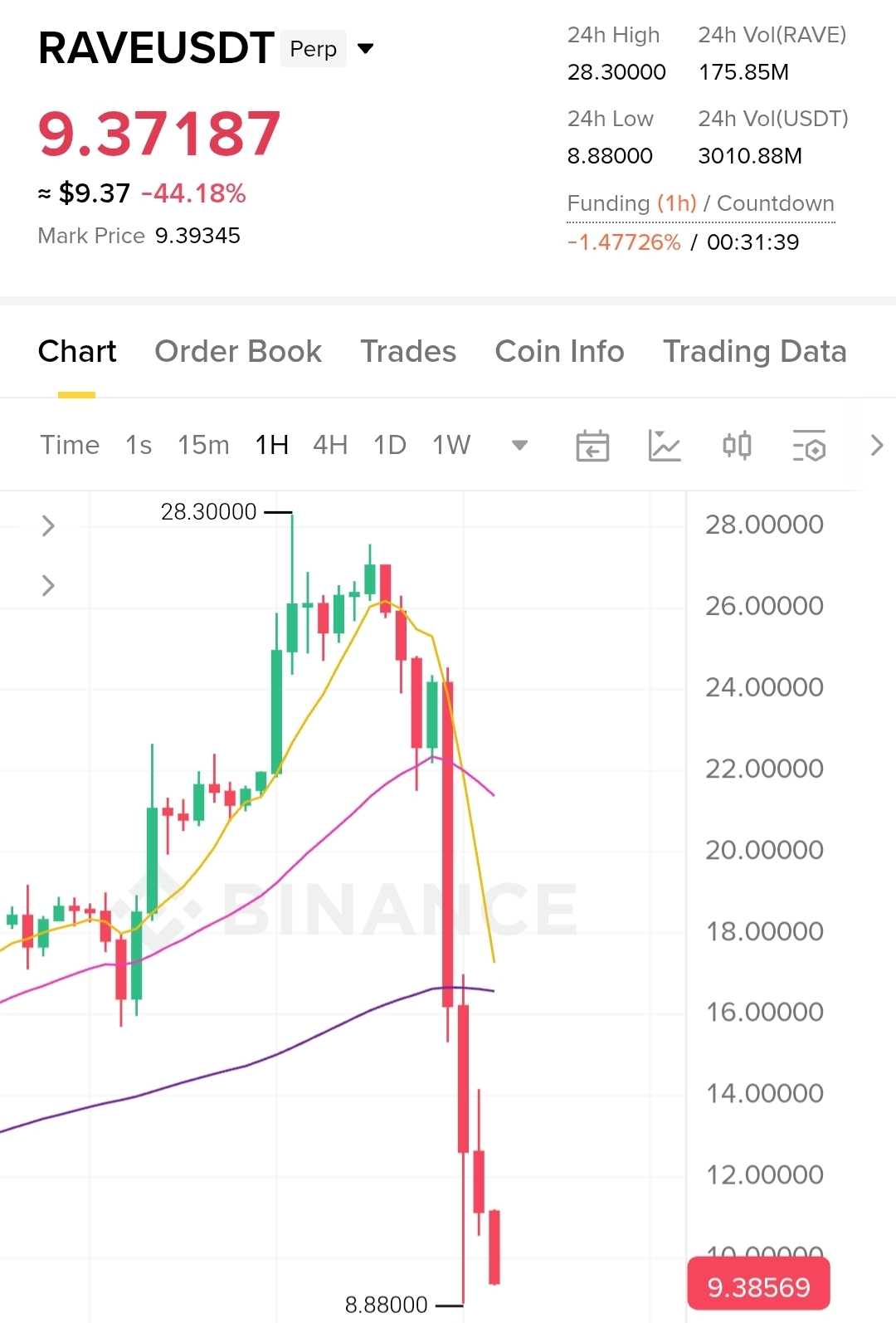
The first warning highlights that the price of the token is subject to high volatility. While volatility is the "bread and butter" of crypto trading, in the context of an early-stage project, it carries specific weight.
The Price Swing Factor: Tokens like RAVE often see massive surges in short windows, followed by sharp corrections.
The Risk: For an investor, this means your entry point is critical. Buying during a "pump" leaves you vulnerable to a "dump," where the price retraces so quickly that you might be unable to sell before losing a significant portion of your initial investment.
2. Mintable Function Detected: The "Inflationary Trap"
The "Mintable Detected" warning is often considered a red flag by veteran traders. It indicates that the smart contract code contains a function that allows the owner or a specific wallet to create new tokens at will.
Supply Dilution: Imagine you own a specific percentage of a project's total supply. If the developer suddenly "mints" millions of new tokens, your share of the project’s value drops instantly.
The Exit Risk: In extreme cases, a developer can mint a massive amount of tokens for free and sell them into the market. This drains the liquidity out of the project, leaving existing holders with worthless assets.
The Context: Some projects use minting for legitimate reasons, like staking rewards. However, if there is no clear cap or explanation, an unrestricted minting function is a major security risk.
3. The Reality of Early-Stage Projects
Projects like RAVE often bridge niche cultures (like electronic music) with blockchain. While they may offer real-world utility—such as staking for event access—the audit results highlight the tension between a creative vision and speculative code.
High volatility means there is a high chance of "slippage" and sudden portfolio drops. Meanwhile, the mintable contract creates the potential for total value dilution if the developers choose to increase the supply. Because many of these projects are in their early stages, there is limited historical data to predict long-term stability.
How to Protect Yourself
If you are looking at a token with these specific warnings, "DYOR" (Do Your Own Research) should involve the following steps:
Check Ownership: Has the contract ownership been "renounced"? If the developer has renounced ownership, they may no longer have the power to trigger the minting function.
Verify the Use Case: Does the project have a valid reason to mint tokens? If the team hasn't explained why the function exists, exercise extreme caution.
Monitor Liquidity: Look for "locked" liquidity. If the developers can remove the underlying funds that back the token, the minting risk becomes even more dangerous.
An audit warning is a signal to stop and look under the hood. While a project might have an interesting narrative, the structural risks identified in the code mean that any investment should be treated as high-risk speculation.