
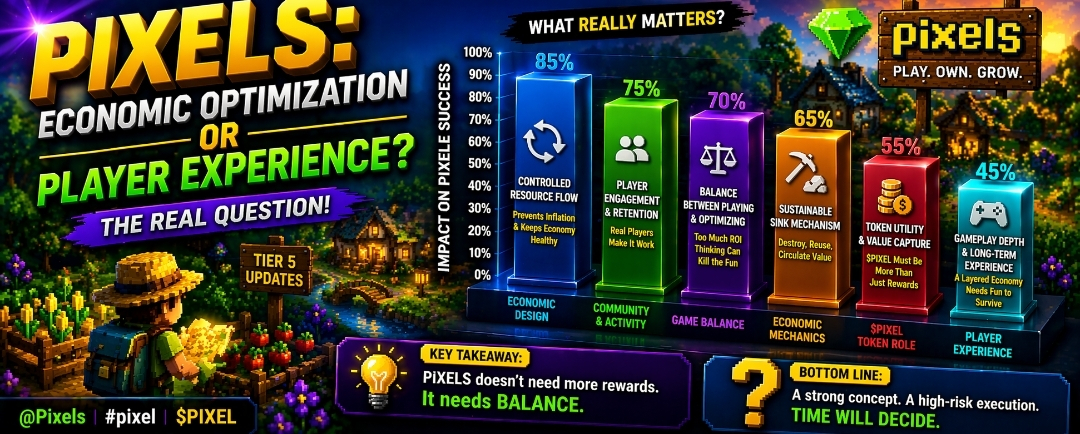
Everyone in Web3 gaming talks about sustainability, but very few projects manage to protect the actual feeling of playing. That’s where Pixels caught my attention again, especially after the Tier 5 update.
At first, it looks like a simple expansion—more resources, more roles, more rewards. But if you look deeper, it’s really about controlling how value moves inside the game. And that’s important. Most GameFi projects fail because they reward too much, too fast. Players farm, sell, and leave. The system turns into extraction, not gameplay.
Pixels seems to be trying something different: circulation over accumulation. Instead of letting resources pile up endlessly, they introduce mechanics that push players to reuse, trade, or even destroy assets to progress. That creates pressure, but also balance.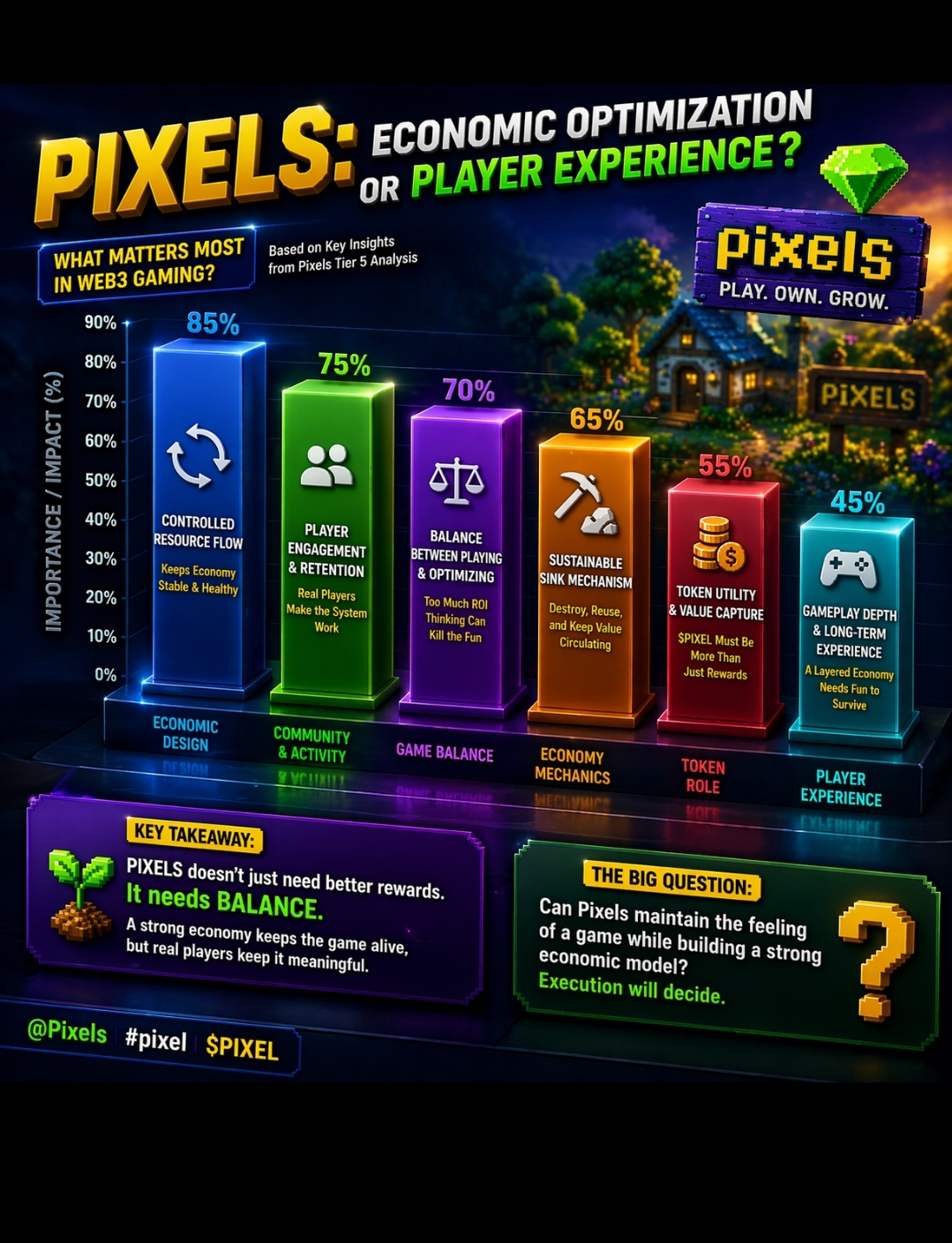
Still, this approach isn’t risk-free. The more you introduce economic logic, the more players start thinking in ROI instead of fun. When every decision becomes optimization, the “game” can slowly feel like a strategy sheet.
From my view, the real challenge is not the system design—it’s player behavior. If enough real users stay, interact, and engage naturally, this model can work. If not, even the best-designed economy will feel empty.
$PIXEL, in this case, depends heavily on this balance. It can’t survive as just a reward token—it needs to reflect real activity inside the ecosystem.
Pixels is taking a different path. That doesn’t guarantee success—but it definitely makes it worth watching.

