
This morning I sat looking at the screen for quite a while before clicking into the game, not because I was excited, but because I wanted to see whether after so many rounds of expansion, this project still had anything genuinely new left to reveal. The moment I entered Pixel Dungeons, that familiar feeling was broken in the very first beat, and that was when I understood that Pixels no longer wanted to keep moving forward in the same outfit that had once made it stand out.
What caught my attention was not simply that a new game mode had appeared at the right moment. What matters is that Pixel Dungeons touches the biggest limitation of Pixels, the limitation of a project being remembered too strongly through the word farming. A product that rises through an easy to understand gameplay loop can very easily become trapped inside that same loop. Once players are used to planting, waiting, harvesting, and repeating, every later attempt at expansion is often treated as a side feature.
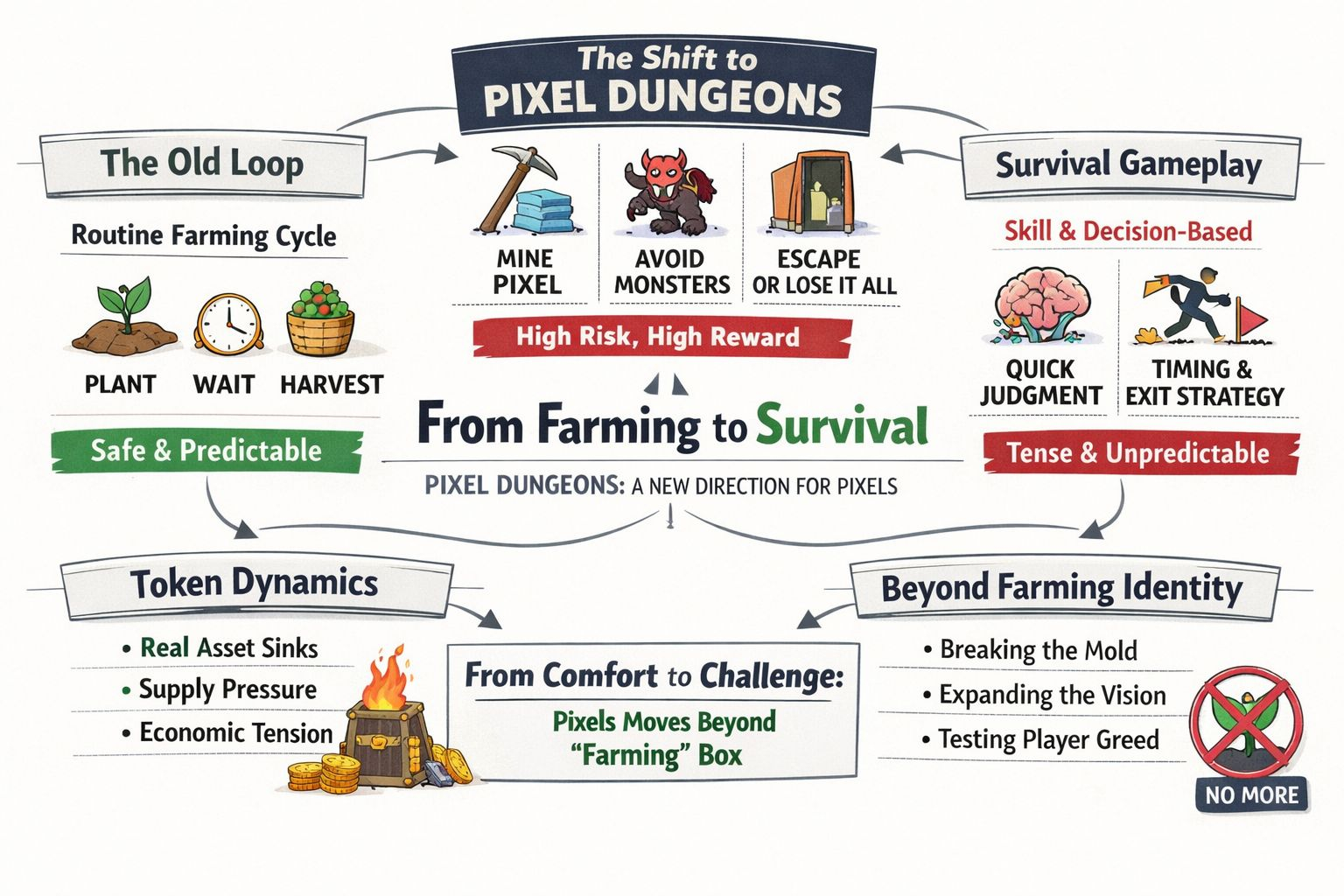
Pixel Dungeons is different because it does not ask permission from old habits. Players go in, mine PIXEL, avoid monsters, avoid dangerous zones, avoid other players as well, then try to carry their resources back out. If they die, they lose everything. Only if they escape do they truly keep what they earned. That single change is enough to reverse the psychological rhythm. Before, value accumulated over time, but here value only temporarily sits in your hands until you make it out of the danger zone. I think that is the real turning point, because it moves Pixels from the feeling of cultivation to the feeling of survival.
When resources are tied to the risk of immediate loss within just a few short minutes, the kind of ability the system rewards also changes. A farming oriented structure usually values consistency and the habit of coming back every day. Pixel Dungeons demands short form judgment, fast reading of situations, and knowing when to stop. Perhaps this is one of the rare times when Pixels forces players to stop thinking in a linear accumulation mindset. The project is beginning to reward reflexes and the discipline to pull back.
From a builder’s perspective, I value this because it hits the hardest part of long term design. A system that retains players through a steady rhythm can easily create a sense of safety, but that same safety will flatten the experience over time if no new tension is added. Pixel Dungeons places risk at the center of the gameplay loop and raises a question about each player’s greed. Honestly, this is the kind of friction that Pixels has needed for a long time, because only when players face the possibility of real loss does the reward stop feeling like an emotionless number.
I also do not see this as just a way to fight boredom. For a token with a large total supply like PIXEL, the important issue is not how much gets distributed, but whether the project can create situations in which the asset is hunted, held, lost, and extracted under real tension. Pixel Dungeons helps Pixels move closer to a form of economic behavior with real friction. It shows that the team understands a system cannot survive for long if value is only suspended inside an environment that is too gentle.
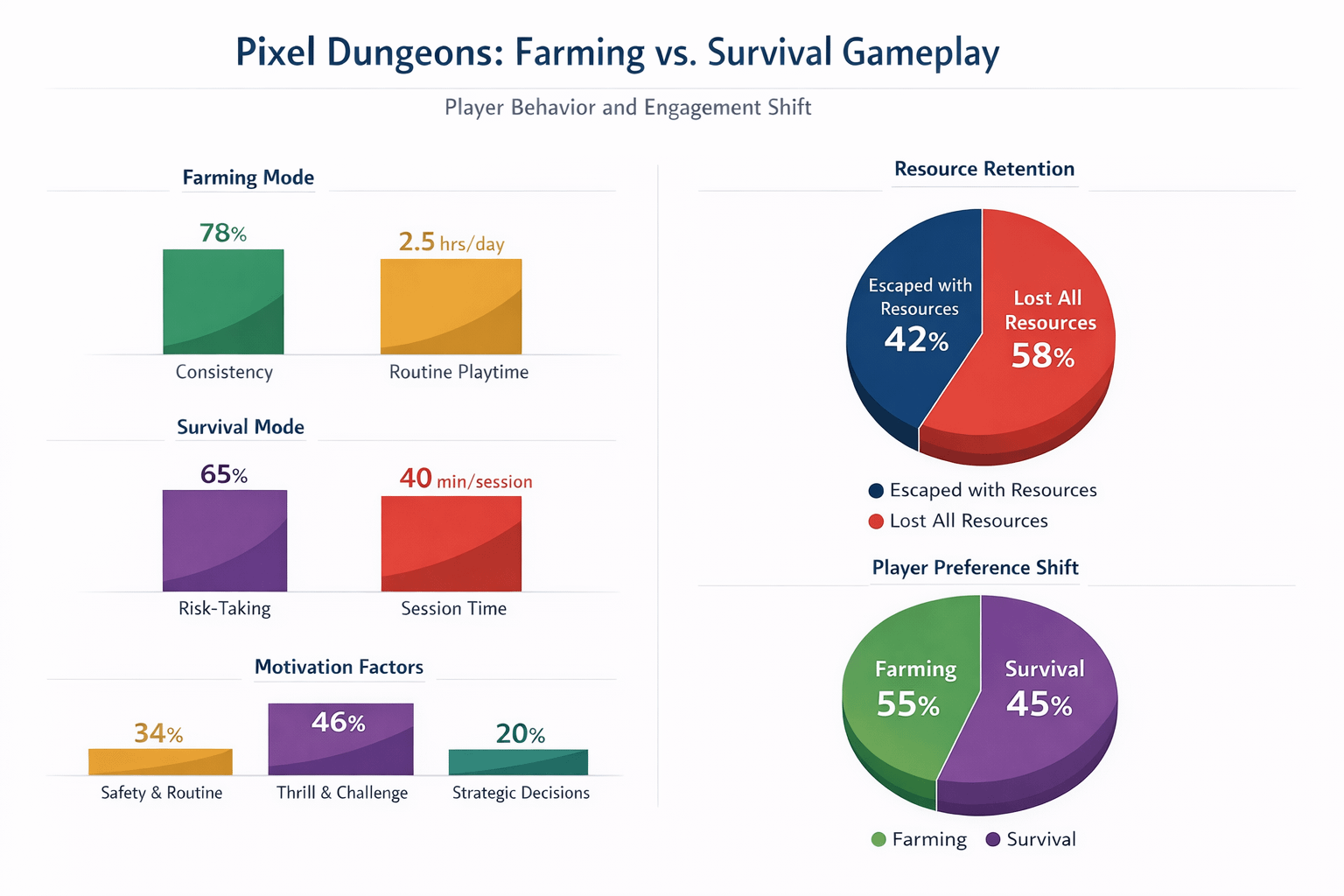
What makes this move feel worthwhile to me is that it does not betray the past, but it also refuses to become a prisoner of that past. Farming is still the foundation that brought the first wave of users to the project and gave it an easily recognizable identity. But if the project keeps clinging to that image, it will be made smaller by its own early success. Pixel Dungeons arrives like an attempt to widen the boundary of perception, so players understand that this project does not only know how to create soft and comfortable loops, but also wants to build spaces where value must be preserved through skill and through the ability to choose the right time to leave.
After years of watching the market wear down projects that only know how to repeat their old strengths, I am no longer persuaded by polished statements about expansion. What I care about is whether a team dares to reshape the way users experience the core of the product. To me, Pixel Dungeons is the clearest answer Pixels has given to that problem. It shows that Pixels does not want to be boxed in by the word farming, and more importantly, the project is trying to build a structure where the feeling of earning is no longer as important as the ability to hold on to what has been earned. Will players still look at this project as a place to repeat old habits.