
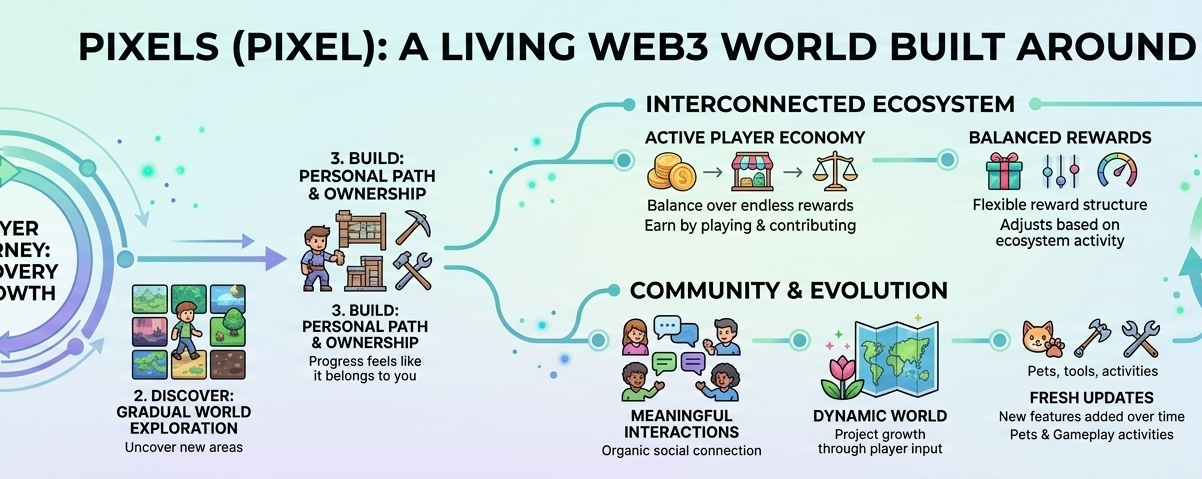
Pixels doesn’t try to overwhelm you or show off it simply invites you in. At first, it feels like a light, relaxing farming game where you plant crops, explore land, and meet other players. But the longer you stay, the more you realize there’s something deeper going on. It’s not just about growing resources; it’s about being part of a world that keeps evolving with the people inside it.
What makes Pixels feel different is how natural everything flows. You’re not forced into complicated systems right away. You move at your own pace, discover things gradually, and build your own path. Whether you’re farming, exploring new areas, or interacting with other players, it never feels like a grind for the sake of rewards. It feels like progress that actually belongs to you.
The $PIXEL token fits into this experience in a way that feels purposeful rather than forced. It’s not just something you earn and forget about. You can use it to strengthen your position in the game, unlock opportunities, and take part in the ecosystem in a more meaningful way. Staking, in particular, gives players a chance to stay connected to the project’s growth. Instead of being passive, you’re involved your activity and decisions matter.
One of the strongest parts of Pixels is how it approaches its economy. It doesn’t rely on endless rewards to keep players interested. Instead, it focuses on balance. You earn by actually playing, contributing, and staying engaged. If you’re active, the system recognizes that. If not, it doesn’t artificially inflate value. This creates a more stable environment where the game doesn’t feel like it’s constantly trying to hold itself together.
The flexible reward structure also makes a difference. There’s no fixed promise that can break later. Everything adjusts based on what’s happening inside the ecosystem, which makes it feel more real and less fragile. It’s a small detail, but it changes how the entire system behaves over time.
What keeps things exciting is that Pixels isn’t standing still. New updates keep arriving, adding fresh features, expanding the world, and giving players new things to do. The introduction of elements like pets and new gameplay activities adds personality and keeps the experience from becoming repetitive. You can feel that the game is growing rather than just maintaining itself.
There’s also a clear effort to make the overall experience smoother. Upcoming changes are focused on making in-game interactions easier and more intuitive, especially when it comes to spending and rewards. These kinds of improvements show that the team is paying attention to how players actually use the system, not just how it looks on paper.
What really brings everything together is the community. Pixels doesn’t feel like a solo experience unless you want it to be. You can interact with others, build alongside them, and share progress in a way that feels organic. Owning land, participating in activities, and being part of the ecosystem creates a sense of connection that goes beyond just playing a game.
Over time, you start to see that Pixels isn’t trying to follow the usual Web3 formula. It’s not built around quick hype or short-term rewards. It’s built to feel alive, shaped by the people who spend time in it. That’s what makes it stand out not just what it offers, but how naturally it all comes together.
In the end, Pixels feels less like a product and more like a space you return to. It respects your time, gives you room to grow, and slowly builds value around your presence. And in a space where many projects come and go, that kind of consistency and intention is what makes it worth watching.