
That morning, I sat in front of the screen with a cup of tea already gone cold, opened Pixels again after a few busy days, and thought I would just skim through it and close it. But the longer I looked, the more I felt this project had clearly turned in a different direction, enough to make someone who has watched too many game economies swell up and collapse stop and stay longer.
In the early stage, land is always the easiest story to understand. It gives players something visible and makes them believe they are holding a good position in the future of the game. The problem is that this model rarely goes far if all value keeps piling into static assets. When the main incentive revolves around ownership, the economy sooner or later shrinks into a competition of positions, while the community gets pushed down into the background layer for speculation.
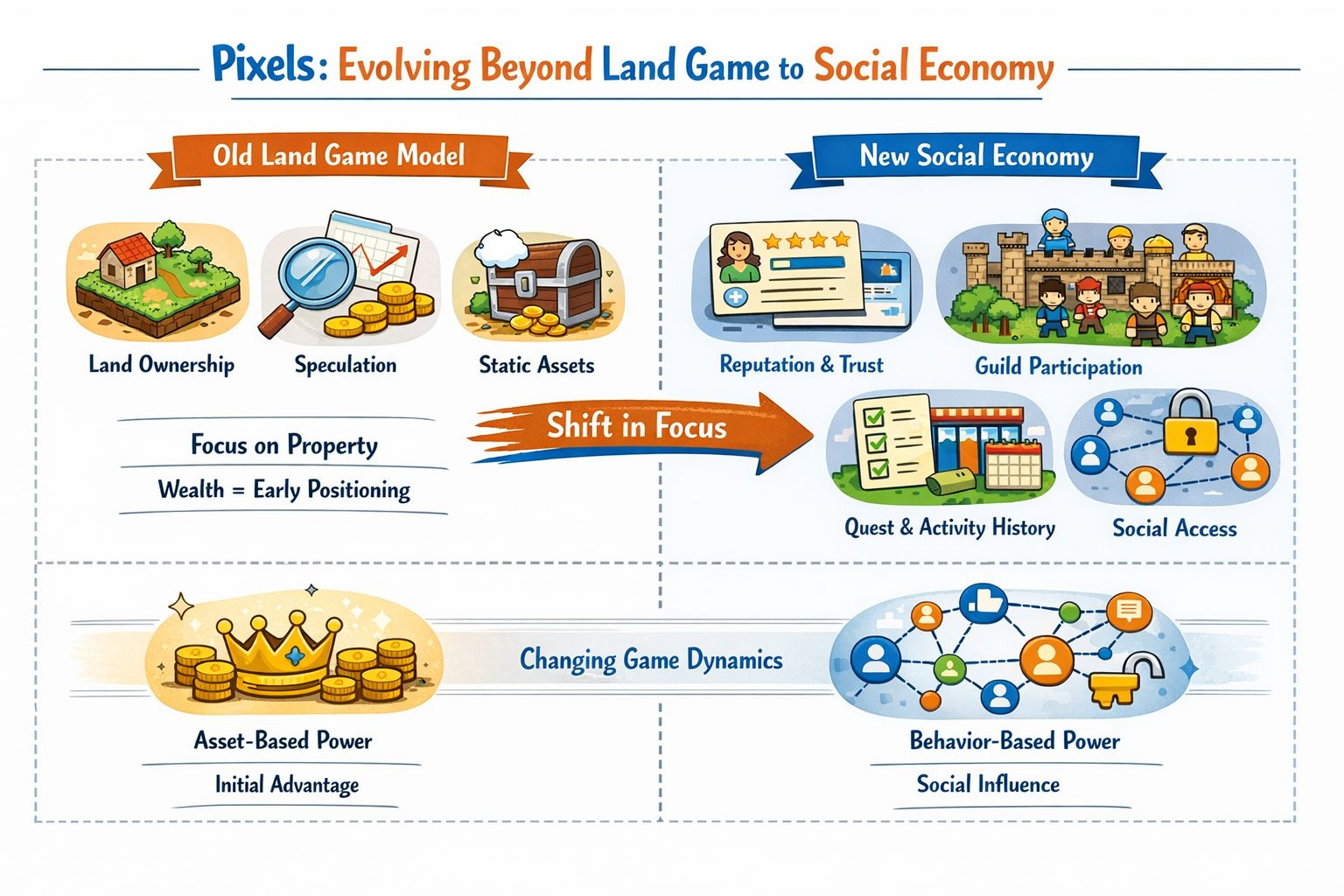
What made me take Pixels more seriously is that the project is no longer letting land remain the absolute center. Land still matters, but its role is being pulled back to what it truly is, which is infrastructure for activity and production. The new weight is moving toward reputation, toward the rhythm of quest completion, toward the ability to participate in guilds, and toward a history of presence that is long enough and real enough. That is not a small change, because it rewrites the core question of the game, from who owns what to who holds what position inside the operating order.
I think this is the point where Pixels starts moving beyond the land game model. A social economy is only worth discussing when it touches real interests, not when it merely creates a sense of liveliness. If social relationships do not open up additional access and do not determine who gets to go deeper, then community is just decoration. But when credibility becomes a condition for entering higher layers of value, the social side of the game begins to carry real economic weight.
In many projects, people like to say that community is the biggest asset, yet in the end the system still rewards early capital or short term grinding the most. Pixels is trying to take the harder path. It reads an account not only through the assets it holds, but also through its behavioral profile, meaning how that player has shown up, whether they are tied to a guild, whether they stay in rhythm with live ops, whether they have built a history stable enough to be trusted. It is ironic that the softest part of the game, which is social relations, is now being forced to become the hardest part of the stratification mechanism.
The strength of this direction is that it changes the power structure from the inside. Before, land usually locked most of the advantage into the moment of entry. Whoever arrived earlier, chose a better position earlier, and secured assets earlier stood higher. But when Pixels ties more gateways to reputation and social role, advantage starts shifting away from the asset inventory and toward the profile of presence. That does not erase inequality, but it makes inequality less lazy.
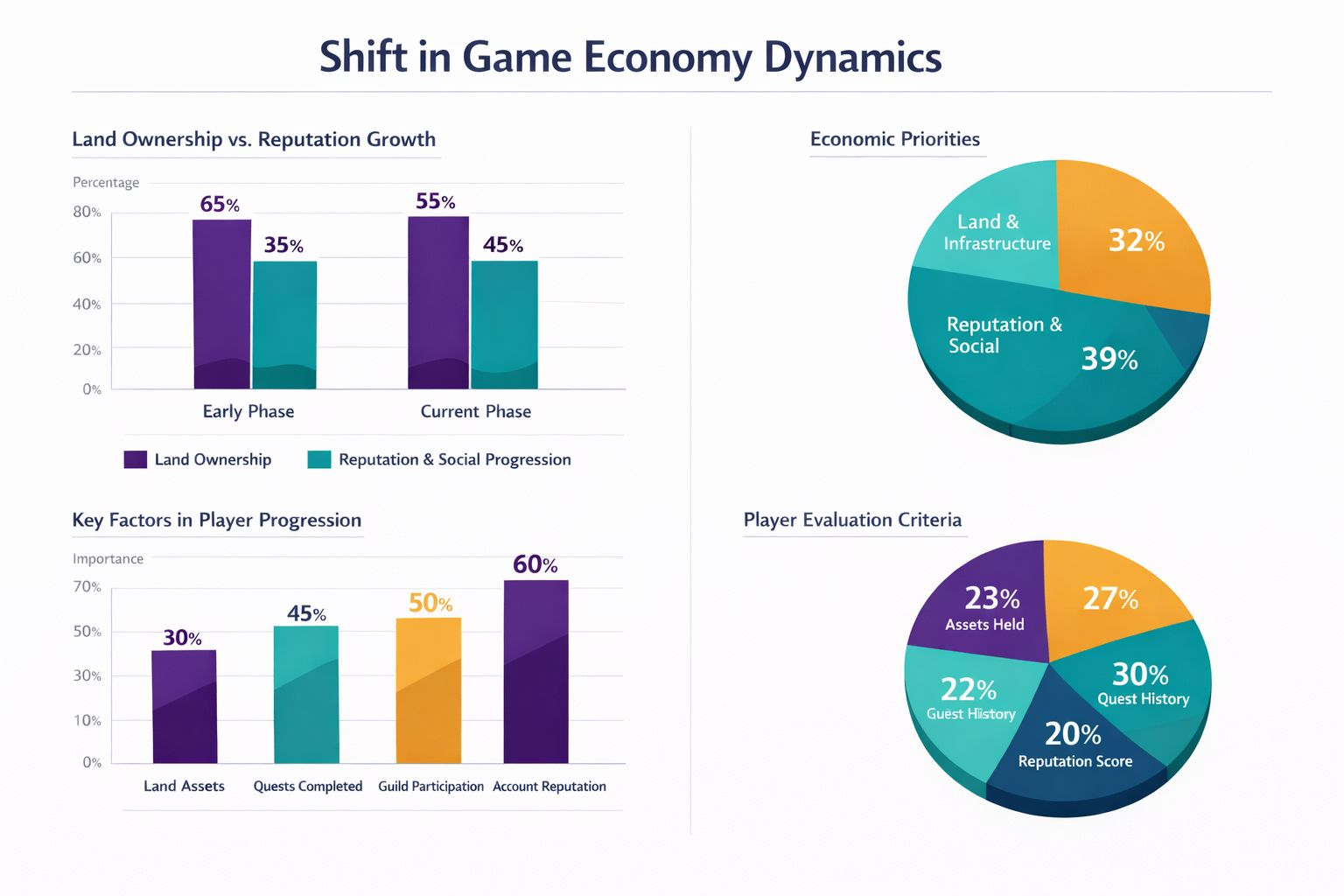
Of course, I do not look at Pixels with easy optimism. Any mechanism that measures behavior also creates incentives for players to perform behavior. When social economy becomes heavier, the risks also become clearer, which means accounts may learn how to optimize their image, join at the right rhythm to accumulate credibility, stay close to guilds to unlock access, yet fail to create value that is actually proportional. That is the hard problem every team has to face.
What stays with me after looking more carefully is not excitement, but a kind of cold acknowledgment. Pixels is trying to leave behind the kind of game where land stands at the center and people stand around it, and move toward the kind of game where a player’s social position determines who gets to go deeper. If it goes all the way down that road, this project will not just fix an old model, it will also force people to rethink how value is created inside a game economy. In your view, when social economy carries real weight, can Pixels preserve the living part of its community without turning it into a dry scoring machine.