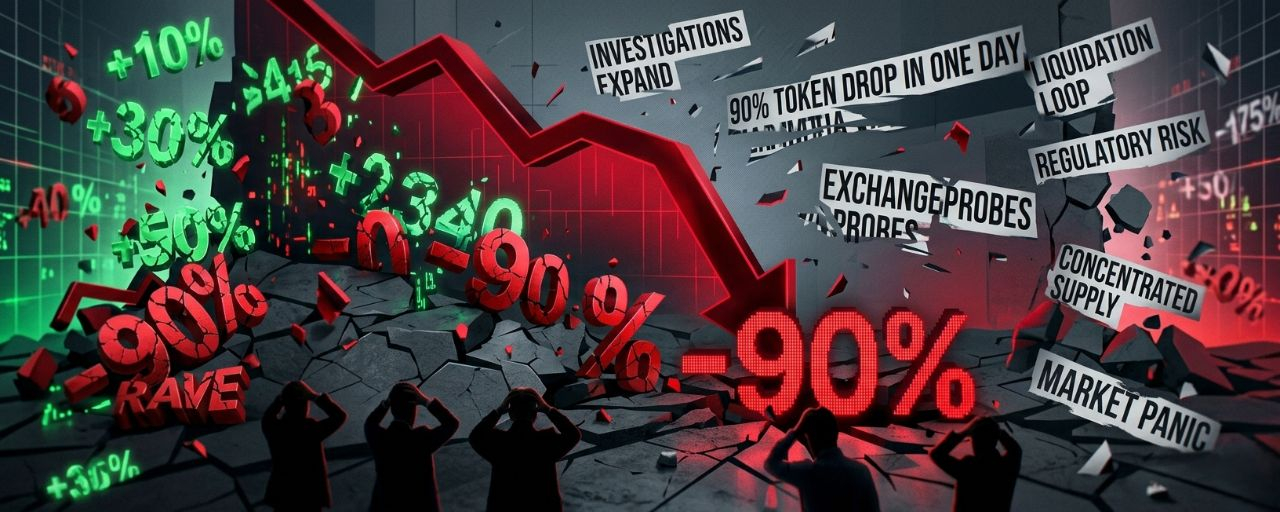

RaveDAO’s native token, RAVE, has suffered one of the most dramatic collapses in recent crypto market history, losing more than 90% of its value within a single day as major exchange investigations into its trading activity expand. The sudden crash has wiped out billions in market value and raised serious questions about insider activity, liquidity concentration, and market manipulation.
The token had recently experienced a violent speculative rally, surging from near $0.25 to above $25 in just days, driven by heavy trading volume and a wave of short liquidations. However, the rapid upside quickly reversed, triggering an equally aggressive sell-off that erased nearly all gains. According to market data, RAVE dropped to nearly $1.50–$1.65 during the peak of the collapse, marking a drawdown of over 90% from its all-time highs. (Bitrue)
The crash intensified after blockchain analysts and prominent on-chain investigators flagged unusual wallet activity tied to the token’s supply distribution. Reports suggest that a small number of wallets control around 90% of the total token supply, a level of concentration that significantly increases the risk of price manipulation and sudden liquidity shocks. (tradingview.com)
As panic spread across derivatives markets, leveraged positions were forcibly liquidated, adding further downward pressure. In just 24 hours, tens of millions of dollars in long positions were wiped out as cascading liquidations accelerated the sell-off. This created a feedback loop where falling prices triggered more forced selling, deepening the crash.
The situation escalated further when multiple centralized exchanges, including Binance and Bitget, confirmed that they had begun reviewing RAVE’s trading activity. These probes were reportedly triggered by abnormal volume spikes, sudden price surges, and allegations of coordinated trading behavior. (tradingview.com)
At the center of the controversy are claims made by independent on-chain analysts suggesting that large token transfers to exchanges occurred shortly before the explosive price movement. Critics argue this pattern is consistent with coordinated pump-and-dump structures, although RaveDAO has strongly denied any involvement in market manipulation.
In public statements, the project team insisted that it has no control over market pricing and is not responsible for recent volatility. However, these denials have done little to calm market sentiment, especially as exchange investigations continue to unfold. (MEXC)
The broader crypto community has reacted with skepticism, with many traders pointing to the token’s extreme volatility, thin liquidity structure, and concentrated ownership as key warning signs that were overlooked during the rally. Some analysts also note that the token’s rapid rise was largely driven by speculative momentum rather than fundamental adoption or utility growth.
As the situation develops, attention is now shifting to whether exchanges will impose trading restrictions, freeze suspicious wallets, or even delist the token if manipulation is confirmed. For now, RAVE remains under intense scrutiny, and its future depends heavily on the outcome of ongoing investigations.
The RaveDAO collapse serves as another reminder of how quickly sentiment can reverse in highly concentrated crypto assets, where a small number of actors can potentially control both liquidity and price direction.