
didn’t expect to find anything particularly technical when I started looking into Pixels pets. Like most NFT-based systems, I assumed it would follow a familiar formula: generate traits, randomize combinations, mint them on-chain, and market them as unique. That model is well-worn, and most projects don’t go much deeper than that.
@Pixels Pixels, however, shows a bit more intentional design than I anticipated—though I’m cautious about giving it too much credit before seeing how it performs at scale.
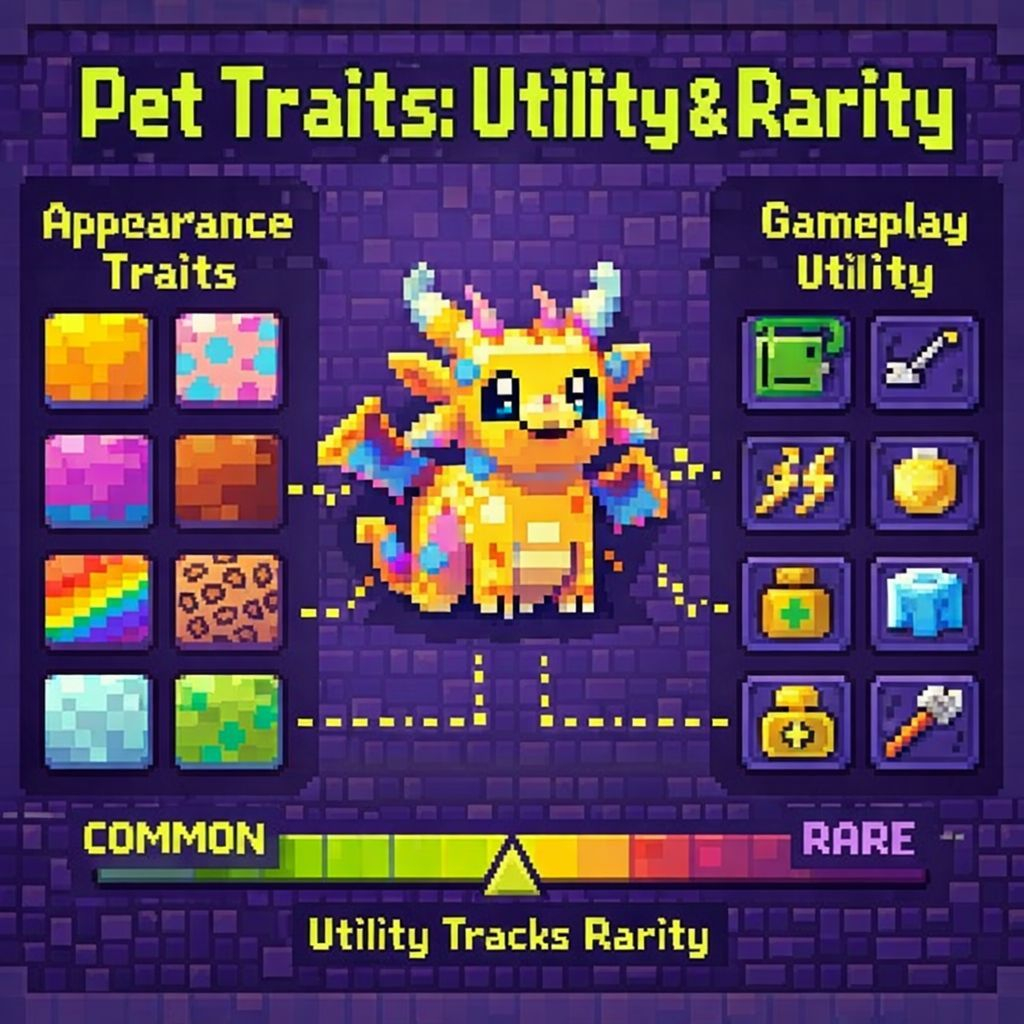
At its core, Pixels pets are minted as NFTs on the Ronin network. Each pet is assigned a set of traits that influence both its appearance and its in-game function. That second aspect is important. Many NFT systems stop at visual uniqueness, but Pixels ties traits directly to gameplay, particularly farming mechanics. In other words, what you mint isn’t just cosmetic—it has functional consequences. That introduces real economic considerations into the system.
The minting process relies on on-chain randomness to generate trait combinations. This is where things become less straightforward. While randomness in theory is well understood, implementing it securely on-chain is more complicated. Most systems rely on tools like verifiable random functions or commit-reveal schemes to approximate fairness. Without reviewing audited smart contract code, it’s difficult to determine whether Pixels’ implementation is truly unpredictable or potentially exploitable. As of now, I haven’t come across a dedicated public audit of the pet minting contracts, which leaves an open question.
Trait rarity follows a tiered structure—common traits are abundant, rare ones are not. This is standard across NFT ecosystems. Scarcity, as usual, is what drives value in secondary markets. There’s nothing particularly innovative about this mechanism itself. The real question is whether rarity translates into meaningful in-game advantage or simply resale appeal.
From what I can see, Pixels is attempting to align rarity with utility. Pets with rarer traits are designed to perform better in specific farming tasks. If this balance holds as the ecosystem grows, it could create a stronger link between gameplay and market value—something many NFT projects struggle to achieve. Aligning the incentives of players and collectors is difficult, and this approach at least attempts to bridge that gap.
Because ownership is on-chain, pets exist independently of the game. They’re held in a wallet rather than stored on a centralized server. That offers portability, but it also raises a practical concern: if the game were to shut down, the NFT would still exist, but its value might not. That’s a reality worth considering before investing.
The breeding system adds another layer of complexity. Two pets can produce offspring with inherited traits, along with the possibility of mutations. These mechanics are governed by smart contracts, introducing both deterministic rules and elements of randomness. This effectively creates a kind of genetic economy, where value isn’t just tied to individual pets but also to their potential combinations.
#pixel $PIXEL #PIXEL/USDT #BitcoinPriceTrends
