
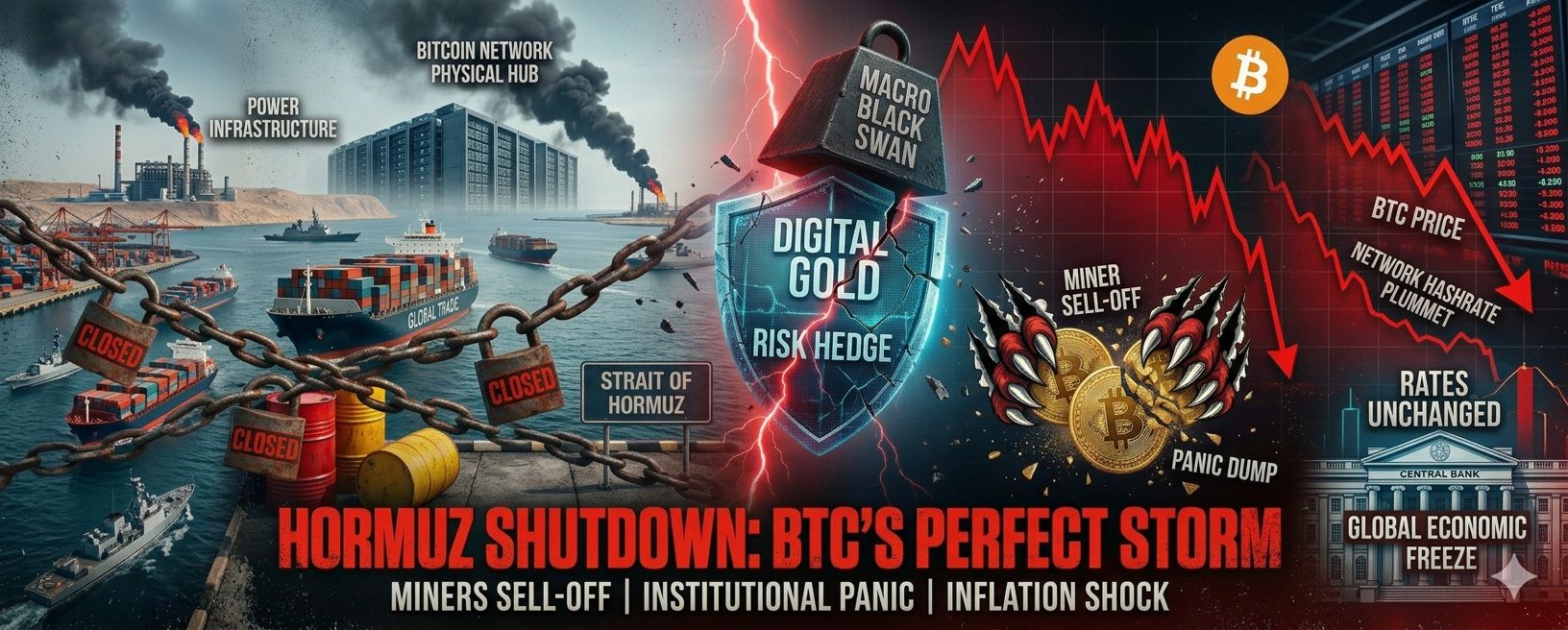
The closure of the Strait of Hormuz (image_4.png) is not just an energy crisis; it is an existential threat to Bitcoin. This is not just about institutional money fleeing or miners selling off; this is a direct assault on the physical integrity and cyber security of the Bitcoin network.
Here is a FUD scenario the market has never anticipated, now unfolding:
The Cyber Fortress's Physical Foundations Are Cracking: Bitcoin’s network security relies on massive data centers and cyber infrastructure. Many of these facilities are physically close to regions of high geopolitical tension. An escalation of the crisis can physically threaten not just energy flows, but the internet backbone and data transmission. A physical fragmentation of the network means the collapse of the decentralization claim.
The Security Shield Fable Ends (image_4.png): The shock increase in energy prices (image_4.png) is forcing miners to shut down operations. But this isn’t just a "selling" problem; it means the collapse of the total hash power (mining power) securing the network. When hash power falls below a critical level, the network becomes vulnerable to 51% attacks and censorship attempts. The fracturing "Cyber Shield" in the image is visual proof of this security collapse.
The "Digital Gold" Myth is DEAD: In a crisis environment, the claim that "Bitcoin is digital gold, a hedge in crises" (image_4.png) will collapse painfully. With real conflict and a macroeconomic bottleneck at the door (image_4.png), investors prefer physical assets and cash, not a digital asset. Bitcoin will be viewed merely as a "risk-on" asset and will be the first thing sold.
The Bottom Line:
This is not just a price correction; it is a physical collapse of Bitcoin’s fundamental promises of security and decentralization. The foundations of its cyber fortress are cracking. Re-evaluate your risk immediately, because the storm is just beginning. 🐻📉🩸#WhatNextForUSIranConflict #btc $BTC #BitcoinPriceTrends #SHORT📉