In the rapidly evolving world of Web3 gaming, most creators are still stuck chasing surface-level narratives—price speculation, token hype, and short-term engagement spikes. But if you zoom out and analyze the deeper mechanics of @Pixels , you’ll notice something far more powerful unfolding: a transition from a simple play-to-earn model into what I call a “Human Signal Economy.”
This is not just a game anymore. It’s an ecosystem where human behavior, creativity, and social interaction become measurable assets. And that shift is exactly what makes Pixels stand out in today’s crowded Web3 gaming landscape. #pixel 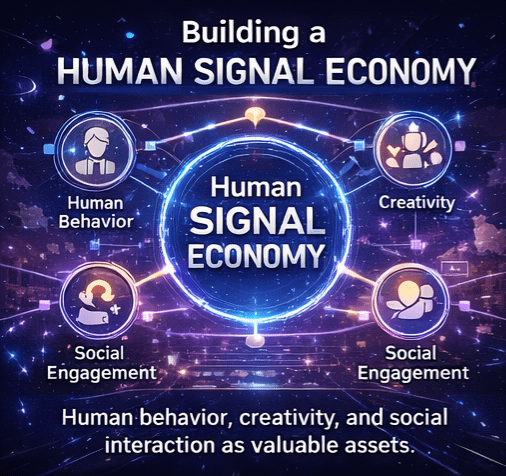
From Play-to-Earn to Proof-of-Participation
Traditional Web3 games relied heavily on financial incentives. Players farm tokens, dump them, and move on. This model created unsustainable economies. But $PIXEL is quietly flipping this model by rewarding something much deeper: consistent participation and meaningful engagement.
Looking at the current campaign structure, it’s clear that rewards are no longer tied only to gameplay, but also to content creation, interaction, and ecosystem contribution. This introduces a new metric—Proof-of-Participation (PoP)—where value is generated not just by grinding, but by being an active member of the ecosystem.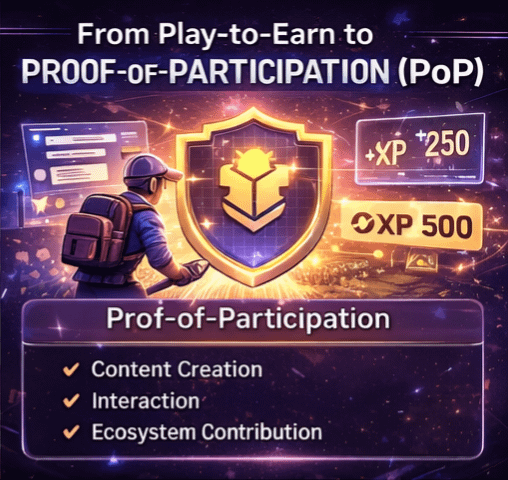
This is why tasks like posting on Binance Square, engaging in discussions, and contributing original content are becoming critical. The system is rewarding real humans, not automated behavior.
The “Humanity Moat”: Why AI Content is Losing Edge
One of the most overlooked shifts in the current algorithm is the move toward filtering repetitive, AI-generated content. The platform is prioritizing what can be called a “Humanity Moat.”
In simple terms, this means your content must prove that it comes from real experience, real interaction, and real insight.
For example:
Raw gameplay screenshots
Personal dashboards
Discord coordination moments
Trade setups or strategy logs
These are what I call “Human Receipts.” They act as proof that you are actively involved in the ecosystem, not just generating generic posts.
This shift changes the entire content strategy. Instead of mass-producing posts, creators now need to focus on:
Storytelling
Personal experience
Unique perspectives
In Pixels, authenticity is now a competitive advantage.
The 3-Turn Social Rule: Turning Content into Conversations
Another powerful concept emerging in the ecosystem is the 3-Turn Social Rule:
Question → Answer → Follow-up
This might look simple, but it fundamentally changes how content performs. Instead of posting and waiting for likes, creators are now building micro-communities within each post.
Why does this matter?
Because the algorithm doesn’t just measure visibility—it measures interaction depth. A post that generates meaningful discussion signals that:
The content is valuable
The audience is engaged
The creator is contributing to the ecosystem
This transforms your post from a static piece of content into a living conversation hub.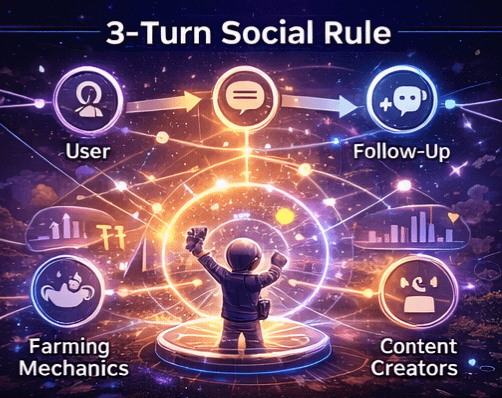
Depth Over Breadth: The “Fun-First” Narrative Shift
Most creators still make the mistake of posting generic statements like “Bullish on $PIXEL.” But the ecosystem is clearly moving toward depth-driven content.
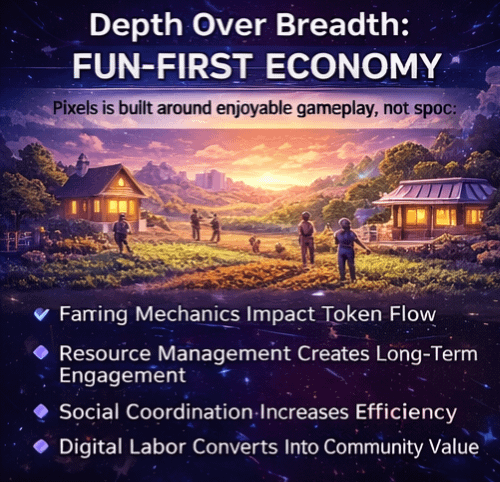
Pixels is built around a Fun-First economy, where gameplay is not just a medium—it’s the core value driver.
Instead of focusing only on token price, smart creators are now exploring:
How farming mechanics impact token flow
How resource management creates long-term engagement
How social coordination increases efficiency
How digital labor converts into community value
When you explain these mechanics in simple, relatable ways, you bridge the gap between:
Technical complexity
Retail understanding
And that’s where your Professionalism Score increases naturally.
The Untapped Opportunity: Creator as an In-Game Asset
Here’s a perspective that almost no one is talking about yet:
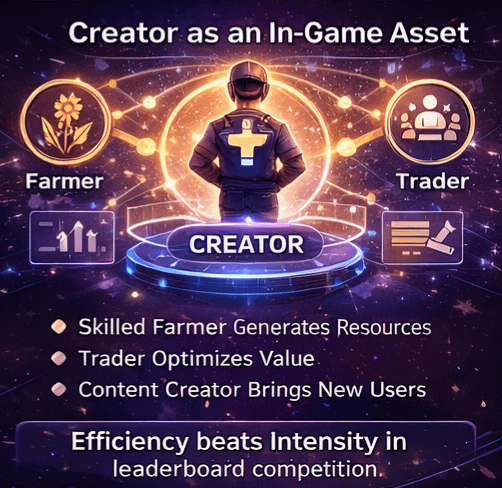
In Pixels, creators themselves are becoming assets inside the ecosystem.
Think about it:
A skilled farmer generates resources
A trader optimizes value
A content creator brings attention and new users
All three contribute differently, but equally, to the ecosystem’s growth.
This means your role is no longer limited to playing the game—you are:
A marketer
A strategist
A community builder
And the more value you bring, the more you align with the ecosystem’s long-term growth.
Leaderboard Strategy: Playing Smart, Not Just Hard
With millions of PIXEL tokens allocated to rewards, many participants focus only on volume. But smart players understand that efficiency beats intensity.
To stand out:
Focus on high-quality posts instead of quantity
Build engagement loops (comments + replies)
Use original visuals instead of stock images
Share insights, not just opinions
Remember, the system is designed to detect:
Authentic interaction
Consistent contribution
Community impact
Not just activity spam.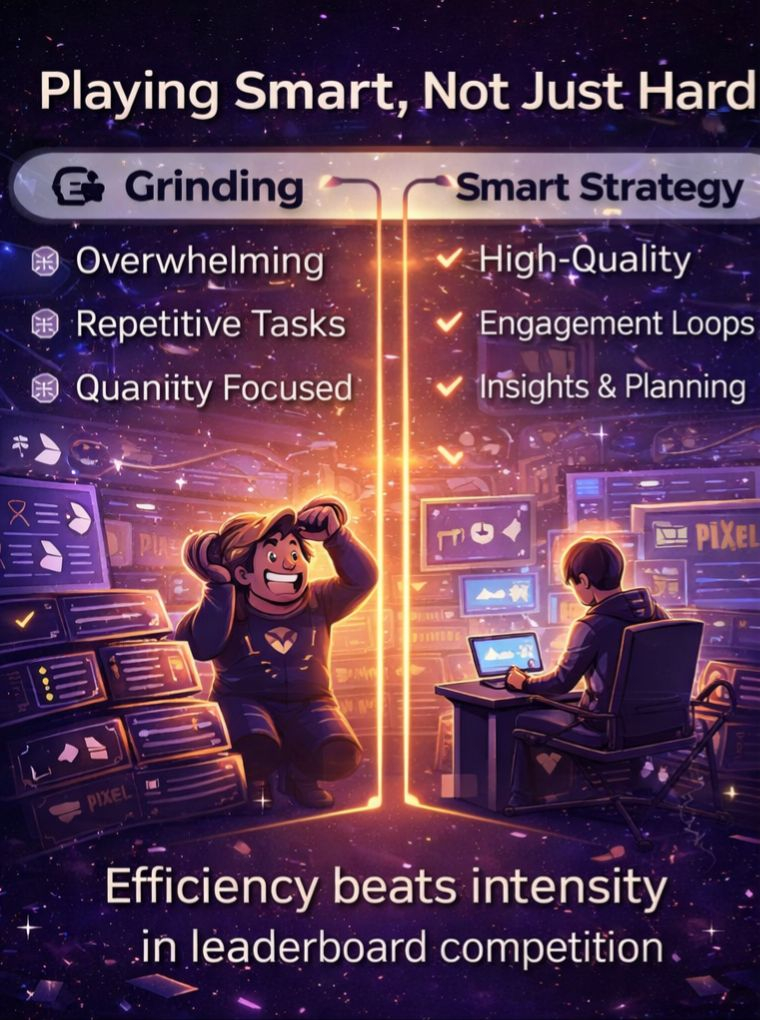
Conclusion: Pixels is Not Just a Game—It’s a Behavioral Economy
The biggest mistake you can make right now is treating Pixels like a typical Web3 game.
This ecosystem is evolving into something much bigger:
A social economy
A creator-driven platform
The winners won’t be the ones who farm the most tokens.
A human-first algorithmic system
They will be the ones who:
Understand the system
Adapt to behavioral incentives
Build real connections
If you position yourself early as a high-value contributor, you’re not just earning rewards—you’re building a long-term presence in the ecosystem.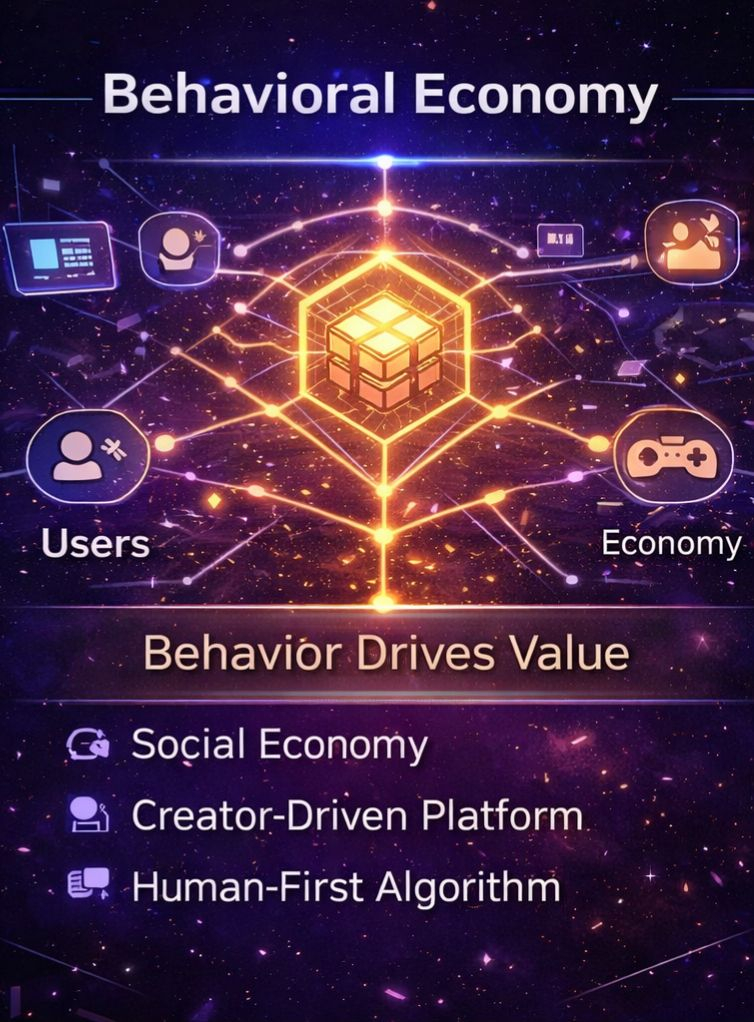
And that’s the real alpha.$PIEVERSE $GUN