
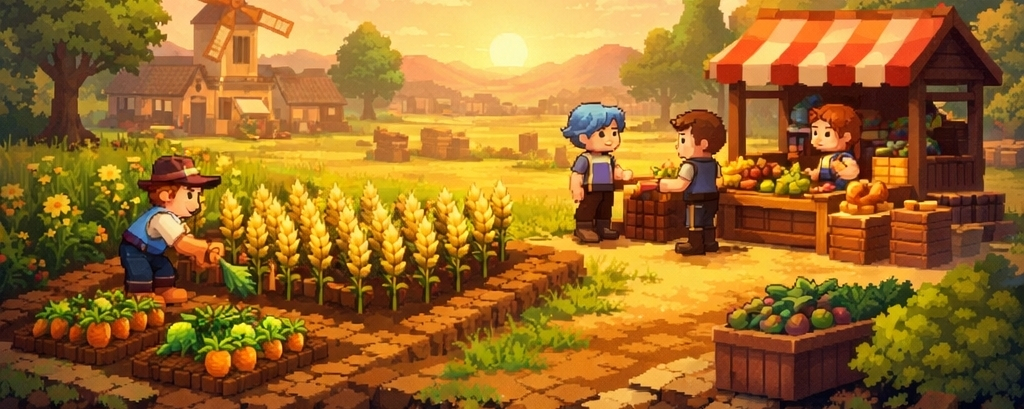

Pixels doesn’t really try to wow you right out of the gate. It feels cozy, almost familiar a simple farming loop, some easy social bits, and a pace that never pressures you. You plant, you harvest, you trade. Nothing shouts “innovation.” Maybe that’s intentional.
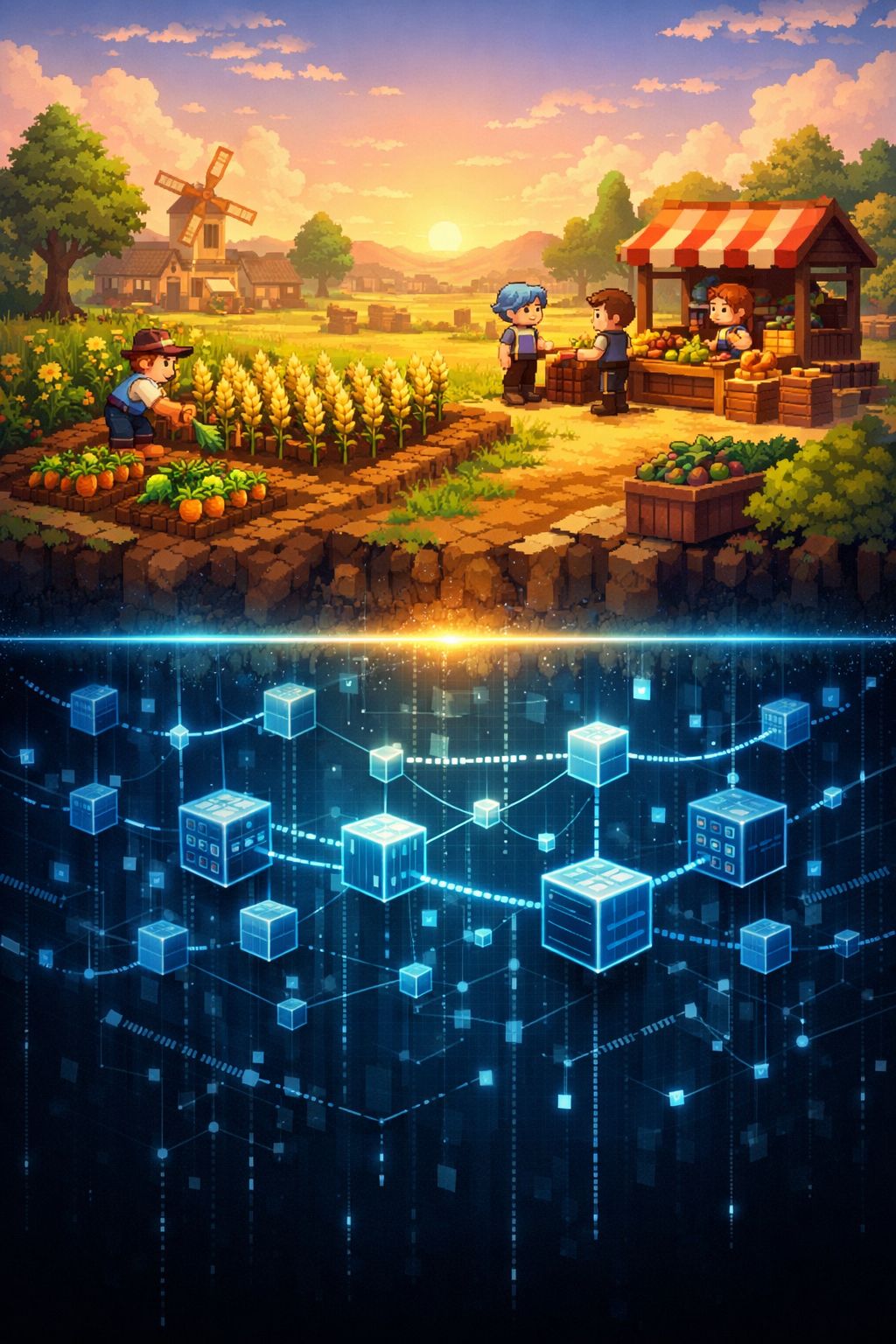
But stick around for a bit, and you start to notice there’s more happening under the hood. The economy isn’t loud, but it’s always in play. People aren’t just playing they’re optimizing, always tweaking little choices that stack up over time. Suddenly, your time and resources feel like pieces in a bigger puzzle, not just actions in a game.
Here’s the clever part: Pixels uses a layered currency system. Most things happen fast, without blockchain confirmations slowing you down. You almost forget there's a whole settlement layer underneath, until it pops up for trading or meaningful progression.
So, it doesn’t really feel like a “crypto game” trying to fit in some blockchain stuff. It feels like a functioning system that just happens to use gameplay as its front door.
Which begs the question what exactly are we looking at?
Is Pixels just a polished Web3 game with better onboarding and player retention? Or is it something deeper a blueprint for how games could become platforms for economic coordination, not just entertainment?
That’s a real difference.
Games entertain. Sure, economies exist within games but usually in predictable, walled-off loops. Inflation wipes, progress resets, token cycles that end up rewarding early adopters at the expense of everyone else. Eventually, the loop cracks.
A system, though, is built to outlast. It absorbs behavior, adapts, persists. Think less about seasons and more about shifting patterns that actually stick.
So forget whether Pixels is fun for a second. The real question is, does it hold up?
What’s interesting is how Pixels treats people as participants, not just users. You see it in the way incentives shift. Rewards respond to what players do, not just handed out blindly. When a wave of activity hits, the system nudges everyone accordingly. Friction creeps in when things get too easy. It's still flawed, but it's aiming in the right direction.
The result? Players start self-regulating. You don’t need someone wagging their finger. If rewards drop, people switch strategies. Scarce resources? Everyone adapts. When trading gets juicy, new roles pop up: farmers, traders, speculators, you name it.
That’s not standard game design. That’s an economy learning to balance itself.
And, it doesn’t drown you in complexity. You start off with crops. Before you know it, you’re juggling opportunity cost and liquidity like it’s second nature.
At some point, the game fades into the background, and the system takes over.
That’s where Pixels shifts from a product to actual infrastructure.
Off-chain stuff keeps things quick and snappy, feels almost like a regular web game. No wallet pop-ups, no transaction fatigue just go. On-chain, you’ve got the important pieces: ownership, value, settlement. It’s slower, but it doesn’t need to be fast. It just needs to work.
That split fast experience, slow settlement is actually pretty important.
Most Web3 games jam everything on-chain, which feels clunky and exhausting. Pixels dodges that by separating play from settlement.
But building infrastructure means more than just handling tech it’s about designing behavior. Reward curves, resource sinks, progression all these pieces interact, create feedback loops that either stabilize the economy or stretch it. The system learns from the mess.
What’s emerging is a responsive economy, not a static one. If that keeps growing, Pixels could turn into a sandbox for player-driven economics. People don’t just play; they shape the system as they go.
That’s a whole different ballgame.
If Pixels catches on, it won’t be because it nailed the graphics or made the best quests. It’ll be because people actually want to stick around not just to play, but to participate.
And that leads to a bigger idea:
What happens when games become environments, not destinations?
Environments don’t reset every season. They build up history, reflect behavior, accumulate value. Decisions stick, and sessions actually matter long-term.
If Pixels turns into that, it’ll be competing not just with other games, but with bigger systems like social platforms or digital marketplaces.
It’s a fragile path, though.
The second incentives get too greedy, trust shatters. If progression feels rigged, people bail. If value pools too fast, things destabilize. And unlike a regular game, you can’t just hit reset real value is on the line.
So, the real challenge isn’t just getting bigger. It’s getting balanced.
Can Pixels keep everyone feeling included and rewarded? Can newbies join in without getting fleeced? Can value flow without tipping over into pure speculation?
If so, then Pixels might be more than just a game it could be a glimpse at a new digital economy, where play gets people in the door and participation becomes the foundation.
But if it can’t? Then it’s just another lesson in how making systems is way tougher than making games.
