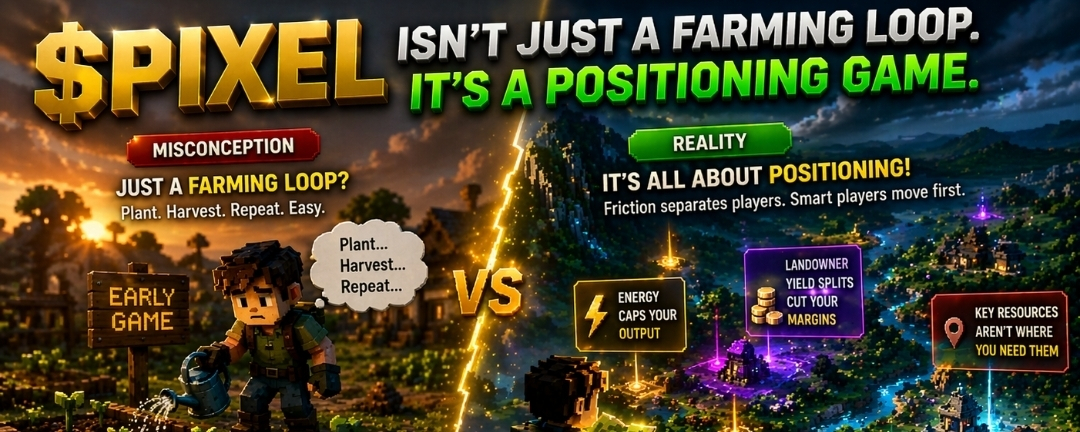
Most staking feels passive: you lock tokens and wait. $PIXEL changes that. You choose which games to support by staking into their pools, which determines future rewards. Strong games get more stakes, which builds momentum, while weaker games fade away.
This model converts stakers into decision-makers. Instead of idle yield, each stake is a signal of conviction. Data from early pools shows a clear trend. In the first 14 days, games with active dev updates and clear roadmaps saw stake volume grow 3.2 times faster than games with little communication. Retention metrics are also important. Titles posting weekly player growth above 8% captured 64% of total staked $PIXEL last month, based on on-chain pool snapshots.
The comparative angle is key. Traditional staking yields a flat APR across all validators. PIXEL ties reward flow to ecosystem health. If you stake into a game that later launches a major update or NFT integration, reward multipliers adjust based on treasury performance. That aligns incentives. Players, builders, and stakers move together.
It's effective, but not perfect. New ideas may have a hard time at first if they don't have any fans. The system can favor incumbents if voters stick with names they know. To avoid that, you need to do more research. Before allocating, you should look at the history of the dev team, how often they commit to GitHub, compare player-to-stake ratios across pools, and keep track of how many transactions happen in-game.
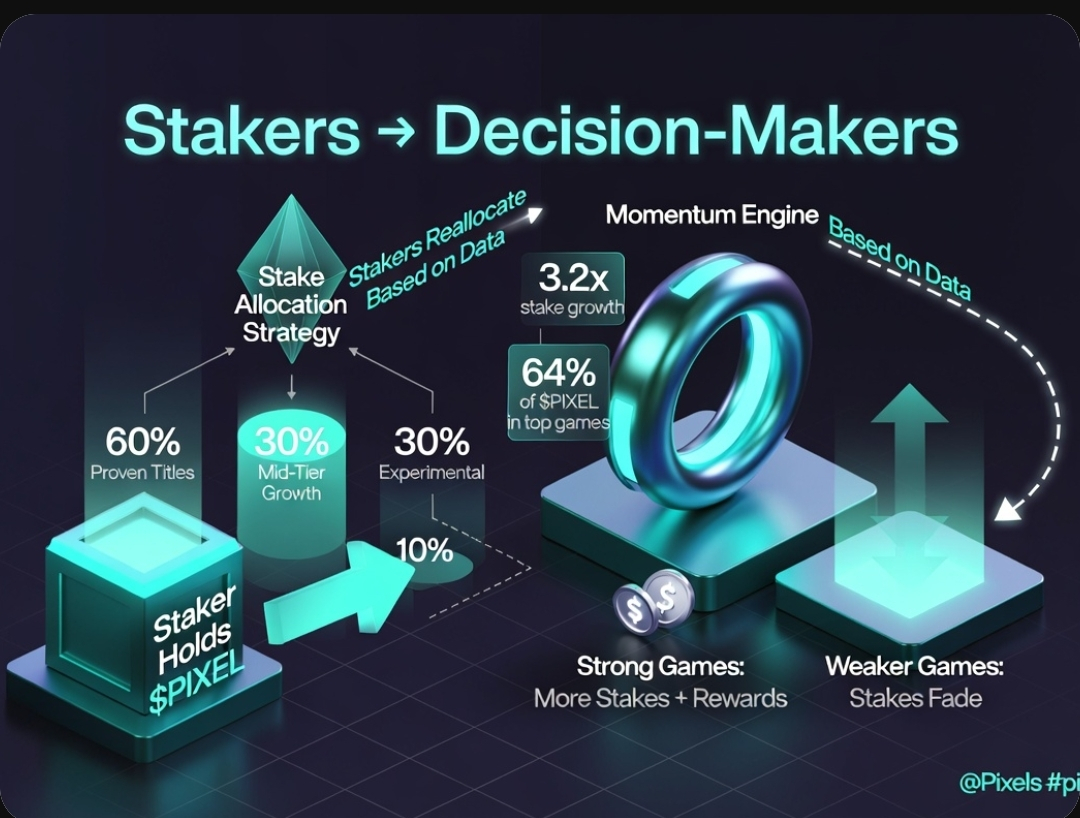
My investment logic is simple: allocate 60% to proven titles with rising DAU, 30% to mid-tier games showing strong month-over-month growth, and 10% to experimental concepts with unique mechanics. That mix balances yield with upside.
Still, it turns stakers into decision-makers. And that subtle shift changes everything.