When $PIXEL first appeared, it looked like every other GameFi token. Price reacts to updates, volume spikes, then slowly cools down. That pattern felt predictable.
But Pixels doesn’t behave that simply.
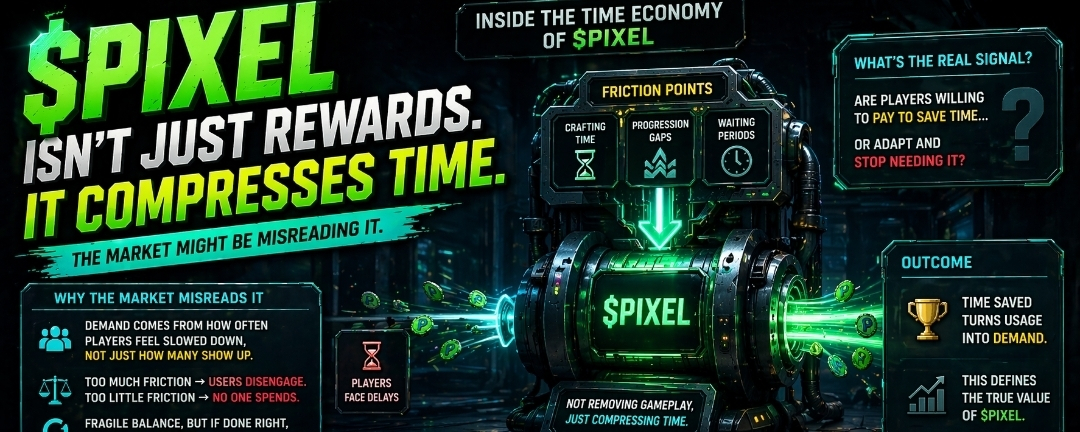
After spending more time observing the system, a different pattern starts to emerge. The token isn’t just rewarding activity—it’s interacting with time itself inside the game. Crafting delays, progression gaps, waiting periods… these aren’t just mechanics, they are pressure points. And PIXEL quietly sits in between them.
It doesn’t remove gameplay. It compresses time.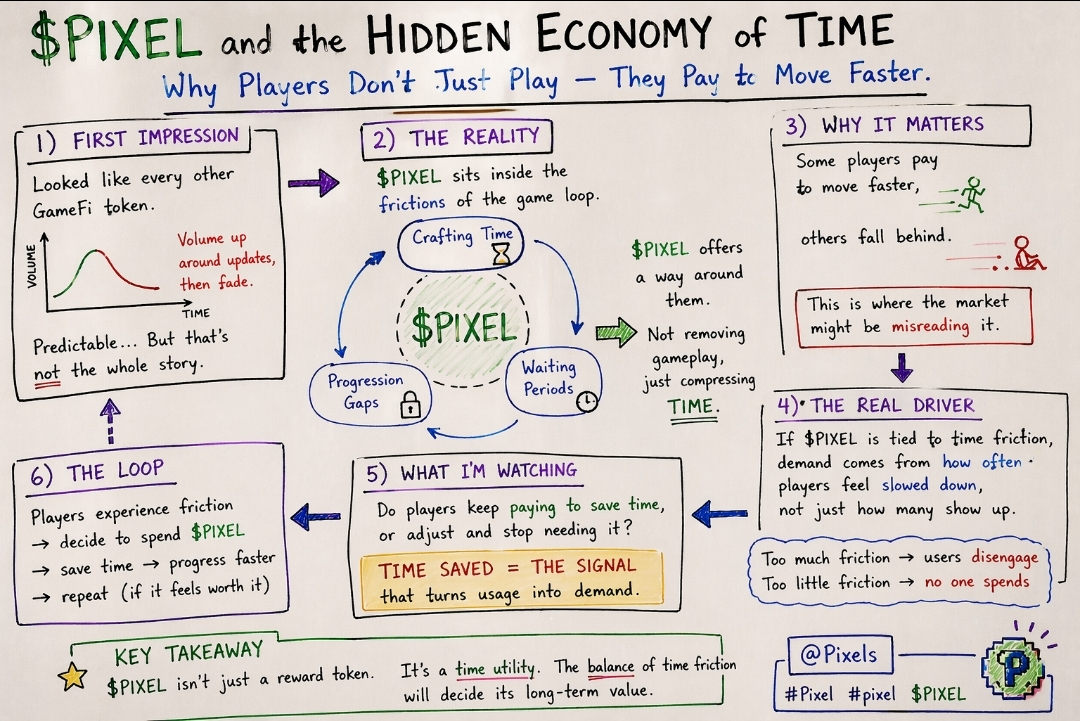
That distinction matters more than most people realize. Players are not just earning—they are deciding whether to wait or move forward faster. Some choose efficiency and spend. Others adapt and slow down. This creates a layered demand, not purely driven by user count, but by how often players feel friction.
This is where many might be misreading @Pixels. So the value of $PIXEL depends on how many players are joining but also how the game balances time pressure. Too much friction, and users disengage. Too little, and spending disappears.
So the real signal isn’t hype or updates—it’s behavior.
Are players consistently willing to spend to save time, or do they stop needing it?
That answer will define whether pixel remains just a reward token—or evolves into a core utility inside the ecosystem.