When I first saw $PIXEL, I assumed it followed the usual GameFi pattern. More players, more activity, more demand. A simple “pay to speed up” loop where usage directly drives price.
But over time, something didn’t match.
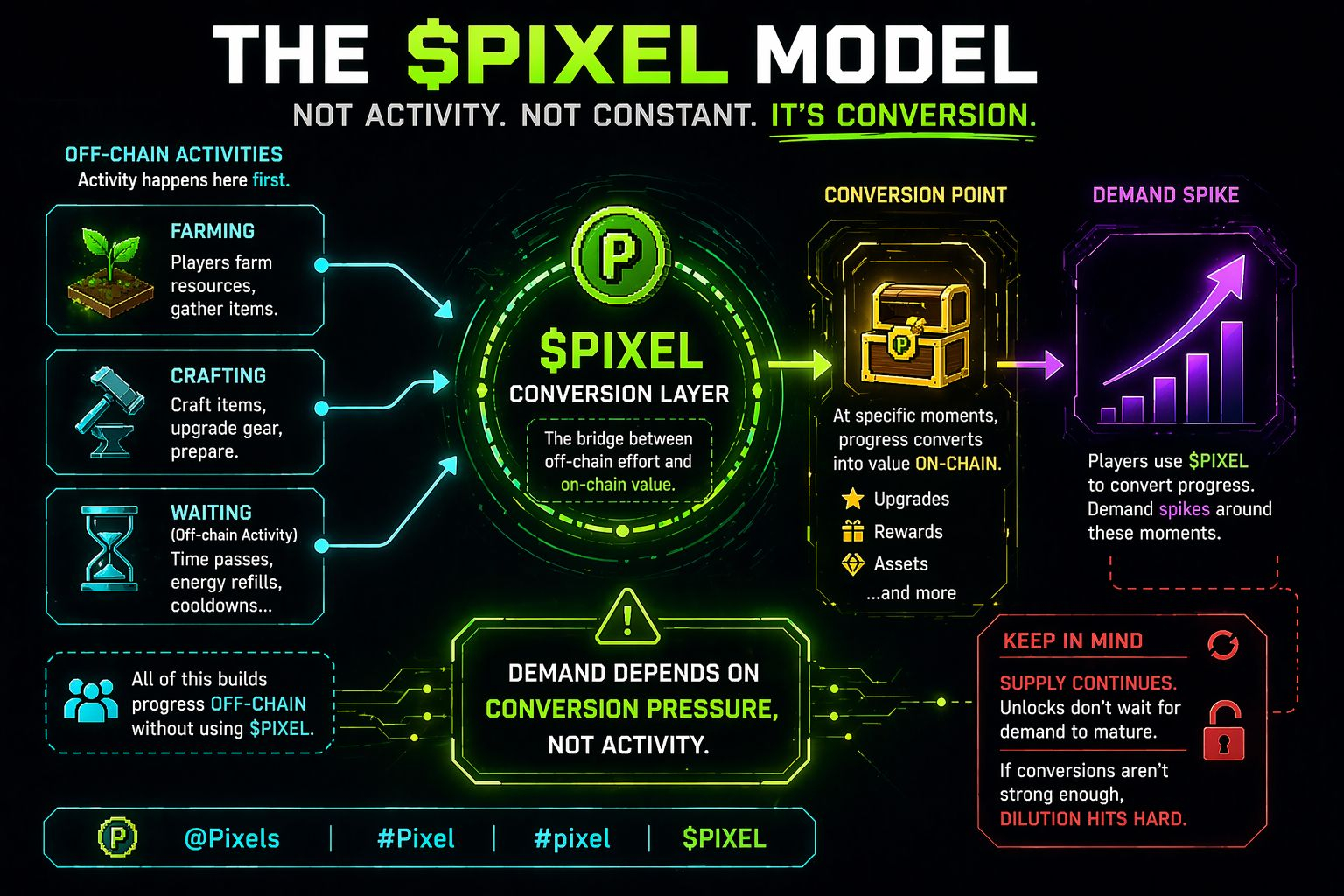
The game stays active—players farming, crafting, waiting—but the token doesn’t move in sync with that activity. That disconnect started to make more sense when I looked deeper into how Pixels actually works.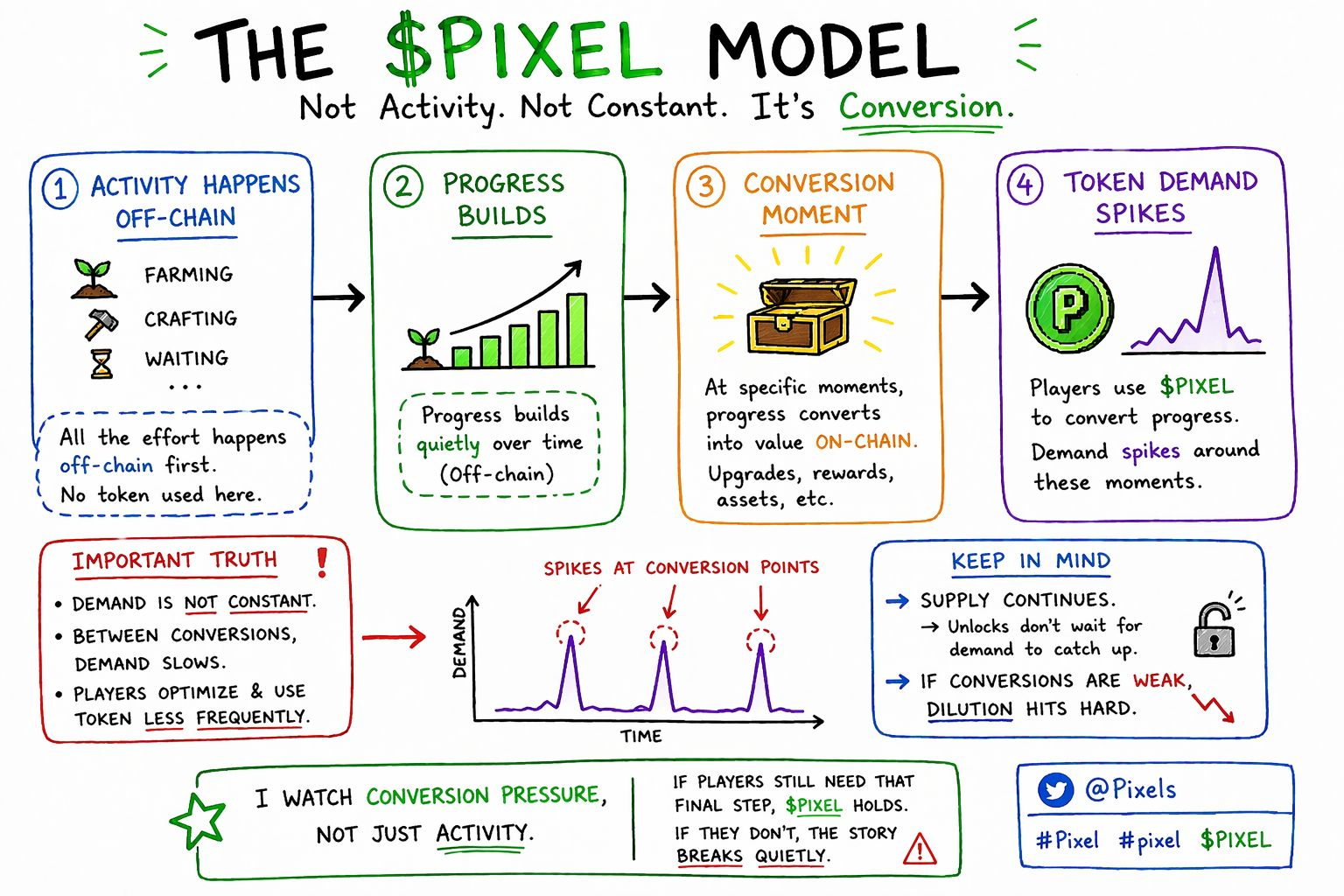
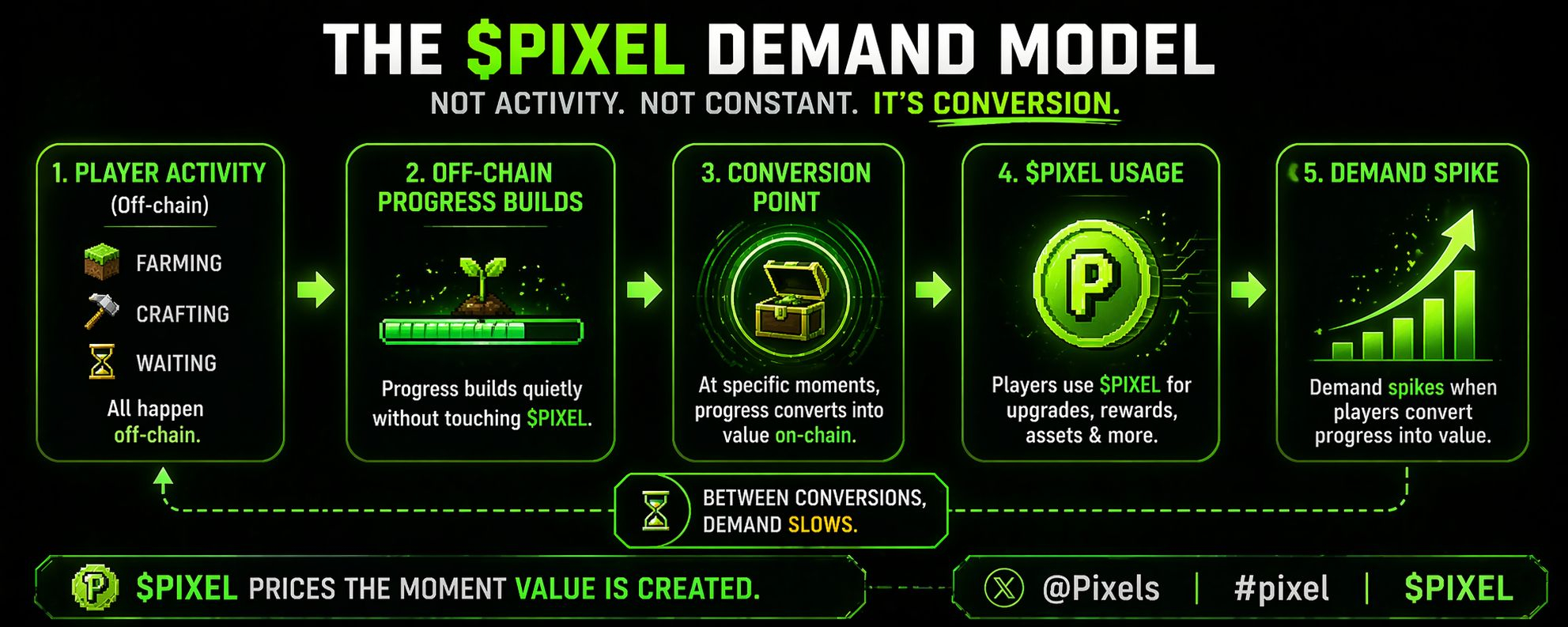
Most of the effort happens off-chain first. Progress builds quietly without touching $PIXEL. Then suddenly, at specific points, that effort converts into something meaningful—upgrades, rewards, assets. And those conversion points are where the token becomes relevant.
This changes everything.
Demand is not constant. It spikes when players need to convert progress into value. Between those moments, usage slows down. If players become efficient and reduce how often they hit those checkpoints, token demand can weaken—even if gameplay remains strong.
At the same time, supply doesn’t pause. Unlocks continue, regardless of whether demand is catching up. That creates pressure.
So now I don’t track activity alone. I watch conversion pressure.
Are players still forced to rely on that final step? Or are they learning to bypass it?
That answer will decide whether $PIXEL holds its position—or quietly loses strength over time.