


Crypto has a familiar rhythm. A new idea shows up, usually framed as a fix to something fundamental. It gets attention, builds a narrative, and for a while feels like a necessary evolution. Then reality hits. Some projects adapt. Most fade. Not because they were wrong, but because the gap between theory and practice was wider than expected.
Pixel is now entering Phase 1. It isn’t competing on speed or lower fees. It’s targeting a problem blockchain has ignored for too long: privacy.
From day one, blockchains defaulted to radical transparency. Every wallet is traceable. Every transaction is permanent and searchable. That was sold as a feature. And it is, for auditability and trust. But that same transparency becomes a constraint the moment you think about real adoption. Businesses and normal users don’t want their financial history permanently public.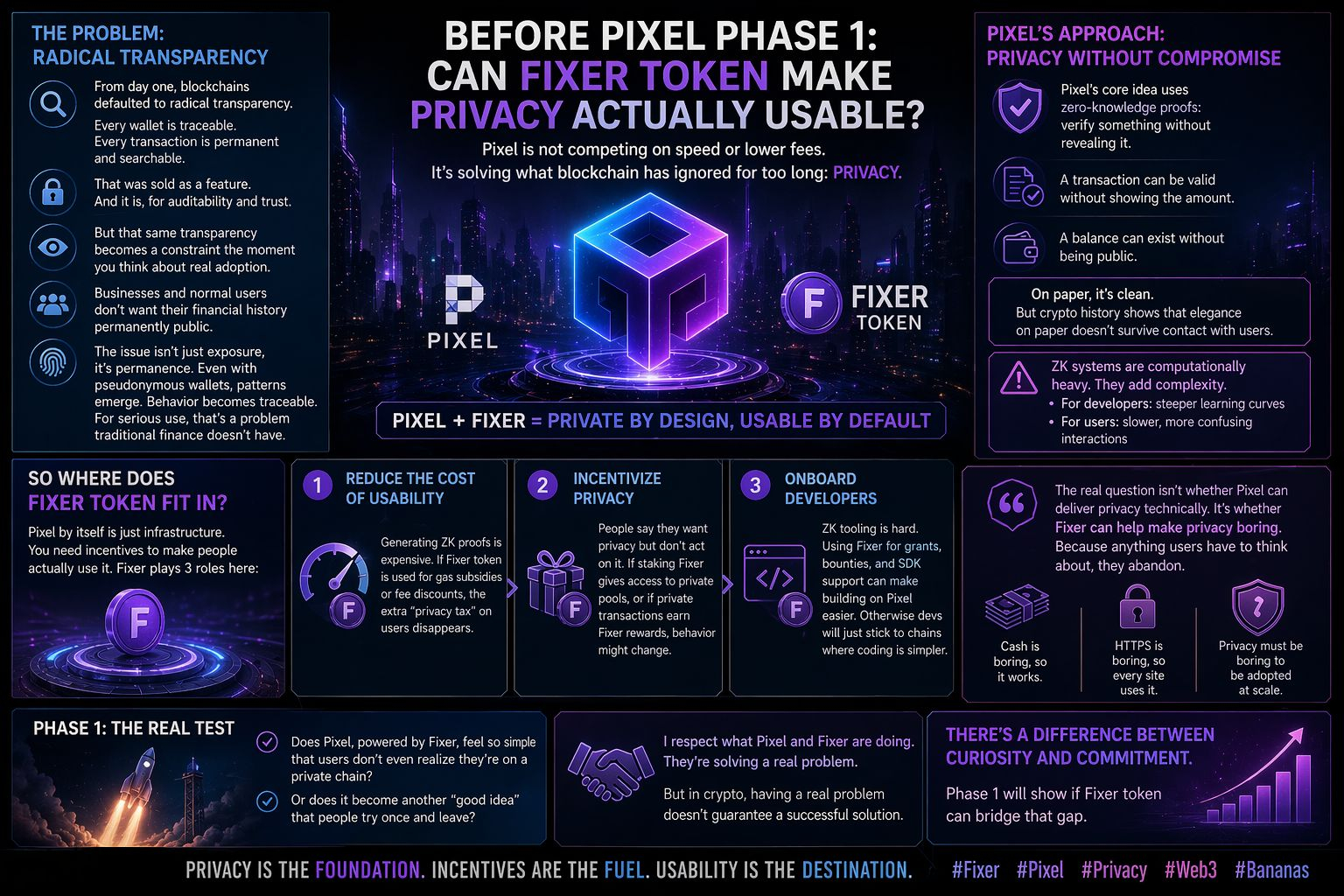
The issue isn’t just exposure, it’s permanence. Even with pseudonymous wallets, patterns emerge. Behavior becomes traceable. For serious use, that’s a problem traditional finance doesn’t have.
This is where Pixel and Fixer Token are trying to operate. Pixel’s core idea uses zero-knowledge proofs: verify something without revealing it. A transaction can be valid without showing the amount. A balance can exist without being public.
On paper, it’s clean. But crypto history shows that elegance on paper doesn’t survive contact with users. ZK systems are computationally heavy. They add complexity. For developers, that means steeper learning curves. For users, it means slower, more confusing interactions.
So where does Fixer Token fit in?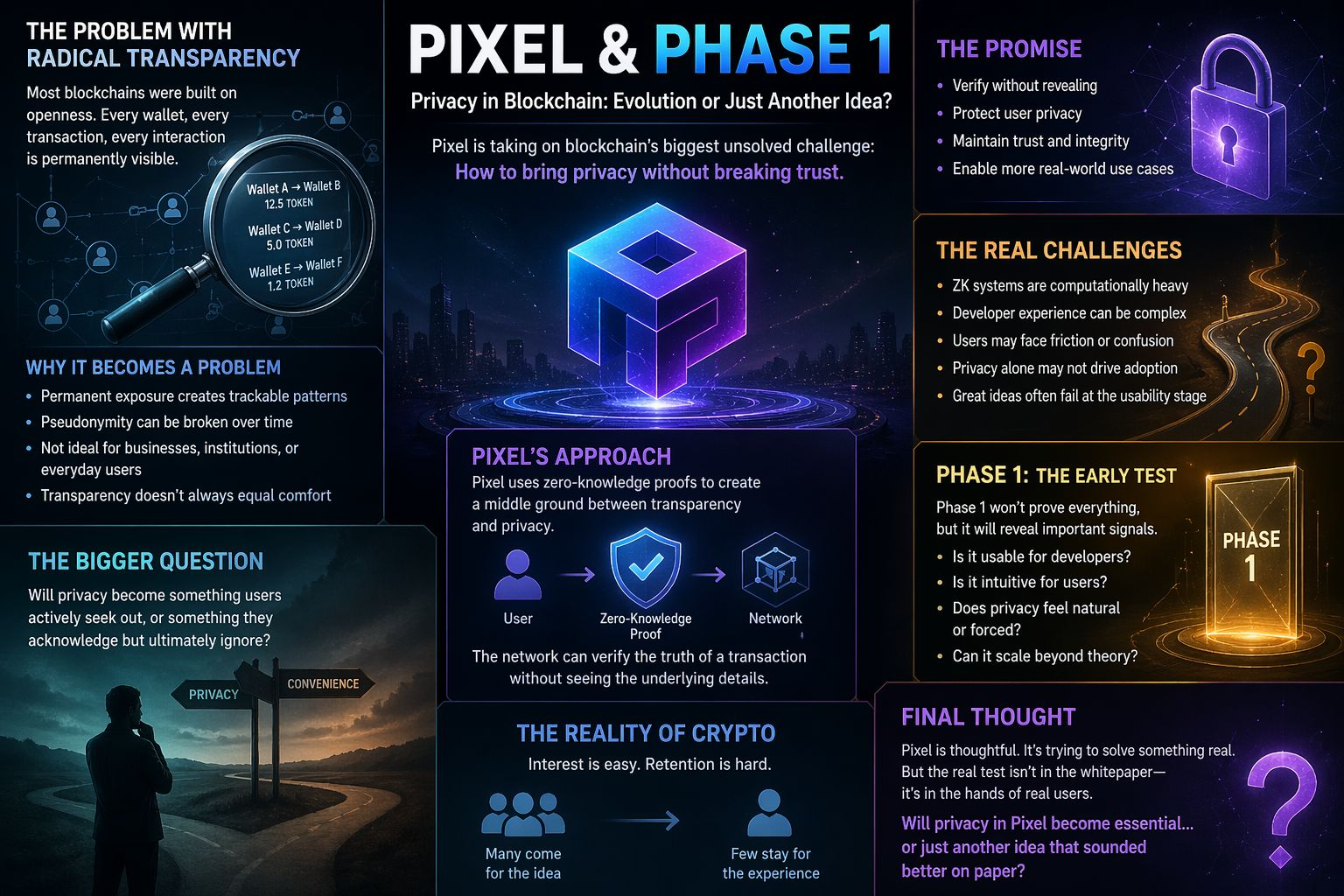
Pixel by itself is just infrastructure. You need incentives to make people actually use it. Fixer plays 3 roles here:
1. Reduce the cost of usability: Generating ZK proofs is expensive. If Fixer token is used for gas subsidies or fee discounts, the extra "privacy tax" on users disappears.
2. Incentivize privacy: People say they want privacy but don’t act on it. If staking Fixer gives access to private pools, or if private transactions earn Fixer rewards, behavior might change.
3. Onboard developers: ZK tooling is hard. Using Fixer for grants, bounties, and SDK support can make building on Pixel easier. Otherwise devs will just stick to chains where coding is simpler.
The real question isn’t whether Pixel can deliver privacy technically. It’s whether Fixer can help make privacy boring. Because anything users have to think about, they abandon. Cash is boring, so it works. HTTPS is boring, so every site uses it.
Phase 1 will test this. Does Pixel, powered by Fixer, feel so simple that users don’t even realize they’re on a private chain? Or does it become another “good idea” that people try once and leave?
I respect what Pixel and Fixer are doing. They’re solving a real problem. But in crypto, having a real problem doesn’t guarantee a successful solution.
There’s a difference between curiosity and commitment. Phase 1 will show if Fixer token can bridge that gap