
The thing that keeps bothering me about Pixels right now isn’t scale.
It’s what happens when everything starts connecting.
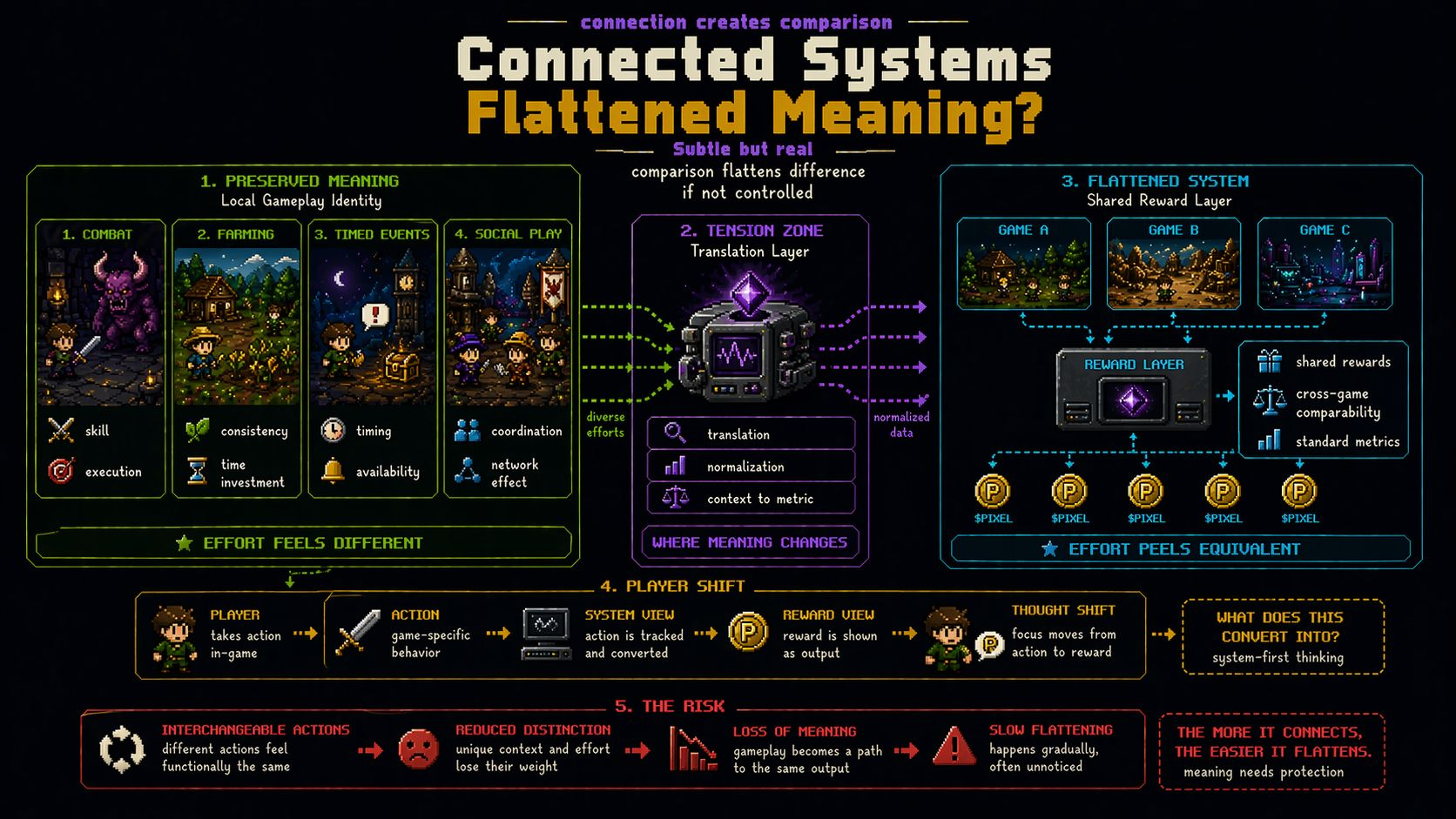
Because once a reward system stretches across multiple games, it doesn’t just distribute value anymore. It starts comparing things that were never meant to feel equal.
And that’s where it gets tricky.
At a surface level, Stacked looks like expansion. More games plugged in, more campaigns, more ways for PIXEL to circulate. That part is easy to understand. But underneath that, there’s a quieter problem.
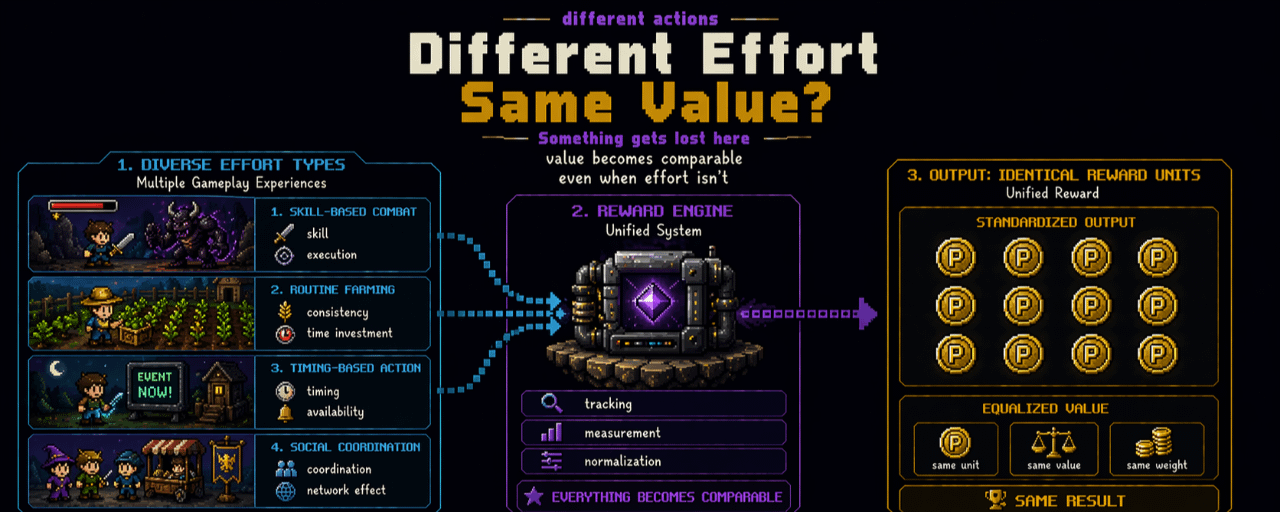
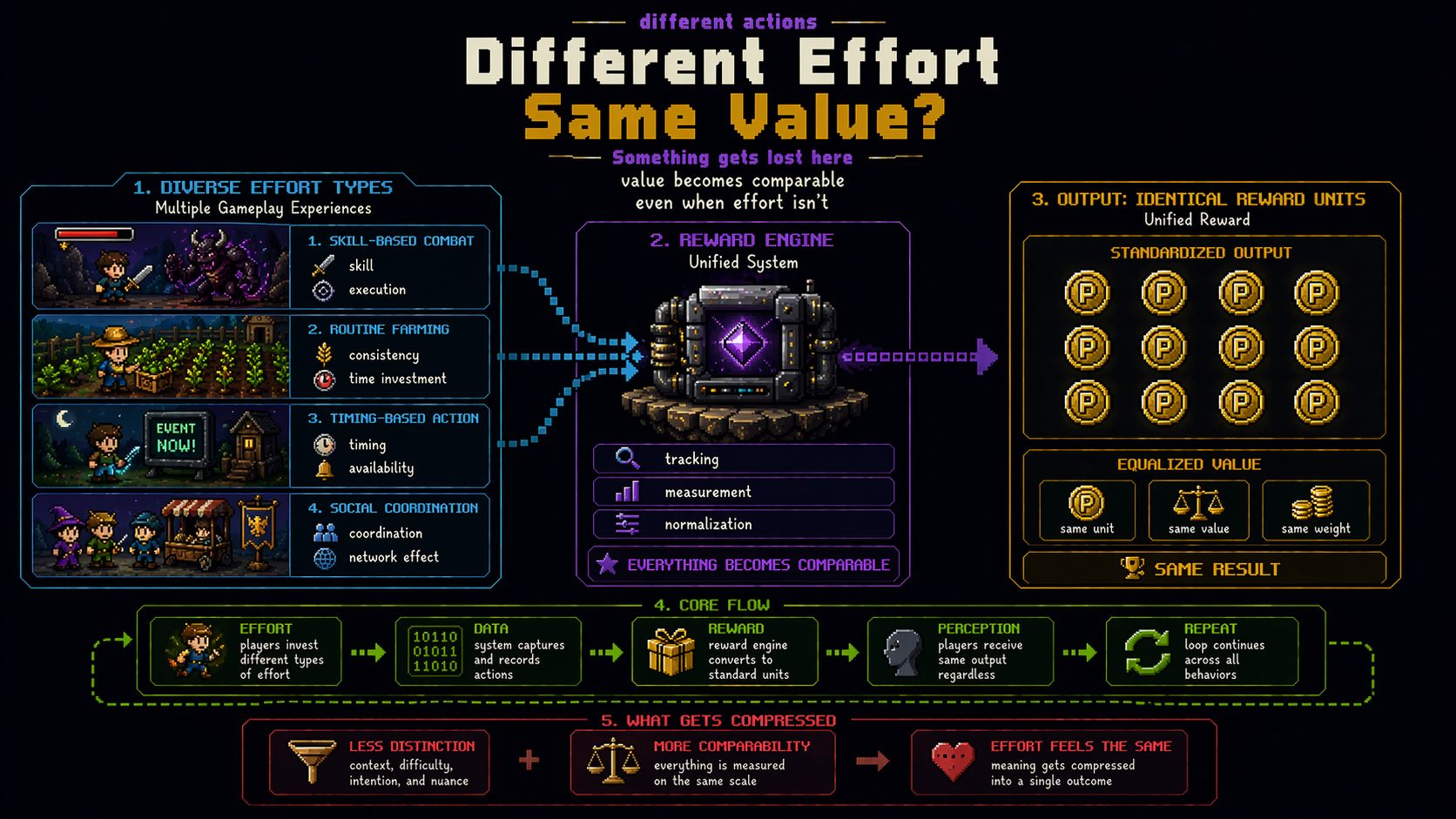
Different games ask for very different kinds of effort.
Sometimes it’s skill. Sometimes it’s just consistency. Other times it’s timing, or social coordination, or just showing up often enough. None of those feel the same when you’re doing them. They have different weight, different friction, different meaning.
But once they all pass through the same reward layer, something shifts.
They start becoming comparable.
Not because they actually are, but because the output looks similar. The system makes them legible in the same way. Trackable, measurable, rewardable. And over time, players might stop feeling the difference between those actions and start focusing on what they convert into.
That’s the part I can’t shake.
Because we’ve already seen what happens when rewards become more memorable than the activity itself. People stop engaging with the game for what it is, and start engaging with the system behind it. Different games, same internal question: what does this action turn into?
And that slowly flattens things.
It doesn’t break the system immediately. It just makes everything feel a bit more interchangeable than it should. A difficult win, a patient routine, a simple action… they all start sitting on the same scale.
That’s not a technical problem. It’s a meaning problem.
And I think that’s the real pressure inside something like Stacked. It’s not just about deciding who gets rewarded and when. It’s about preserving the difference between actions even after they’ve been translated into the same output.
Because games rely on that difference.
If everything starts feeling equivalent after the reward lands, then the reward layer stops supporting the game and starts quietly shaping it from above. Not by force, but by how players interpret value.
That’s a much slower, subtler shift.
And probably harder to fix once it sets in.
I don’t think this makes the expansion a bad idea. A shared reward system can make an ecosystem feel more connected. It can carry value across experiences, give players a sense that time spent somewhere still matters elsewhere.
But that connection has to come with restraint.
If it becomes too smooth, too consistent, too easy to compare, then something gets lost. The local meaning of effort starts fading. And that’s where games stop feeling distinct, even if they still look different.
That’s why I don’t really see this as just a growth story.
It feels more like a test of whether Pixels can connect experiences without flattening them.
And that’s also where PIXEL comes more interesting to me. Not just as something that moves across more places, but as something that has to carry value without making everything feel the same.
The reward itself is easy to see.
What’s harder to notice is whether, after receiving it, players still feel that different kinds of effort actually mattered in different ways.
I’m still watching that part.