
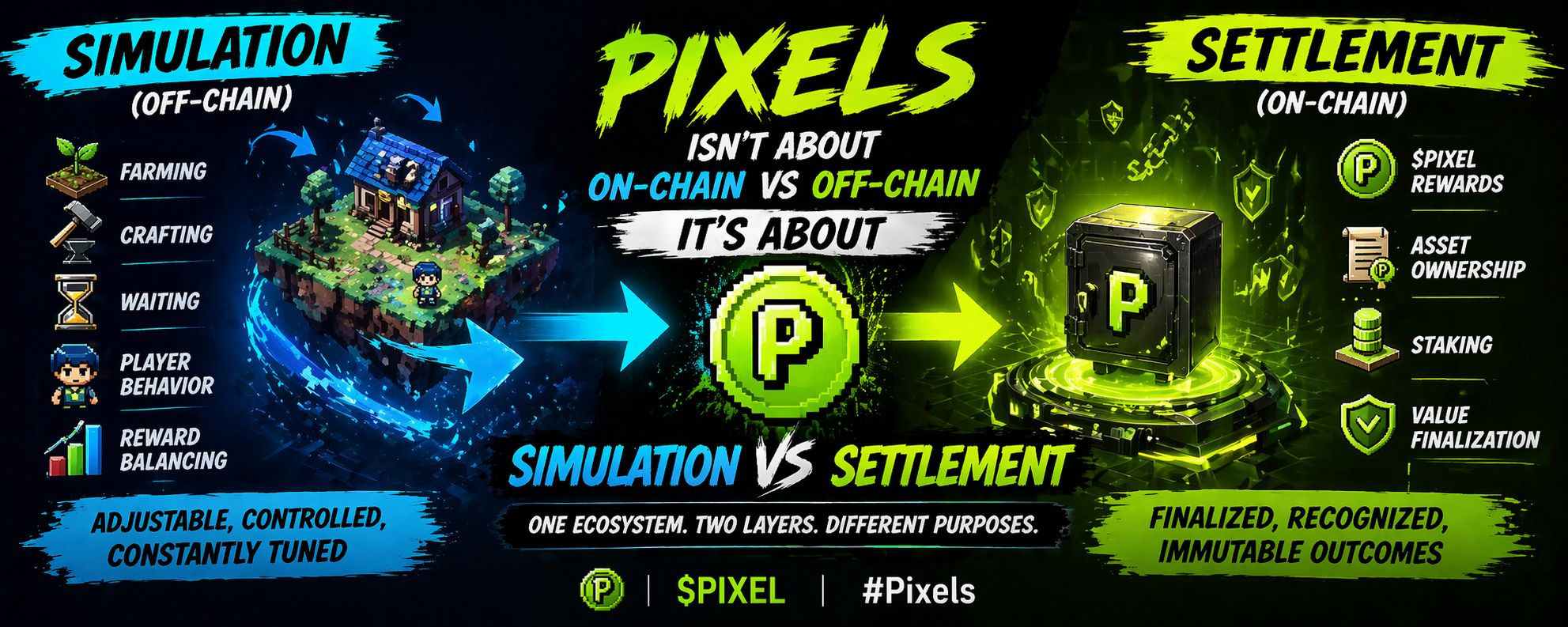
Many people still debate whether @Pixels is truly “on-chain,” but that framing feels outdated. The more useful distinction is not blockchain versus game—it’s simulation versus settlement.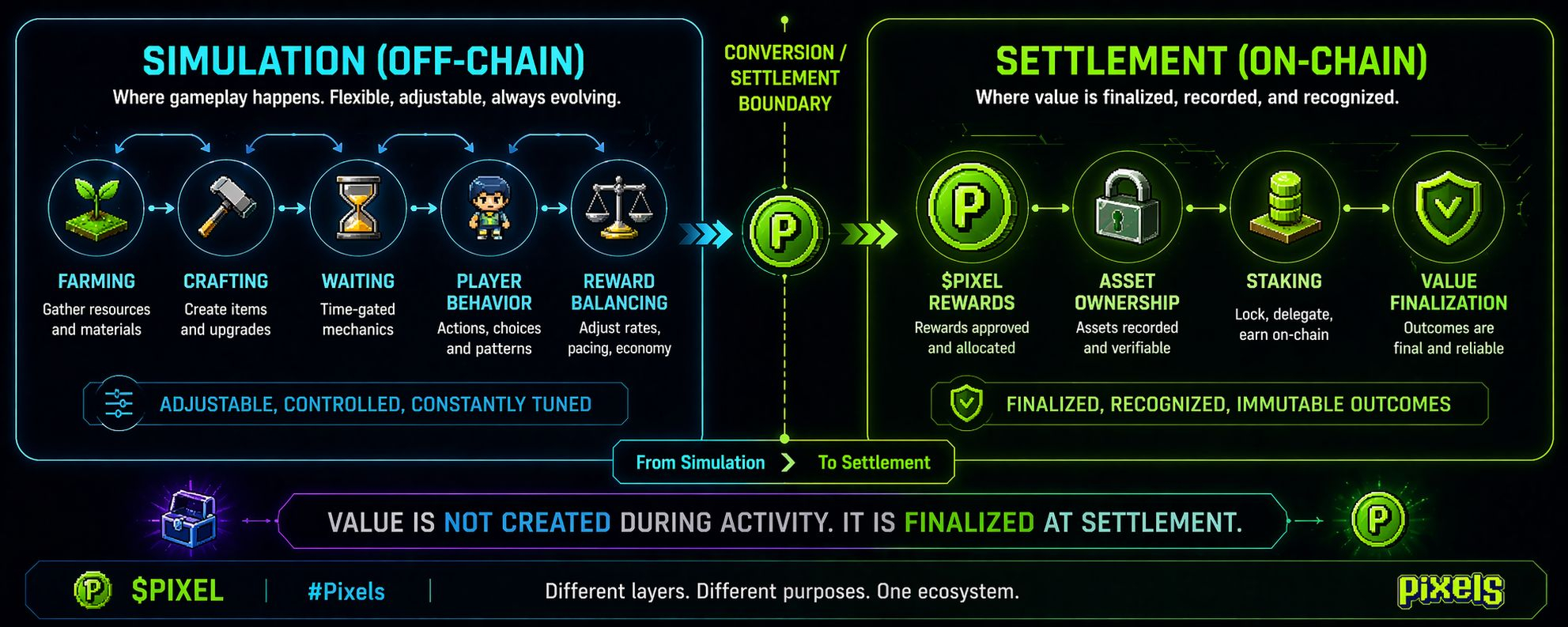
Inside Pixels, most activity lives in the simulation layer. This is where the balance, pacing of rewards, and player behavior are constantly tuned. This is where farming, crafting, and soft-currency systems live. It’s flexible by design, because live economies need room to adapt. The apparent shift from on-chain $BERRY to off-chain Coins can be read as a signal that control and stability often matter more than forcing everything directly onto the chain.
Settlement is where things change.
This is where $PIXEL becomes relevant. Value is not fully realized until it is recognized and finalized. Rewards may be calculated off-chain, but once approved, they move into a layer where outcomes become fixed.
You can also see this distinction in staking. In-game staking can feel passive—players remain active, hold $PIXEL, and rewards may be distributed automatically. On-chain staking often involves connecting a wallet, selecting allocations, and in many setups claiming rewards manually. Same ecosystem, different level of commitment.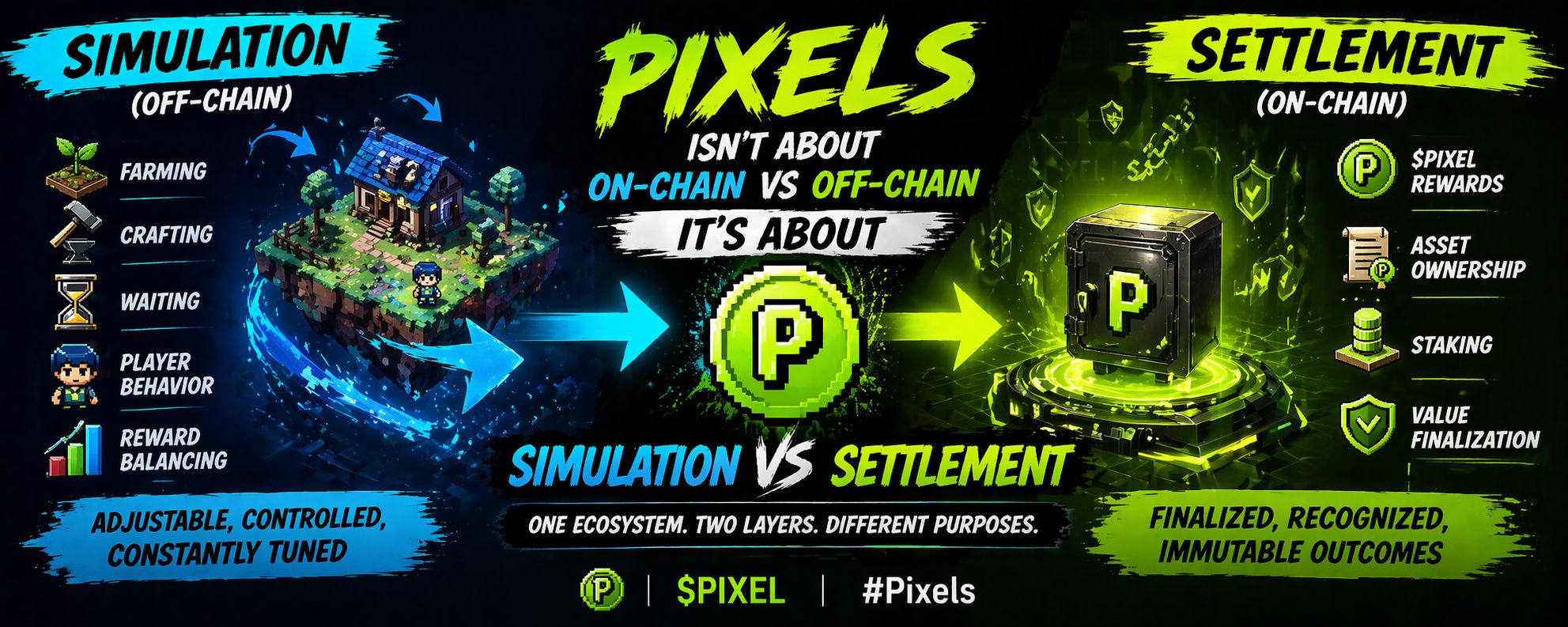
So the real boundary in Pixels is not technical—it’s functional. One side is adjustable and evolving. The other is final and accountable.
Takeaway: When evaluating Web3 games, ask which actions are flexible (simulation) and which are finalized (settlement).
Educational perspective only, not financial advice.
