
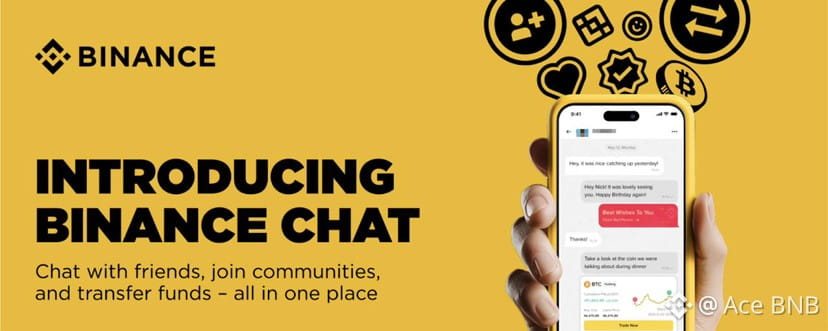

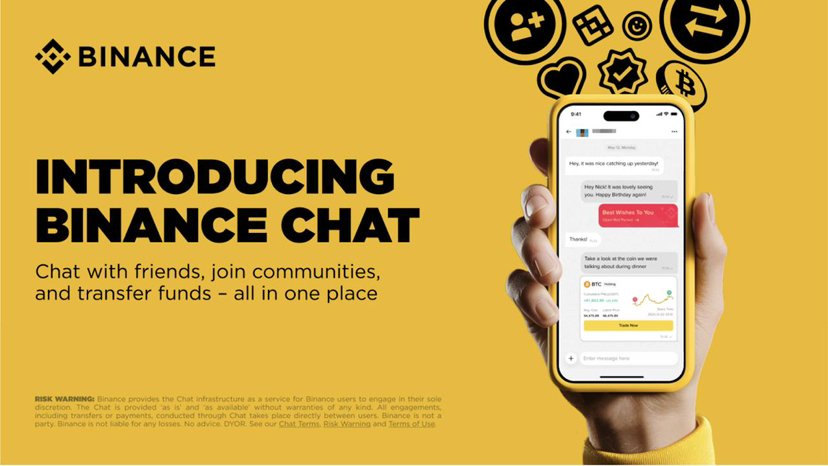
The crypto industry has long searched for a unified platform that blends communication, financial activity, and intelligent automation. Binance Chat represents a significant step toward that vision. It is not simply an exchange with an added messaging feature. It introduces a new category that merges social interaction, trading infrastructure, and AI driven execution into a single environment.
This evolution reflects a broader trend. Digital platforms are moving toward consolidation, where users no longer want fragmented experiences across multiple apps. Instead, they expect seamless interaction, financial capability, and intelligent tools in one place.
The Missing Super App in Crypto
Despite rapid growth, the crypto ecosystem still lacks a true super app comparable to what WeChat achieved in traditional digital ecosystems. Several major platforms dominate individual areas, yet none fully integrate all core functions.
Telegram has over one billion monthly active users and excels in community building. However, it does not offer a native trading execution layer. Discord, with around 260 million monthly active users, provides powerful tools for Web3 communities but lacks built in financial infrastructure.
X, formerly known as Twitter, reaches roughly 560 million monthly active users and has shown strong interest in payments. Still, it is not fundamentally designed around crypto. Robinhood offers trading services to approximately 27 million funded accounts but does not emphasize social interaction. Coinbase has around 120 million registered users and provides reliable trading, yet it also lacks a social layer.
WeChat stands as the benchmark with 1.4 billion monthly active users. It successfully combines messaging, payments, investing, and everyday services into a single ecosystem. This integrated model has become the reference point for what a digital super app can achieve.
Binance Chat’s Integrated Model
Binance Chat enters this landscape with a distinct advantage. It connects three critical components that have previously existed in isolation.
First, it builds on Binance’s user base of around 300 million users. This provides immediate scale and liquidity.
Second, it integrates full trading infrastructure, including spot, futures, and peer to peer systems. Users are not redirected to external tools. Execution happens within the same environment where conversations occur.
Third, it introduces an AI execution layer through Clawbot. This component adds automation and intelligence to trading decisions, bridging the gap between discussion and action.
The result is a system where users can communicate, analyze opportunities, and execute trades without leaving the platform.
Why This Matters
The combination of social interaction, trading capability, and AI support changes how users engage with crypto markets. Information flows faster when discussion and execution are tightly connected. Decisions can be made and acted upon in real time.
This structure also lowers friction. Traditional workflows often require switching between messaging apps, exchanges, and analytical tools. Binance Chat reduces these steps, potentially increasing efficiency and participation.
The Competitive Landscape
The race to build crypto’s equivalent of a super app is still open. Each major platform holds a piece of the puzzle but lacks full integration.
Telegram dominates communication but lacks trading. Discord offers community depth but no financial rails. X explores payments but is not crypto native. Trading platforms like Coinbase and Robinhood focus on execution without strong social layers.
Binance Chat attempts to unify all three dimensions. Whether it succeeds depends on user adoption, product execution, and the effectiveness of its AI layer.
Conclusion
Binance Chat represents a new direction in the evolution of crypto platforms. By combining social interaction, trading infrastructure, and AI execution, it moves closer to the super app model that the industry has yet to achieve.
The concept is clear. The opportunity is significant. The outcome remains uncertain. The platform that successfully integrates these elements at scale will likely define the next phase of digital finance.