
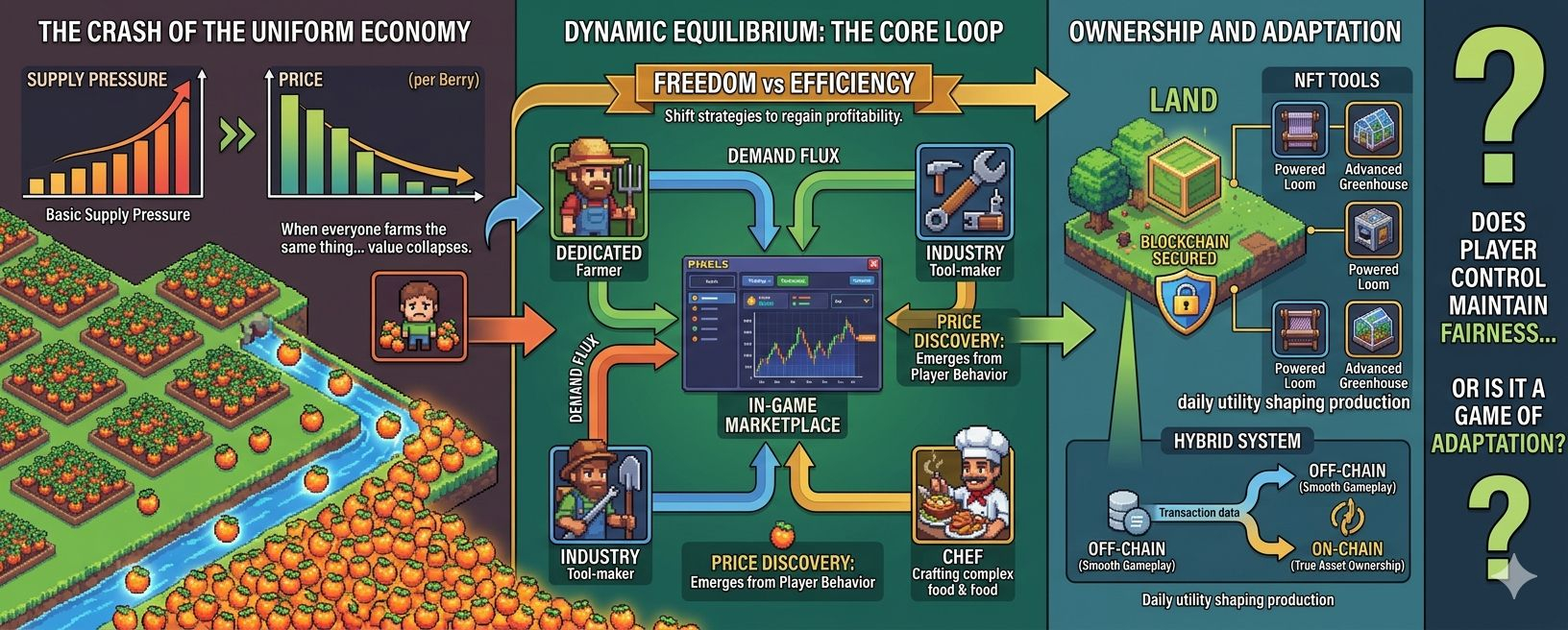


Honestly? been sitting with how the @Pixels economy behaves when players start doing the same thing, and it gets messy fast 😂. Most people assume farming more equals earning more, but what I kept coming back to is that when too many players farm the same resource, its value collapses. It’s basic supply pressure but inside a game, it feels personal.
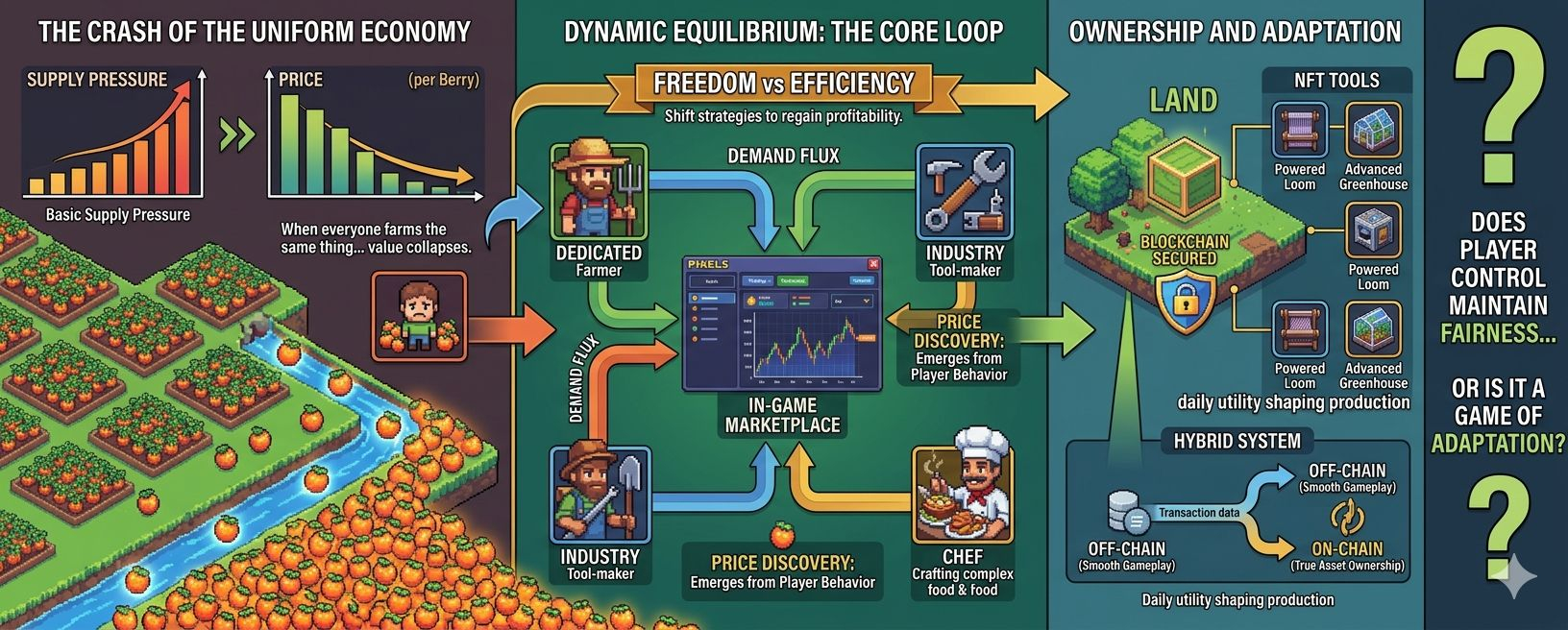
Pixels tries to maintain balance through dynamic demand. Resources aren’t valuable by default. they’re valuable because other players need them. When supply floods the market, prices drop, and players are forced to shift strategies. The tension here is freedom vs efficiency. You can farm anything… but not everything stays profitable.
Trading is where the system actually comes alive. It’s not just a feature. It’s the core loop that connects all roles. In-game marketplaces function like simplified exchanges, where players list assets, react to price changes, and chase margins. Price discovery isn’t controlled by the system. it emerges from player behavior. What I kept noticing is that prices aren’t stable they’re constantly reacting to what players decide to do next.
That’s what makes the economy feel real. It’s player-driven in the truest sense. If players stop farming something, scarcity pushes prices up. If everyone rushes in, the opportunity disappears. It’s a living system, not a fixed one.
Then there’s NFTs. People think they’re just collectibles, but in Pixels they represent functional ownership land, tools, and key assets that directly affect productivity. These NFTs aren’t passive they’re used daily, shaping how efficiently you can operate inside the game.
Ownership is secured through blockchain, which ensures that assets are actually yours, not just stored on a server. But here’s where it gets interesting the game doesn’t fully rely on blockchain speed. If transactions are delayed, off-chain systems keep gameplay running, then sync later. It’s a practical compromise.
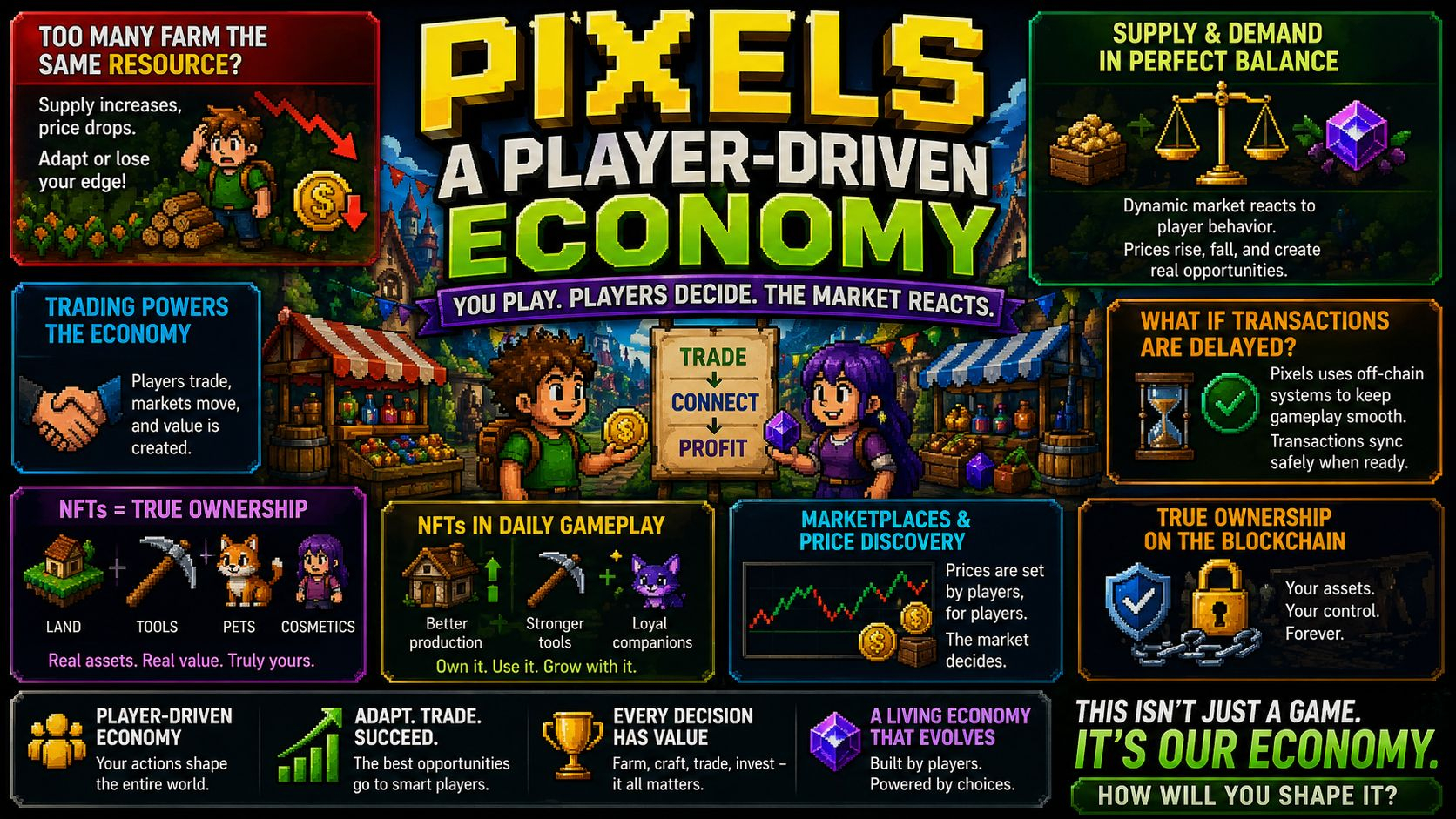
What Pixels gets right is blending real ownership with smooth gameplay. But the tension never disappears decentralization vs performance, freedom vs balance.
So the real question is… when players control the economy this much, does it stay fair… or does it slowly become a game of who adapts fastest?
