


There’s a debate quietly building in the background of the crypto space… and it’s not about price.
It’s about something much deeper — ownership, security, and the future of Bitcoin itself.
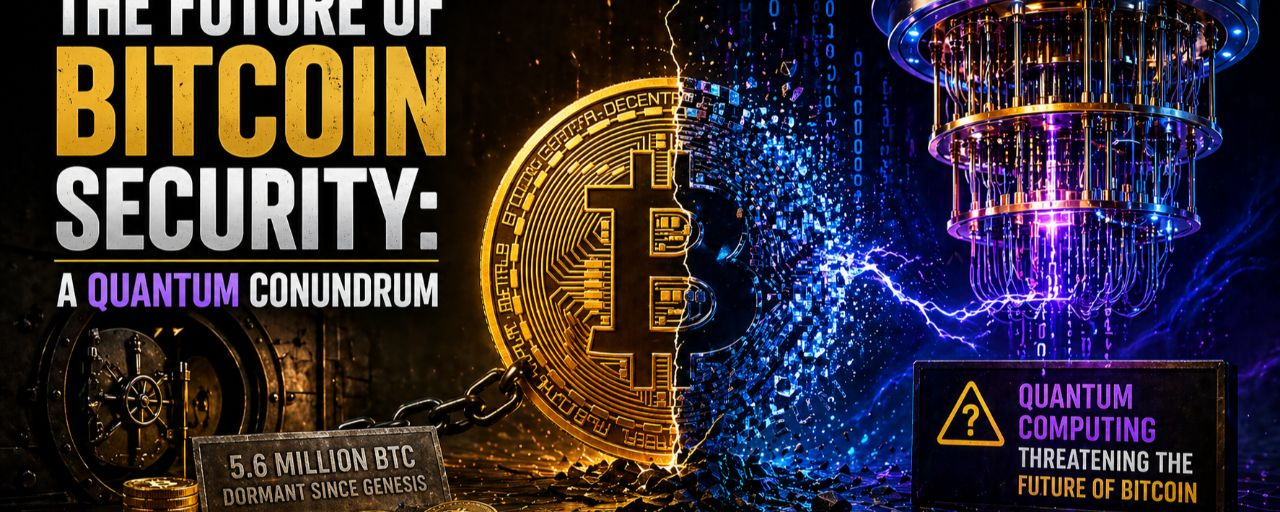
At the center of it all are nearly 5.6 million $BTC that haven’t moved since the early days. These coins, worth hundreds of billions today, have remained untouched… but now they’re being viewed in a completely different light.
Not as lost assets — but as a potential risk.
The Quantum Threat No One Can Ignore
For years, Bitcoin’s security has been considered nearly unbreakable.
But with the rise of quantum computing, that assumption is starting to get questioned.
The concern is simple in theory… but serious in impact.
If quantum technology reaches a level where it can break traditional cryptography, older wallets — especially inactive ones — could become vulnerable. And if that happens, those untouched coins could suddenly be accessed.
Not recovered… but taken.
That’s where the fear comes in.
Because if even a portion of those dormant BTC enters circulation through a breach, it wouldn’t just affect supply — it would shake confidence in the entire system.
A Proposal That Changes Everything
To address this, some developers have introduced a controversial idea.
A proposal suggests updating Bitcoin’s cryptography while also freezing long-inactive coins to prevent potential exploits. On paper, it sounds like a defensive move — protect the network before a threat becomes reality.
But in practice… it opens a much bigger question.
Can Bitcoin still be Bitcoin if coins can be frozen?
Because the entire foundation of Bitcoin is built on one principle — if you own it, no one can take it or restrict it.
Introducing any kind of freeze, even for security reasons, challenges that idea directly.
A Community Divided
This is where things get complicated.
On one side, there are those who see this as necessary evolution.
They argue that protecting the network from a future threat is more important than sticking to rigid rules.
On the other side, there’s strong resistance.
The argument here is not technical… it’s philosophical.
If Bitcoin allows even one exception — even for “lost” coins — it sets a precedent that ownership is conditional. And once that line is crossed, it becomes difficult to define where it stops.
For many, that risk is bigger than the quantum threat itself.
No Easy Way Forward
What makes this situation different is that there’s no perfect solution.
Do nothing, and risk a future where quantum computing exposes vulnerabilities.
Take action, and risk undermining the very principle that gives Bitcoin its value.
Either way, something has to be compromised.
And without any central authority to enforce changes, any major decision could lead to division — potentially even splitting the network.
The Bigger Picture
This isn’t just a technical discussion… it’s a defining moment.
Bitcoin has always been about certainty — fixed supply, fixed rules, and absolute ownership. That’s what built trust over time.
Now, for the first time, that certainty is being challenged by a future technology that hasn’t fully arrived yet… but is close enough to matter.
And the question becomes clear:
Is it better to protect Bitcoin by changing it…
or protect it by leaving it exactly as it is?
Because whatever decision is made here won’t just impact dormant coins…
It will define what Bitcoin really stands for moving forward.