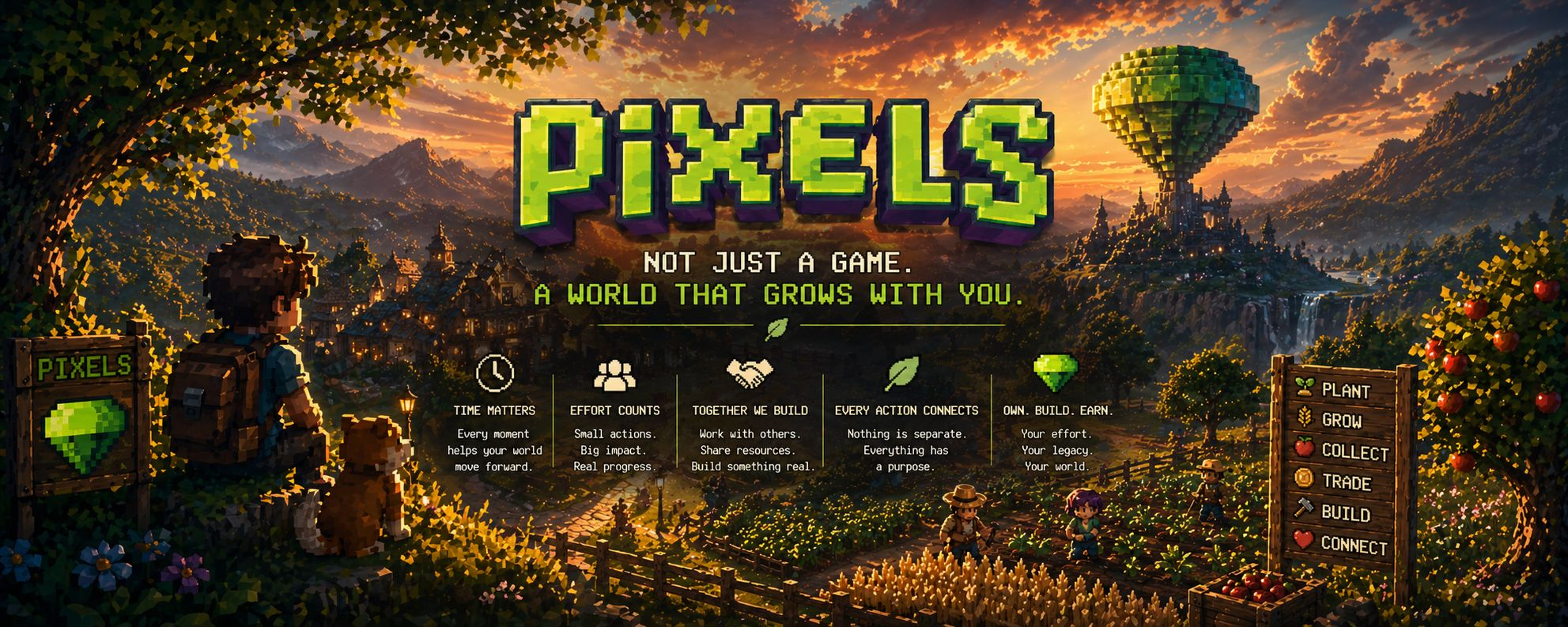

I’ll be honest—when I first logged into Pixels, I felt like I had wasted my time. The graphics looked so simple that it almost felt outdated, like I was sitting in front of an old computer from years ago. For a moment, I was ready to close it. Nothing about it looked impressive. Nothing pulled me in.
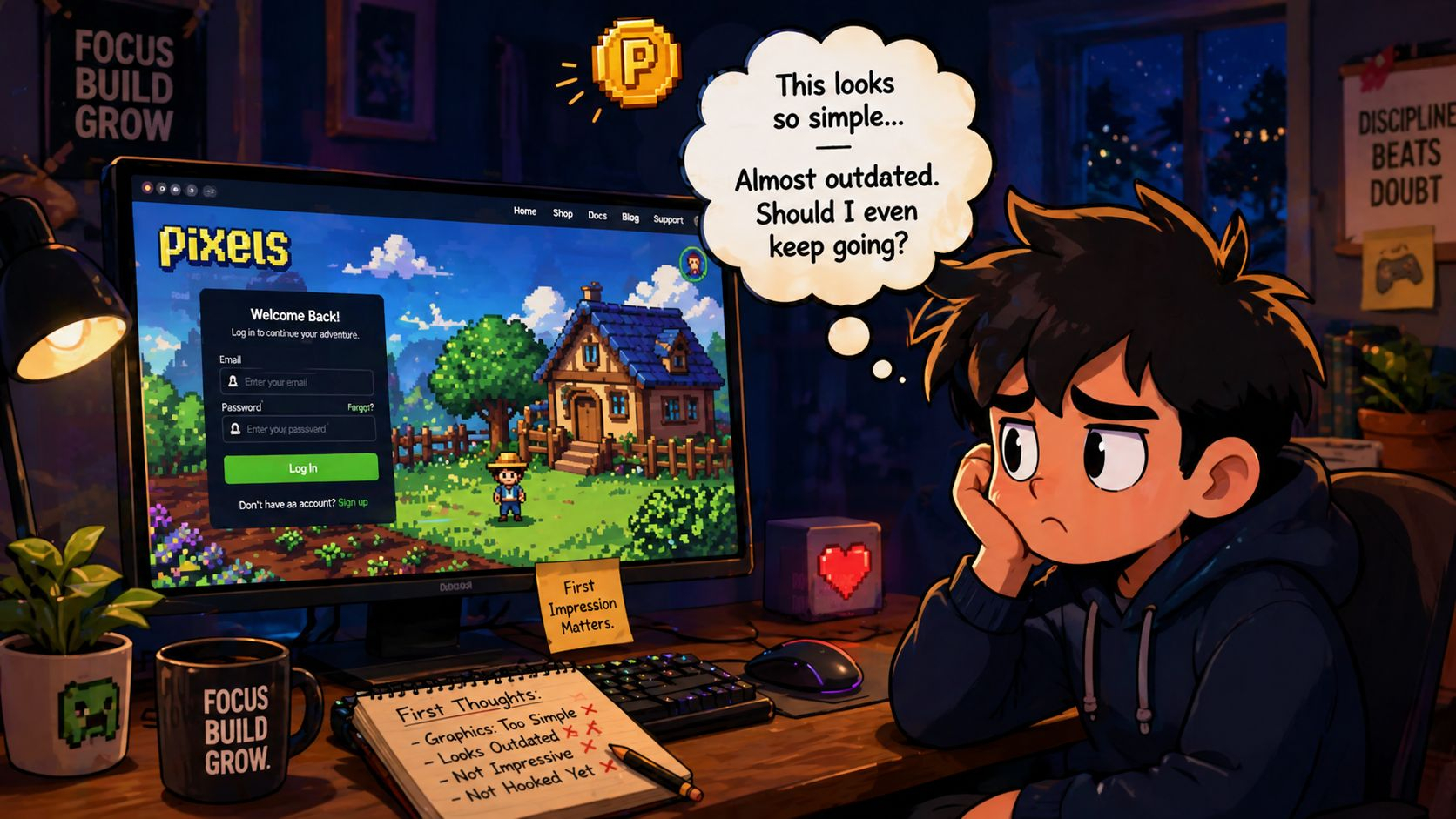
But I didn’t close it. I stayed.
And somewhere between planting my first crops and walking around that quiet little world, something started to feel different. Not exciting. Not dramatic. Just… different.
At first, I couldn’t explain it.
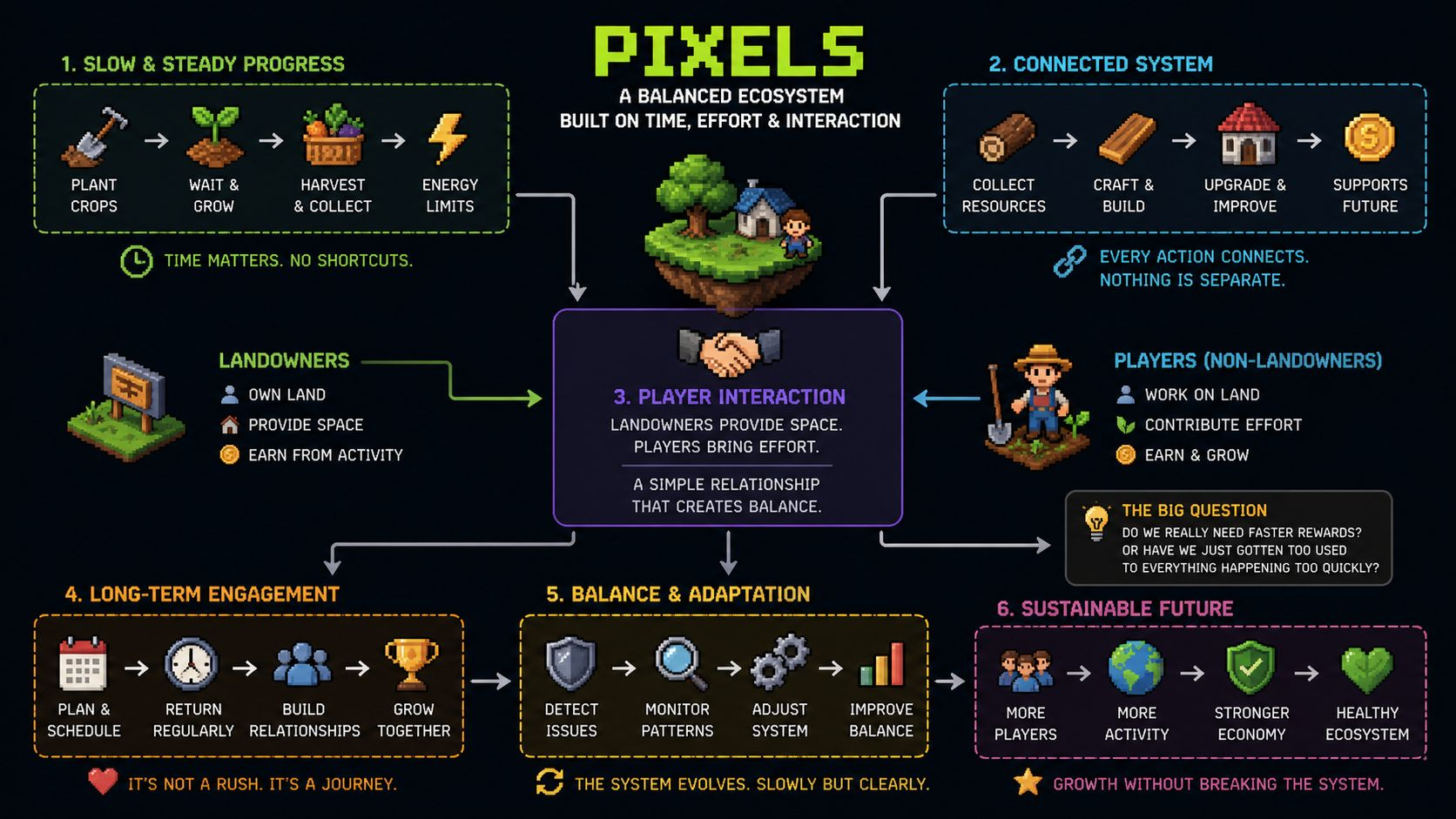
Most blockchain games I’ve seen try very hard to grab attention. Fast rewards, quick progress, instant results. You go in, you earn something, and you leave. Simple cycle. But Pixels doesn’t do that. In fact, it almost does the opposite.
It slows me down.
If I plant crops, I have to wait. If I want to move forward, I have to repeat small actions. There’s no rush. No shortcut. And at first, that feels frustrating.
But then something changes.
It starts to feel normal.
The more I spend time in it, the more I realize that this isn’t just about farming or collecting items. It’s about how the system works underneath. Every small action connects to something else. The wood I collect today helps me tomorrow. The crops I grow are not just rewards—they’re part of a cycle that keeps going.
Nothing feels separate. Everything links together.
And honestly, this is where Pixels feels different.
Most games break because they give too much, too fast. People come, take what they can, and leave. There’s no reason to stay. But here, progress takes time. Effort matters. And because of that, the system feels more stable.
Think about it like a small local shop in a neighborhood. The shop owner needs customers. The customers need the shop. Both depend on each other. Without one, the other doesn’t work.
Pixels feels like that.
Some players own land. Others don’t. I might not own land, but I can still work on it. The landowner provides space, and I bring effort. It’s not perfect, but it creates a kind of balance. A simple relationship. One that actually makes sense.
Isn’t that what most systems are missing?
Something that feels natural instead of forced?
Time plays a big role here too. I can’t do everything in one go. Energy runs out. Crops take time. Progress slows down. And yes, sometimes that feels annoying.
But that’s also the point.
I have to stop.
And somehow, that makes the experience better.
Because I come back. I think about what to do next. I plan a little. It stops being just a game and starts feeling like something I return to, not something I rush through.
Even the simplicity of the graphics starts to make sense. There’s no overload. No unnecessary detail. Everything is clear, easy to follow. The depth is not on the screen—it’s in how everything connects behind it.
Of course, it’s not perfect.
There were times when players found easy ways to repeat actions and gain more than they should. That created imbalance. But those patterns were noticed and adjusted. The system changed. Slowly, but clearly.
Now, it feels like the game is pushing toward something more real. Less about repeating one action. More about doing different things. More about interacting with others.
And that shift matters.
Because when people work together, things become less predictable. Harder to exploit. More… human.
Still, there are challenges ahead. As more people join, keeping everything balanced won’t be easy. More activity means more pressure. And because the gameplay is simple, there’s always the risk that it might start to feel repetitive over time.
So the question becomes: how do you grow something like this without breaking it?
That’s not easy.
Pixels doesn’t try to answer that loudly. It doesn’t promise anything big. It just keeps building, step by step, quietly adjusting itself.
And maybe that’s the most interesting part.
It doesn’t try to pull you in with excitement. It gives you a system that slowly starts to make sense the longer you stay.
So now I think about it differently.
It’s not just a game.
It’s something closer to a working environment—where time, effort, and interaction actually matter.
And maybe that’s what makes it worth paying attention to.
Tell me honestly—do we really need faster rewards? Or have we just gotten too used to everything happening too quickly?