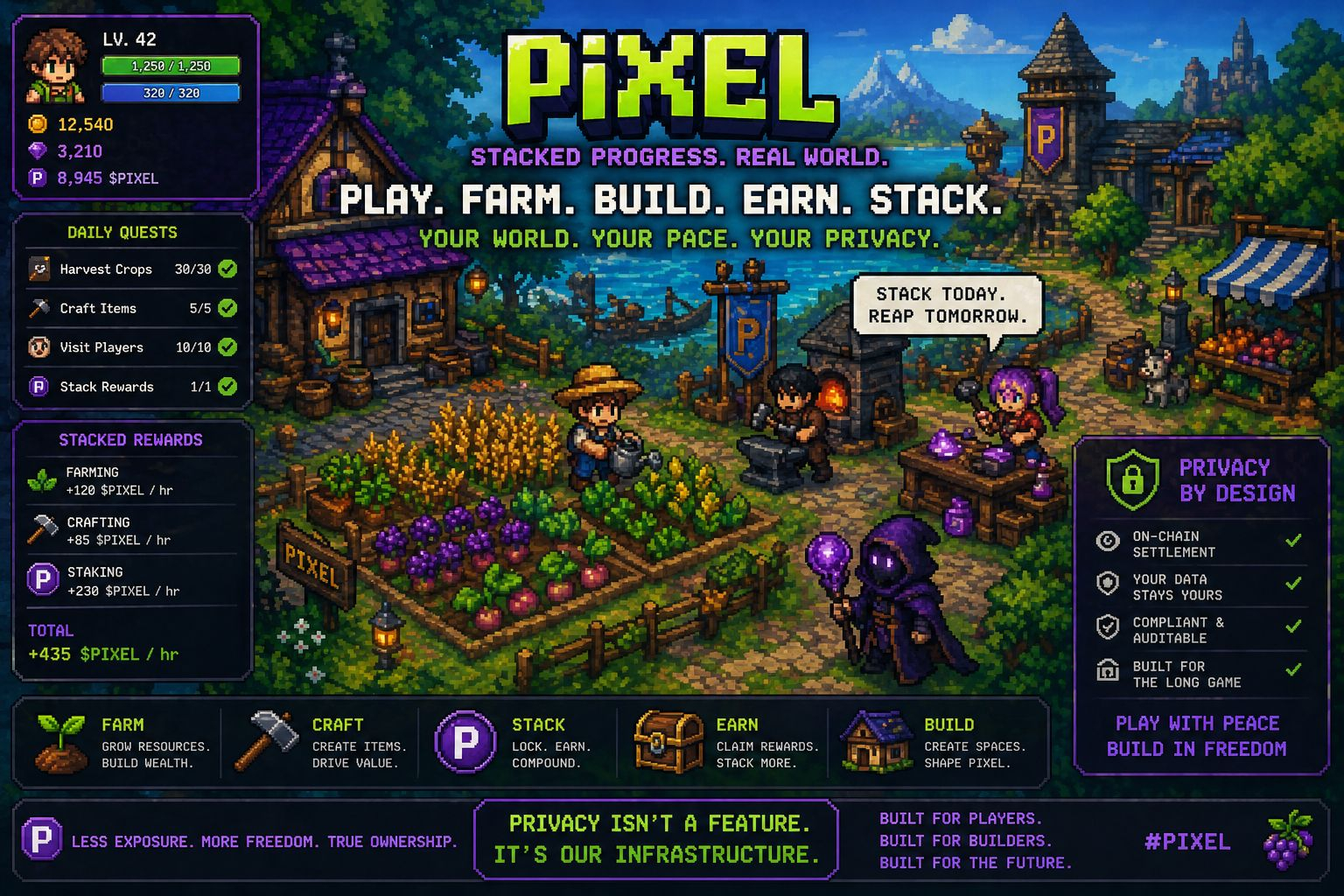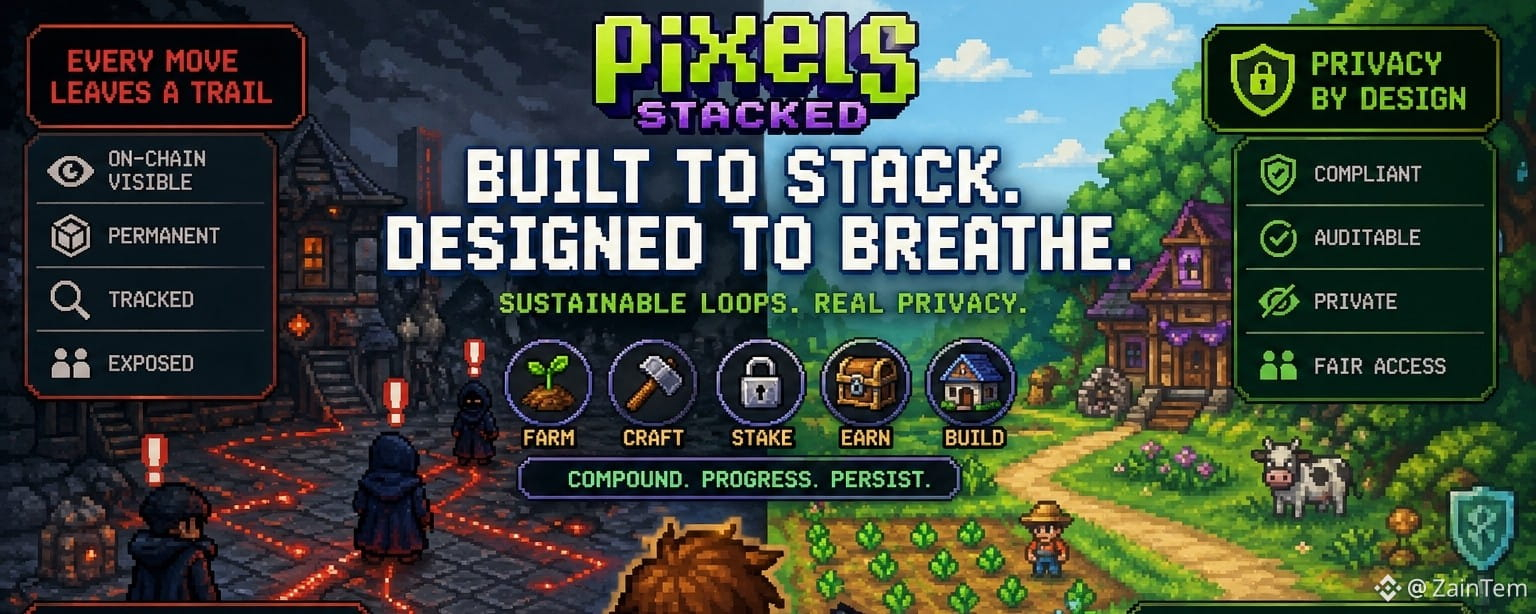
I have been thinking about this lately, sitting with my coffee in Hyderabad, watching how these digital systems we all rely on keep tripping over the same old issues. You know the friction: you're just trying to play a game like Pixels, farm some land, craft items, maybe stake PIXEL in the Stacked ecosystem for those steady rewards, and suddenly there's this nagging sense that every click, every transaction, every bit of your in-game progress is being logged somewhere. Not because someone is malicious, but because the whole setup was built for visibility first transparency for the chain, auditability for compliance, ease for the platform. And then the regulators show up, or a partner wants KYC for cash-outs, or you realize your farm data could be tied back to your wallet in ways that feel... exposed.
The problem isn't new. In practice, most blockchain projects, especially ones blending fun gaming with real economic layers like Pixels on Ronin, start with move fast, ship on-chain. Privacy comes later, as an exception: add a zero knowledge proof here, a mixer there, or some opt-in toggle that half the users ignore. It feels awkward because it is. Builders end up retrofitting after launch patching compliance holes when laws tighten around data protection, anti-money laundering, or consumer rights.
Users hesitate to fully engage; why pour hours into building your virtual farm if a future audit or breach could link your playstyle to your real identity? Institutions and regulators push for oversight settlement needs records, compliance demands traceability yet the human behavior side is messy. People want to participate casually, earn without hassle, but they also don't want their casual farming habits profiled or their staking positions exposed in ways that invite targeting or judgment.
I have seen systems fail before. Early crypto experiments where "public by default" led to doxxing scares, or DeFi protocols that got hammered by regulators because every flow was visible. The awkward incompleteness shows up in costs too: bolting on privacy after the fact means higher engineering spend, delayed features, and compliance teams scrambling with workarounds. For a project treated as infrastructure like Pixels aiming for a broader Stacked ecosystem where in game achievements compound across layers, feeding into AI-driven rewards, staking, and cross-game utility it gets even trickier. Stacked seems designed to make rewards feel sustainable, turning player behavior into verifiable value without endless token printing. But if that data layer isn't private from the ground up, it risks becoming another surveillance point: who farmed what, who staked how much, whose crafting patterns look suspicious under future rules.
Regulated environments don't tolerate "privacy by exception" for long. Laws evolve toward expecting data minimization, consent that's meaningful, protection baked into the architecture rather than added as a feature flag. Think about settlement: on-chain transactions need to clear cleanly, but if every Pixel land NFT or PIXEL move carries unnecessary personal traces, institutions balk at integration. Compliance costs balloon audits, reporting, breach notifications while human behavior pushes back. Most folks aren't privacy maximalists; they're pragmatic. They want the game to feel light, the ecosystem rewarding, without constant mental overhead about who's watching. When privacy is an afterthought, it creates friction in real usage: slower onboarding, dropped sessions when extra verifications hit, or quiet exits when users sense the data exposure.
Treating something like the Pixels Stacked setup as infrastructure means looking past the hype of play-to-earn or Web3 gaming. It's about building something that can actually scale into daily habits farming, gathering, crafting that compounds, staking PIXEL for ecosystem perks while fitting into a world of tightening rules. Privacy by design would mean structuring the core so that sensitive links (wallet to real-world identity, play data to personal profiles) stay minimized or provable without revelation by default. Not hiding everything that would kill compliance and settlement but designing so exceptions are rare, justified, and auditable only where needed. It's cautious work: you wonder if the overhead slows innovation, or if users even notice until something goes wrong. Yet the alternative feels familiar and incomplete another cycle of launch, expose, patch, regret.

I am skeptical by default here. We've watched too many projects promise seamless experiences only for regulatory reality or a data incident to reveal the cracks. For Pixels and Stacked, the promise lies in making progress feel compounding: your in-game efforts feeding into broader value via PIXEL, without the system feeling extractive or leaky. But infrastructure succeeds quietly, through reliability over time, not flashy mechanics.
In the end, who would actually use a version built with privacy by design? Serious players and builders who treat their time and assets as investments farmers stacking rewards across the ecosystem, creators extending Pixels into new layers, institutions eyeing compliant on-ramps for gaming economies. It might work because it reduces long-term costs fewer retrofits, smoother regulatory navigation) and aligns with human caution: people engage more when they trust the foundations won't crumble under scrutiny. What would make it fail?
If it adds too much complexity or latency, pricing out casual users who just want to farm without thinking; or if the design still leaks in practice because incentives favor visibility for growth metrics. Or simply if adoption stays niche while the broader market chases speed over substance.
It's not exciting. It's the kind of quiet realism that might let something like @Pixels Pixels and its Stacked ecosystem endure where $PIXEL isnot just a game token but part of infrastructure that respects the friction of real lives under real rules.